Skip to content
YearMaps
6 states331 BCE – 28 BCE

Kingdoms of the Diadochi: Map & History

The Diadochi were the rival generals, families, and friends of Alexander the Great who fought for control over his empire after his death in 323 BC. The Wars of the Diadochi mark the beginning of the Hellenistic period from the Mediterranean Sea to the Indus River Valley.

The most notable Diadochi include Perdicas, Eumenes, Lysimachus, Cassander, Ptolemy, Seleucus, Antigonus and his son Demetrius Poliorcetes, with the last ones founding Ptolemaic, Seleucid and Antigonid dynasties respectively, that lasted for several centuries after the end of the Wars of the Successors, ruling in Egypt, Levant, Asia-Minor, Mesopotamia, Persia and Macedon.

From Wikipedia: Diadochi (CC BY-SA 4.0)

Ptolemy I Soter Louvre Ma849 A
This file was derived from: Ptolemy I Soter Louvre Ma849.jpg · Public domain · Commons
Bust of Lysimachus
José Luiz · CC BY-SA 3.0 · Commons
Seleuco I Nicatore
Unknown author · CC BY-SA 2.0 it · Commons
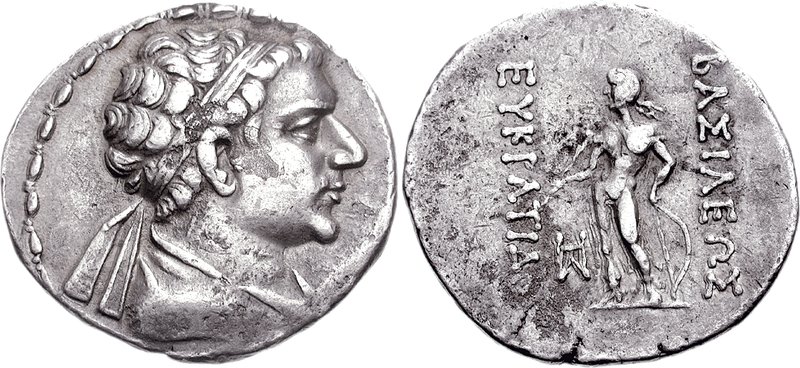
Coin of the Baktrian King Diodotos II
Classical Numismatic Group;[1] · CC BY-SA 3.0 · Commons
Base map
331 BC
317 BC
28 BC
331 BC
250 BC
175 BC
100 BC
28 BC
Epochs:
↗
↗
↗
↗
↗
↗
↗
↗

Each state in its own colour. Move the timeline to see which existed in any year from 331 BC to 28 BC; select a territory to read about it. Borders: Cliopatria / Seshat (CC BY 4.0).

The Kingdoms of the Diadochi Compared

StateYearsCapitalLargest extentRulers
Ptolemaic Kingdom331 BCE – 28 BCEAlexandria4,829,751 km²5
Kingdom of Lysimachus323 BCE – 282 BCE–488,990 km²–
Polyperchon318 BCE – 316 BCE–69,900 km²–
Seleucid Empire318 BCE – 64 BCE–2,975,895 km²–
Antigonid Dynasty291 BCE – 278 BCEAntigoneia (Syria) (Antigonus I), Demetrias, Thessaly (Demetrius I), Pella, Macedon (since Antigonus II)127,922 km²2
Greco-Bactrian Kingdom247 BCE – 127 BCEBactra, Ai-Khanoum1,364,110 km²12

Timeline of the Kingdoms of the Diadochi

When each state existed, 331 BCE to 28 BCE. Select a year to see the map then.

  1. Ptolemaic Kingdom
    331 BCE – 28 BCE
  2. Kingdom of Lysimachus
    323 BCE – 282 BCE
  3. Polyperchon
    318 BCE – 316 BCE
  4. Seleucid Empire
    318 BCE – 64 BCE
  5. Antigonid Dynasty
    291 BCE – 278 BCE
  6. Greco-Bactrian Kingdom
    247 BCE – 127 BCE

How the Kingdoms of the Diadochi Began

Where did the Kingdoms of the Diadochi come from?

It was exactly this expectation that contributed to strife in the Alexandrine and Hellenistic Ages, beginning with Alexander. Philip II had married a woman who changed her name to Olympias to honor the coincidence of Philip's victory in the Olympic Games and Alexander's birth, an act that suggests love may have been a motive as well. Macedon's chief office was the basileia, or monarchy, the chief officer being the basileus, now the signatory title of Philip. Their son and heir, Alexander, was raised with care, being educated by select prominent philosophers. Philip is said to have wept for joy when Alexander performed a feat of which no one else was capable, taming the wild horse, Bucephalus, at his first attempt in front of a skeptical audience including the king. Amidst the cheering onlookers Philip swore that Macedonia was not large enough for Alexander.

From Wikipedia: Diadochi · Background: Basileus (CC BY-SA 4.0)

How the Kingdoms of the Diadochi Ended

How did the Kingdoms of the Diadochi end?

This division was to last for a century, before the Antigonid Kingdom finally fell to the Roman Republic, and the Seleucids were harried from Persia by the Parthians and forced by the Romans to relinquish control in Asia Minor. A rump Seleucid kingdom survived in Syria until finally conquered by Pompey in 64 BC. The Ptolemies lasted longer in Alexandria, though as a client under Rome. Egypt was finally annexed to Rome in 30 BC.

From Wikipedia: Diadochi · The Epigoni: Decline and fall (CC BY-SA 4.0)

The 6 States

Ptolemaic Kingdom

331 BCE – 28 BCE · Capital: Alexandria · 4,829,751 km²

Ptolemy I Soter Louvre Ma849 A
Ptolemy I Soter Louvre Ma849 A This file was derived from: Ptolemy I Soter Louvre Ma849.jpg · Public domain · Commons

The Ptolemaic Kingdom (Koine Greek: Πτολεμαϊκὴ βασιλεία, Ptolemaïkḕ basileía) or Ptolemaic Empire was an ancient Greek polity based in Egypt during the Hellenistic period. It was founded in 305 BC by the Macedonian Greek general Ptolemy I Soter, a companion of Alexander the Great, and was ruled by the Ptolemaic dynasty until the death of Cleopatra VII in 30 BC. Alexandria, a Greek polis (city-state) founded by Alexander the Great, became the capital city and a major center of Greek culture, learning, and trade for the next several centuries.

From Wikipedia: Ptolemaic Kingdom (CC BY-SA 4.0)

Origins and Founding

Limestone relief with a Hadrianic version of Ptolemy I’s decree announcing the arrival of Greeks Roman Period, Ashmolean Museum
Limestone relief with a Hadrianic version of Ptolemy I’s decree announcing the arrival of Greeks Roman Period, Ashmolean Museum SpeakingArch · CC BY-SA 4.0 · Commons

Following Alexander's death in Babylon in 323 BC, a succession crisis erupted among his generals. Initially, Perdiccas ruled the empire as regent for Alexander's half-brother Arrhidaeus, who became Philip III of Macedon, and then as regent for both Philip III and Alexander's infant son Alexander IV of Macedon, who had not been born at the time of his father's death. Perdiccas appointed Ptolemy, one of Alexander's closest companions, to be satrap of Egypt. Ptolemy ruled Egypt from 323 BC, nominally in the name of the joint kings Philip III and Alexander IV. However, as Alexander the Great's empire disintegrated, Ptolemy soon established himself as ruler in his own right. Ptolemy successfully defended Egypt against an invasion by Perdiccas in 321 BC, and consolidated his position in Egypt and the surrounding areas during the Wars of the Diadochi (322–301 BC).

From Wikipedia: Ptolemaic Kingdom · History: Establishment (CC BY-SA 4.0)

Founder
Ptolemy I Soter
Founded
331 BCE

Rulers

Government, Society and Religion

At its height, the population of the Ptolemaic Kingdom may have reached three to four million by the late dynastic period. The Ptolemies presided over a diverse and cosmopolitan society; from its very foundation by Ptolemy I Soter, Macedonians and other Greeks were given land grants and allowed to settle with their families, which encouraged tens of thousands of Greek mercenaries and soldiers to immigrate and form a landed class. Greeks soon became the dominant elite; native Egyptians, though always the majority, generally occupied lower posts in the Ptolemaic government. Over time, Greeks in Egypt became somewhat homogenized and the cultural distinctions between immigrants from different regions of Greece became blurred.

Read more

The Jews who lived in Egypt had originally immigrated from the Southern Levant.

From Wikipedia: Ptolemaic Kingdom · Demographics (CC BY-SA 4.0)

Government
Monarchy
Population
4.9–7.5 million

Economy and Trade

Among the most fundamental and radical changes introduced by the Ptolemies was the systematic monetization of the economy. Egypt had never developed a system of minted coinage for commerce, relying instead on in-kind exchanges or barter at fixed rates. Beginning with Ptolemy I Soter, the kingdom minted Egyptian coins that were roughly equivalent to the standard Greek denominations of the chalkous, obol, and drachma. Throughout the Ptolemaic period, Egypt would produce an extensive series of coinage in gold, silver, and bronze, which also served to project the literal image and authority of a given monarch. Nevertheless, in-kind transactions remained widespread, even among Greeks, and were recorded by receipts in Greek or Demotic Egyptian.

From Wikipedia: Ptolemaic Kingdom · Economy: Monetary policy (CC BY-SA 4.0)

Coins, Currency and Symbols

Currency
Ptolemaic coinage, Greek drachma

Wars and Battles

The Ptolemies maintained a standing army throughout their reign, made up of both professional soldiers (including mercenaries) and recruits. From the very beginning the Ptolemaic army demonstrated considerable resourcefulness and adaptability. In his fight for control over Egypt, Ptolemy I had relied on a combination of imported Greek troops, mercenaries, native Egyptians, and even prisoners of war. The army was characterized by its diversity and maintained records of its troops' national origins, or patris. In addition to Egypt itself, soldiers were recruited from Macedonia, Cyrenaica (modern Libya), mainland Greece, the Aegean, Asia Minor, and Thrace; overseas territories were often garrisoned with local soldiers.

From Wikipedia: Ptolemaic Kingdom · Military: Army (CC BY-SA 4.0)

Achievements and Monuments

Ptolemaic art was produced during the reign of the Ptolemaic Rulers (304–30 BC) and was concentrated primarily within the bounds of the Ptolemaic Empire. At first, artworks existed separately in either the Egyptian or the Hellenistic style, but over time, these characteristics began to combine. The continuation of the Egyptian art style evidences the Ptolemies' commitment to maintaining Egyptian customs. This strategy not only helped to legitimize their rule, but also placated the general population. Greek-style art was also created during this time and existed in parallel to the more traditional Egyptian art, which could not be altered significantly without changing its intrinsic, primarily religious function. Art found outside of Egypt itself, though within the Ptolemaic Kingdom, sometimes used Egyptian iconography as it had been used previously, and sometimes adapted it.

From Wikipedia: Ptolemaic Kingdom · Culture: Art (CC BY-SA 4.0)

Decline and Fall

Ended
28 BCE
Last recorded ruler
Ptolemy II Philadelphus
Succeeded by
Roman Egypt

Kingdom of Lysimachus

323 BCE – 282 BCE · 488,990 km²

Bust of Lysimachus
Bust of Lysimachus José Luiz · CC BY-SA 3.0 · Commons

Lysimachus (Greek: Λυσίμαχος, Lysimachos; c. 360 BC – 281 BC) was a Thessalian officer and successor of Alexander the Great who became king of Thrace in 306 BC, western Asia Minor in 301 BC and Macedon in 288 BC. Born into a Thessalian noble family, Lysimachus was one of Alexander's immediate bodyguards and accompanied him in his Persian and Indian campaigns. After Alexander's death in 323 BC, he was appointed strategos of Thrace. Afterwards, he joined a coalition against Antigonus, who was ultimately defeated and killed at the Battle of Ipsus in 301 BC.

From Wikipedia: Lysimachus (CC BY-SA 4.0)

Wars and Battles

Polyperchon

318 BCE – 316 BCE · 69,900 km²

Polyperchon (sometimes written Polysperchon; Greek: Πολυπέρχων; b. between 390–380 BC – d. after 304 BC, possibly into 3rd century BC), was a Macedonian Greek general who served both Philip II and Alexander the Great and then played an active role in the ensuing battles for control between Alexander's generals.

From Wikipedia: Polyperchon (CC BY-SA 4.0)

Wars and Battles

The death of Alexander the Great in 323 BC upended the plans of Craterus and the Macedonian high command. A major Greek uprising, later known as the Lamian War, broke out almost immediately. Antipater, left in charge in Macedon, suffered a defeat at the Battle of Thermopylae and was besieged in the city of Lamia. He urgently appealed for reinforcements from Craterus, then still in Cilicia, and from Leonnatus, satrap of Hellespontine Phrygia.

Read more

Craterus eventually marched west with a force of 10,000 infantry, 1,000 Persian archers and slingers, and 1,500 cavalry. His arrival proved decisive and shifted the balance of the war. Although Craterus held senior rank, he voluntarily deferred command to Antipater during the campaign. Following the end of the Lamian War, the two commanders launched a new expedition against the Aetolian League.

From Wikipedia: Polyperchon · First War of the Diadochi (CC BY-SA 4.0)

Seleucid Empire

318 BCE – 64 BCE · 2,975,895 km²

Seleuco I Nicatore
Seleuco I Nicatore Unknown author · CC BY-SA 2.0 it · Commons

The Seleucid dynasty or the Seleucidae (Greek: Σελευκίδαι, Seleukídai, "descendants of Seleucus") was a Macedonian Greek royal family, which ruled the Seleucid Empire based in West Asia during the Hellenistic period. It was founded by Seleucus I Nicator, a general and successor of Alexander the Great, after the division of the Macedonian Empire as a result of the Wars of the Successors (Diadochi). Through its history, the Seleucid dominion included large parts of the Near East, as well as of the Asian territory of the earlier Achaemenid Persian Empire.

From Wikipedia: Seleucid dynasty (CC BY-SA 4.0)

Origins and Founding

Coin of Seleucus Nicator, circa 305– September 281 BCE, National Museum, New Delhi
Coin of Seleucus Nicator, circa 305– September 281 BCE, National Museum, New Delhi SpeakingArch · CC BY-SA 4.0 · Commons

Seleucus (c. 358 – 281 BC) served as an officer of Alexander the Great, commanding the elite infantry corps in the Macedonian army: the "Shield-bearers" (Greek: Ὑπασπισταί, Hypaspistai), later known as the "Silvershields" (Ἀργυράσπιδες, Argyraspides). After the death of Alexander in 323 BC, the Partition of Triparadisus assigned Seleucus as satrap of Babylon in 321 BC. Antigonus, the satrap of much of Asia Minor, forced Seleucus to flee from Babylon, but, supported by Ptolemy, the Satrap of Egypt, Seleucus returned in 312 BC. Seleucus' later conquests included Persia and Media. He agreed to a peace treaty with the Indian King Chandragupta Maurya (reigned 324-297 BC). Seleucus defeated Antigonus in the Battle of Ipsus in 301 BC and Lysimachus (King of Thrace, Macedon and Asia Minor) in the battle of Corupedium (near Sardis) in 281 BC.

From Wikipedia: Seleucid dynasty · History: Background (CC BY-SA 4.0)

Founder
Seleucus I Nicator
Founded
318 BCE

Coins, Currency and Symbols

Wars and Battles

Antigonid Dynasty

291 BCE – 278 BCE · Capital: Antigoneia (Syria) (Antigonus I), Demetrias, Thessaly (Demetrius I), Pella, Macedon (since Antigonus II) · 127,922 km²

The Antigonid dynasty (Ancient Greek: Ἀντιγονίδαι) was a Macedonian Greek royal house which ruled the kingdom of Macedon during the Hellenistic period. It was founded by Antigonus I Monophthalmus, a general and successor of Alexander the Great who first came to power during the Diadochi Wars. He took the title of basileus after the victory of his son Demetrius Poliorcetes at the Battle of Salamis in 306 BC.

From Wikipedia: Antigonid dynasty (CC BY-SA 4.0)

Origins and Founding

Founder
Antigonus I Monophthalmus
Founded
291 BCE

Rulers

  • Antigonus I Monophthalmus
  • Perseus of Macedon

Government, Society and Religion

Government
Monarchy
Languages
Greek
Religion
Ancient Greek / Hellenistic

Wars and Battles

Legacy in the Modern World

The Antigonid was one of four dynasties established by Alexander's successors, the others being the Seleucid dynasty, Ptolemaic dynasty and Antipatrid dynasty. The last scion of the dynasty, Perseus of Macedon, who reigned between 179 and 168 BC, proved unable to stop the advancing Roman legions and Macedon's defeat at the Battle of Pydna signaled the end of the dynasty.

From Wikipedia: Antigonid dynasty · Legacy (CC BY-SA 4.0)

Greco-Bactrian Kingdom

247 BCE – 127 BCE · Capital: Bactra, Ai-Khanoum · 1,364,110 km²

Coin of the Baktrian King Diodotos II
Coin of the Baktrian King Diodotos II Classical Numismatic Group;[1] · CC BY-SA 3.0 · Commons

The Greco-Bactrian Kingdom (Greek: Βασιλεία τῆς Βακτριανῆς, romanized: Basileía tês Baktrianês, lit. 'Kingdom of Bactria'), officially the Kingdom of Bactria was a Greek kingdom during the Hellenistic period located in Central Asia and Afghanistan. The kingdom was founded by the Seleucid satrap Diodotus I Soter in about 256 BC, and continued to dominate Central Asia while ruled by the Euthydemid and Eucratid dynasties, until its fall around 120 BC.

From Wikipedia: Greco-Bactrian Kingdom (CC BY-SA 4.0)

Origins and Founding

The Oxus Valley region was originally settled by nomadic Zoroastrian tribes, referred to generally as Scythian by classical Greek writers. Bactria is referenced multiple times in the Avesta. In Zaroastrian writings the region is associated with the Turanian people.

Read more

Bactria (known to the Greeks as Βακτριανή, i.e. Baktrianē) was inhabited by Greek settlers since the time of Darius I, when the majority of the population of Barca, in Cyrenaica, was deported to the region for refusing to surrender assassins. Greek influence increased under Xerxes I, after the descendants of Greek priests who had once lived near Didyma (western Asia Minor) were forcibly relocated in Bactria, and later on with other exiled Greeks, most of them prisoners of war. Greek communities and language were already common in the area by the time that Alexander the Great conquered Bactria in 328 BC.

From Wikipedia: Greco-Bactrian Kingdom · History: Origins (CC BY-SA 4.0)

Founded
247 BCE

Capitals

Fifteenth century Green (Sabz) Mosque in Balkh.
Fifteenth century Green (Sabz) Mosque in Balkh. bluuurgh · Public domain · Commons
Balkh
Capital
Ai-Khanoum
Capital

Rulers

Government, Society and Religion

Government
Monarchy
Languages
Greek (official), Bactrian, Pali, Sanskrit, Aramaic, Sogdian
Religion
Greek polytheism, Greco-Buddhism, Zoroastrianism, Hinduism

Coins, Currency and Symbols

Currency
Stater

Wars and Battles

Before the Greek conquest, the armies of Bactria were overwhelmingly composed of cavalry and were well known as effective soldiers, making up large portions of the Achaemenid cavalry contingents. 2,000 Bactrian horsemen fought at the Granicus against Alexander and 9,000 at the Battle of Gaugamela on the left flank of Darius' army. Herodotus also mentions the widespread use of chariots among the Bactrians. After Alexander's conquest of Bactria, Bactrian cavalry units served in his army during the invasion of India and after the Indian campaign, Alexander enlarged his elite companion cavalry by adding Bactrians, Sogdians and other east Iranian cavalrymen. Both Aeschylus (The Persians, v. 318) and Curtius mention that Bactria was able to field a force of 30,000 horse. Most of these horsemen were lightly armed, using bows and javelins before closing with sword and spear.

From Wikipedia: Greco-Bactrian Kingdom · Army (CC BY-SA 4.0)

Achievements and Monuments

Greeks first began settling the region long before Alexander conquered it. The Persian Empire had a policy of exiling rebelling Greek communities to that region long before it fell to Greek conquest. Therefore, it had a considerable Greek community that was expanded upon after Macedonian conquest.

Read more

The Greco-Bactrians were known for their high level of Hellenistic sophistication, and kept regular contact with both the Mediterranean and neighbouring India. They were on friendly terms with India and exchanged ambassadors.

Their cities, such as Ai-Khanoum in northeastern Afghanistan (probably Alexandria on the Oxus), and Bactra (modern Balkh) where Hellenistic remains have been found, demonstrate a sophisticated Hellenistic urban culture.

From Wikipedia: Greco-Bactrian Kingdom · Culture and legacy: Greek culture in Bactria (CC BY-SA 4.0)

Decline and Fall

A nomadic steppe people called the Yuezhi inhabited a region thousands of miles to the east of Bactria on the edges of the Han Empire called the Hexi Corridor. Shortly before 176 BC, the Xiongnu invaded the Hexi Corridor, forcing the Yuezhi to flee the region. In 162 BC the Yuezhi were driven west to the Ili River valley by the Xiongnu. In 132 they were driven out of the Ili valley by the Wusun. The surviving Yuezhi migrated again south towards the territory just north of the Oxus River where they encountered and expelled a nomadic steppe nation called Sakastan.

Read more

Around 140 BC, eastern Scythians (the Saka, or Sacaraucae of Greek sources), apparently being pushed forward by the southward migration of the Yuezhi started to invade various parts of Parthia and Bactria.

From Wikipedia: Greco-Bactrian Kingdom · History: Nomadic invasions and fall (CC BY-SA 4.0)

Ended
127 BCE
Last recorded ruler
Eucratides I

Legacy in the Modern World

To the north, Euthydemus also ruled Sogdiana and Ferghana, and there are indications that from Alexandria Eschate the Greco-Bactrians may have led expeditions as far as Kashgar and Ürümqi in Xinjiang, leading to the first known contacts between China and the West around 220 BC. The Greek historian Strabo too writes that: "they extended their empire even as far as the Seres (Chinese) and the Phryni". (Strabo, XI.XI.I).Several statuettes and representations of Greek soldiers have been found north of the Tian Shan, on the doorstep to China, and are today on display in the Xinjiang museum at Ürümqi (Boardman). Middle Eastern or Greek influences on Chinese art have also been suggested (Hirth, Rostovtzeff).

From Wikipedia: Greco-Bactrian Kingdom · Culture and legacy: Contacts with Han China (CC BY-SA 4.0)

Kingdoms of the Diadochi: Frequently Asked Questions

What were the Kingdoms of the Diadochi?

The Diadochi were the rival generals, families, and friends of Alexander the Great who fought for control over his empire after his death in 323 BC.

How many states were there among the Kingdoms of the Diadochi?

The atlas maps 6 of them: Ptolemaic Kingdom, Kingdom of Lysimachus, Polyperchon, Seleucid Empire, Antigonid Dynasty, Greco-Bactrian Kingdom.

Which was the largest of the Kingdoms of the Diadochi?

Ptolemaic Kingdom had the largest mapped extent, about 4,829,751 km².

Which of the Kingdoms of the Diadochi lasted longest?

Ptolemaic Kingdom lasted longest, 331 BCE – 28 BCE.

Sources

  • Reading text: Wikipedia articles on the group and each state, condensed (CC BY-SA 4.0).
  • Facts, rulers and wars: Wikidata (CC0).
  • Borders: Cliopatria, Seshat Global History Databank (CC BY 4.0).
  • Pictures: Wikimedia Commons; the author and licence are under each picture.

Largest state by mapped extent: Ptolemaic Kingdom.