Skip to content
YearMaps

How Did Earth Form? From Dust to Oceans in 3D

Earth formed about 4.54 billion years ago from the disk of gas and dust around the young Sun. Watch the Sun ignite, dust grow into planets, Earth melt and form its iron core, a collision with Theia make the Moon, and the steam rain out into the first oceans.

9 animated 3D scenes

How Earth formed

First 100,000 yearsThe protoplanetary disk
Cosmic Chronicles · Step by Step Guide

The 9 Milestones of Early Earth Evolution

Each chapter explores a pivotal moment, connecting the 3D simulation with real observations, the theories that explain them and the scientists who worked them out.

The Sun ignites in our 3D simulation
Milestone 1 of 9

4.57 billion years ago

The Sun ignites

How did the Sun form?

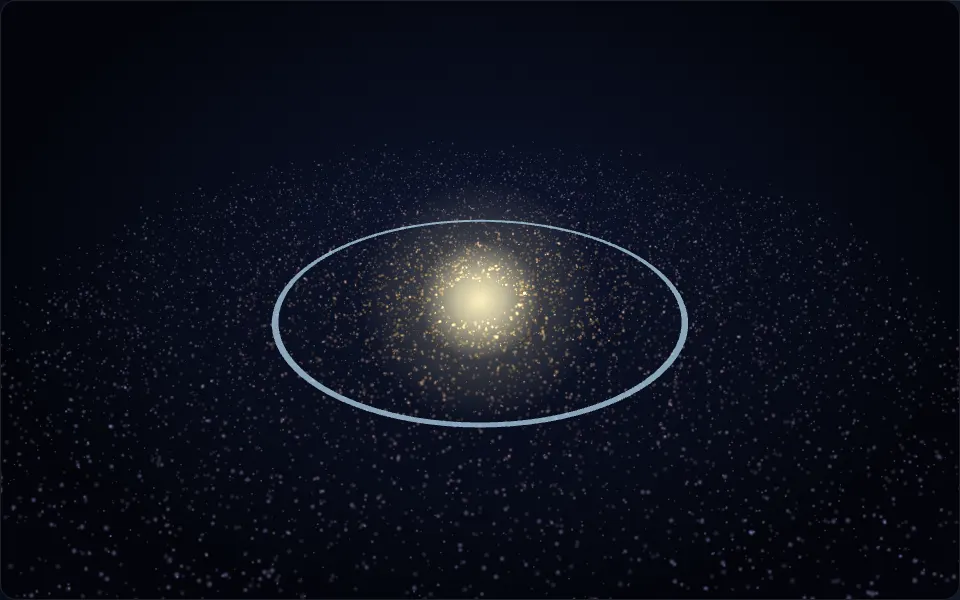
The Sun formed at the centre of the collapsing solar nebula about 4.57 billion years ago. When its core reached about 10 million °C, hydrogen fusion began and it became a star; its strong early wind then cleared the remaining gas from the inner Solar System.

Key milestones

  1. The protoplanetary diskFirst 100,000 years

    A disk of gas and dust circles a growing, glowing protostar.

  2. Fusion beginsWithin a few million years

    The core gets hot and dense enough for hydrogen fusion: the Sun is born.

  3. The frost line

    Close in it is too hot for ice: rocky worlds form inside the frost line, gas and ice giants beyond.

  4. The wind clears the gasA few million years

    A strong solar wind blows the leftover gas out of the inner Solar System.
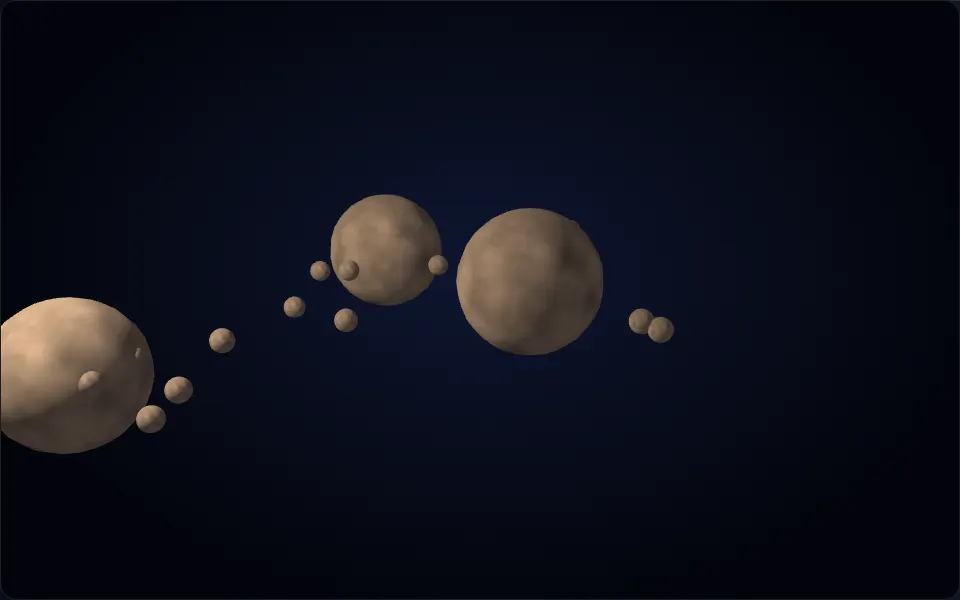
Dust to planetesimals in our 3D simulation
Milestone 2 of 9

4.57–4.55 billion years ago

Dust to planetesimals

How do planets form from dust?

In the disk, dust grains stuck together into pebbles, pebbles into kilometre-sized “planetesimals”, and those collided and merged into planetary embryos the size of the Moon or Mars, in just a few million years.

Key milestones

  1. DustThe first years

    Microscopic grains of rock, metal and ice drift in the disk.

  2. PebblesThousands of years

    Grains collide and stick, growing into fluffy clumps and pebbles.

  3. PlanetesimalsTens of thousands of years

    Clumps grow to kilometres across; now their gravity pulls in more material.

  4. EmbryosA few million years

    Runaway growth makes a few large bodies, the size of the Moon or Mars, that sweep up the rest.

Proto-Earth grows in our 3D simulation
Milestone 3 of 9

About 4.56–4.54 billion years ago

Proto-Earth grows

How did Earth form?

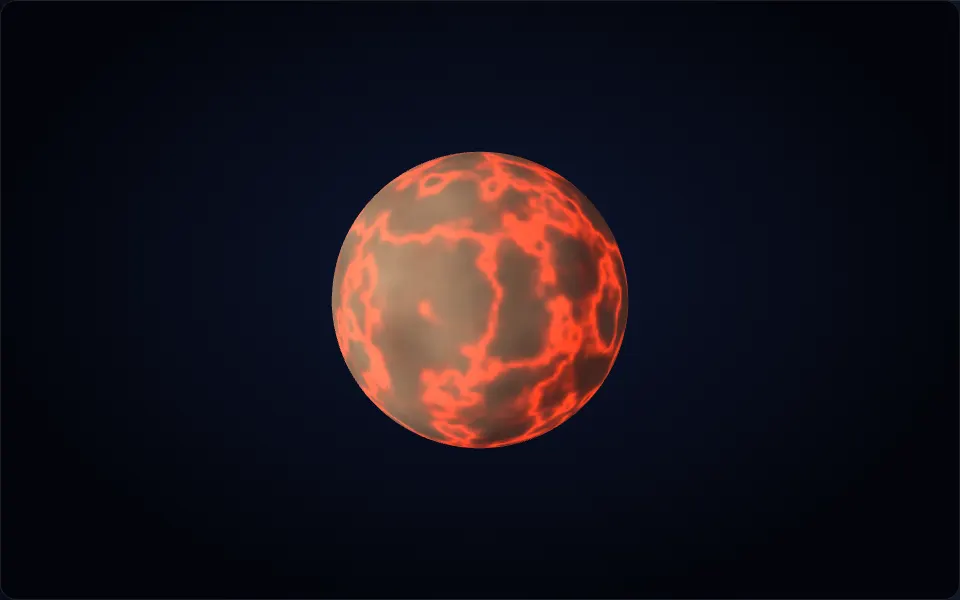
Earth grew by accretion: planetary embryos and planetesimals collided and merged over tens of millions of years. The energy of the impacts, the squeeze of gravity and heat from radioactive elements kept the young planet largely molten. Earth formed about 4.54 billion years ago.

Key milestones

  1. An embryoA few million years

    A rocky body tens of kilometres across sweeps up material in its orbit.

  2. Giant collisionsTens of millions of years

    Bodies up to Mars-size collide and merge with it.

  3. A hot young planet~4.54 billion years ago

    Impacts, compression and radioactive heat melt the surface into a magma ocean.

The core forms in our 3D simulation
Milestone 4 of 9

Within ~30 million years of formation

The core forms

How did Earth’s core form?

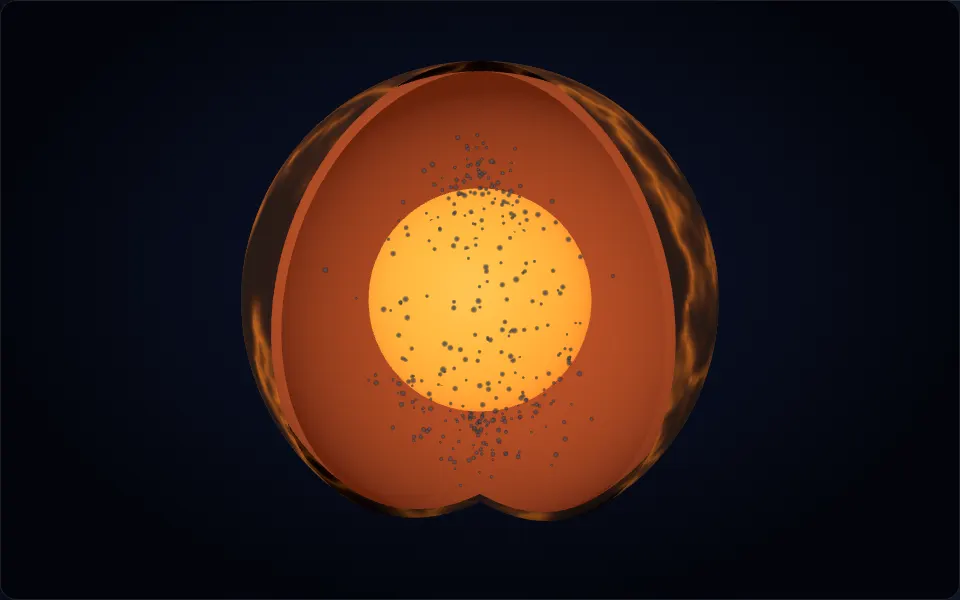
While Earth was largely molten, heavy iron and nickel sank towards the centre and formed the core, leaving lighter rock above as the mantle. This happened within roughly the first 30 million years; the lightest rock later formed the crust.

Key milestones

  1. A mixed, molten planetAt first

    Iron and rock are mixed together through the hot young Earth.

  2. Iron sinksMillions of years

    Dense iron droplets sink through the molten rock towards the centre.

  3. Core, mantle, crustWithin ~30 million years

    Earth is layered: an iron core, a rocky mantle and, as the surface cools, a thin crust.

Theia and the birth of the Moon in our 3D simulation
Milestone 5 of 9

About 4.51 billion years ago

Theia and the birth of the Moon

How did the Moon form?

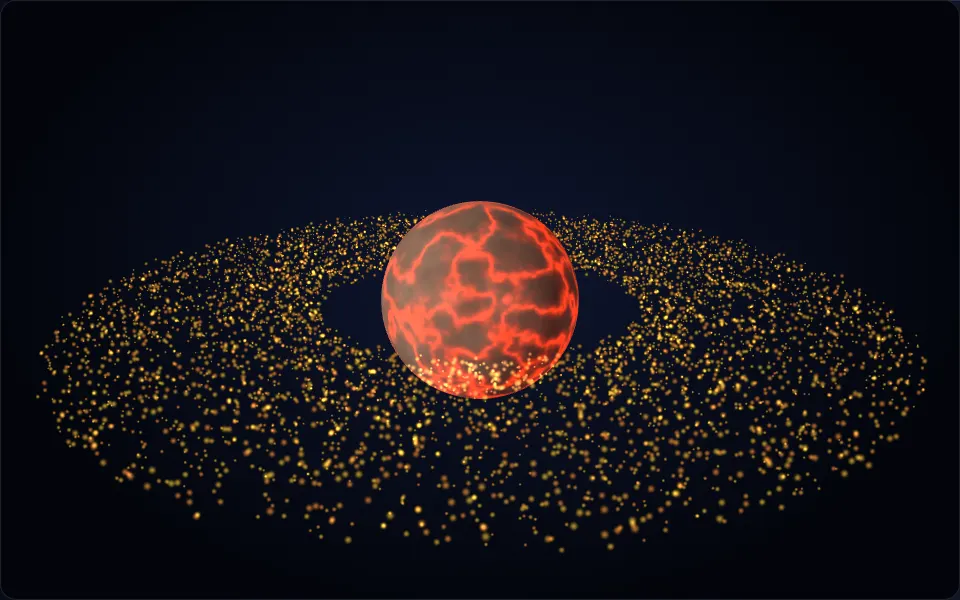
The leading idea is the giant-impact hypothesis: a Mars-sized protoplanet, Theia, struck the young Earth about 4.5 billion years ago. Debris thrown into orbit gathered into the Moon, which began very close to Earth and has been drifting away ever since.

Key milestones

  1. Theia approaches~4.51 billion years ago

    A Mars-sized world, Theia, shares Earth’s orbit and drifts closer.

  2. ImpactHours

    A glancing blow melts and partly vaporises both worlds.

  3. A debris diskDays to years

    A ring of molten rock and vapour circles Earth.

  4. The Moon gathersYears to a century

    Much of the ring clumps into one body: the Moon, only a few Earth-widths away.

A magma ocean cools in our 3D simulation
Milestone 6 of 9

4.5–4.4 billion years ago

A magma ocean cools

Was Earth once molten?

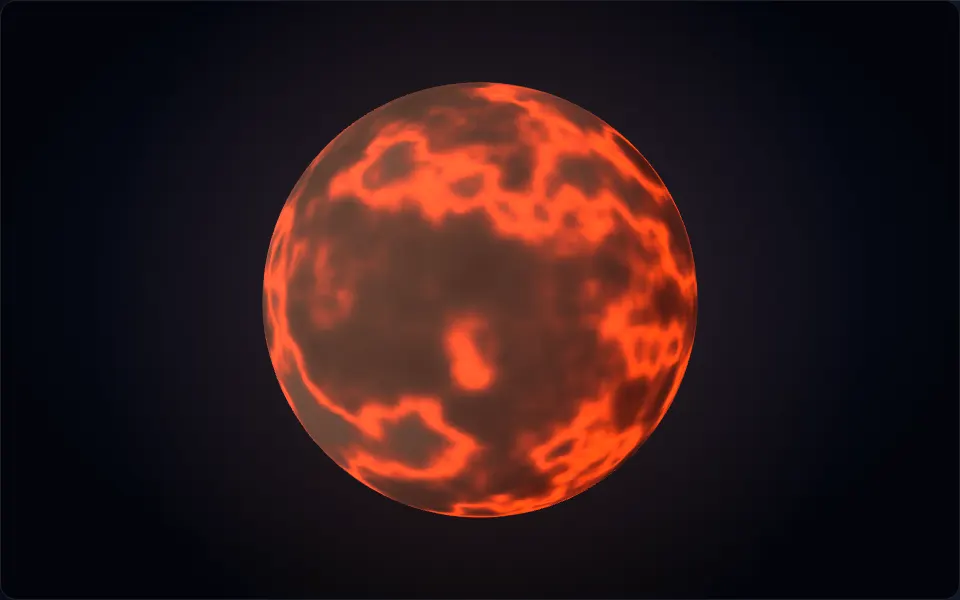
Yes. After the Moon-forming impact, Earth’s surface was a magma ocean hundreds of kilometres deep under an atmosphere of rock vapour and steam. Within a few million years it cooled and crusted over, while volcanoes released water vapour and carbon dioxide.

Key milestones

  1. A glowing worldAfter the impact

    The whole surface is molten rock, glowing orange.

  2. A crust formsThousands to millions of years

    As heat escapes, dark rafts of crust form and crack over the glowing magma.

  3. A steam atmosphereA few million years

    Gas from the cooling rock and volcanoes builds a thick atmosphere of steam and carbon dioxide.

The first oceans in our 3D simulation
Milestone 7 of 9

By 4.4 billion years ago

The first oceans

Where did Earth’s water come from?

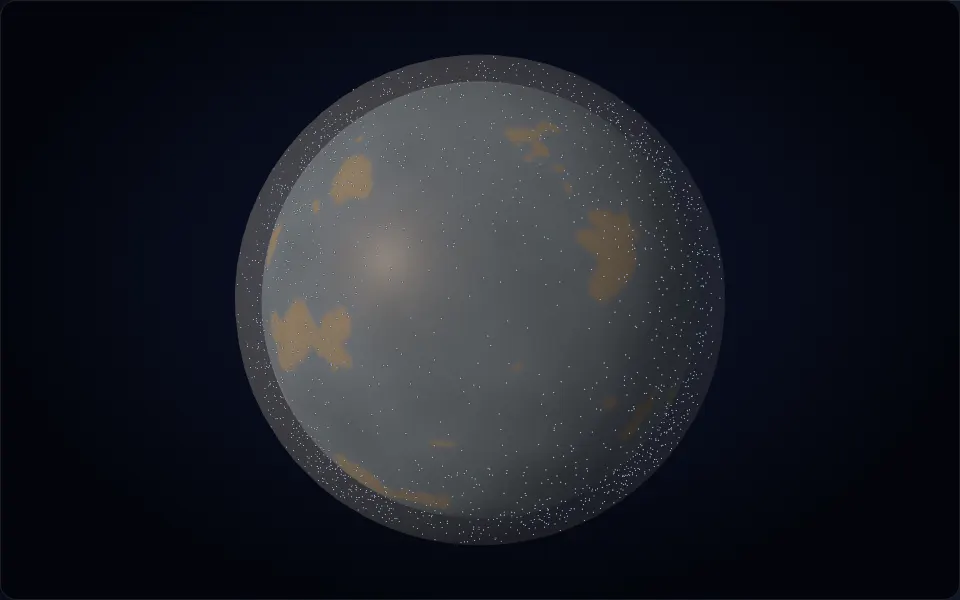
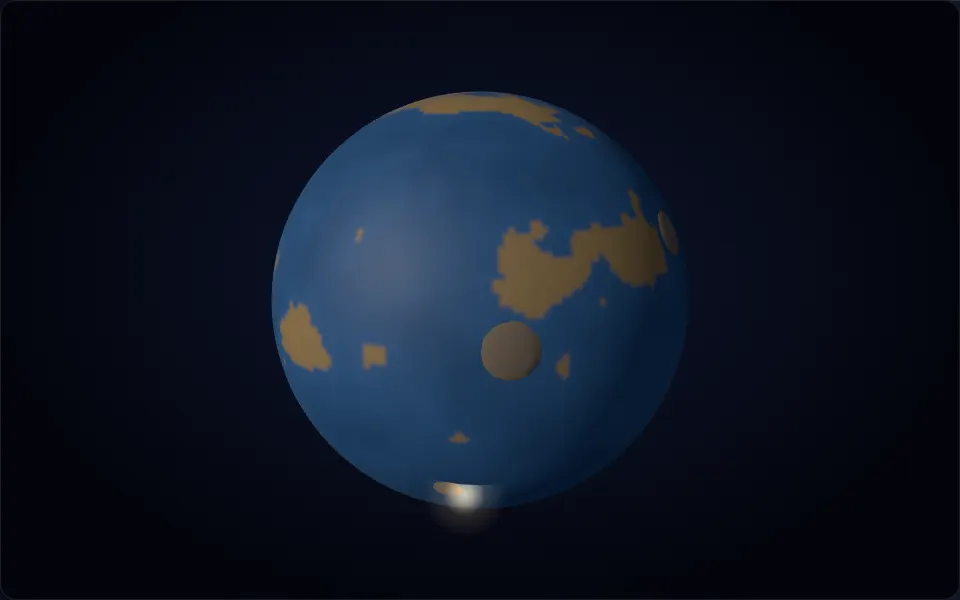
Much of Earth’s water was probably present in the rocks it formed from, with some delivered by water-rich asteroids and perhaps comets. As the surface cooled below about 300 °C, the steam atmosphere rained out; zircon crystals show liquid water by 4.4 billion years ago.

Key milestones

  1. Steam~4.45 billion years ago

    A thick atmosphere of steam hangs over a hot surface.

  2. RainThousands of years or more

    As the surface cools, the steam condenses and rain pours down.

  3. A water worldBy 4.4 billion years ago

    Oceans fill the low ground, covering nearly all of the young Earth.

The heavy bombardment in our 3D simulation
Milestone 8 of 9

4.5–3.8 billion years ago

The heavy bombardment

What was the Late Heavy Bombardment?

For hundreds of millions of years after it formed, Earth was struck by asteroids and comets far more often than today. Some scientists argue for a spike, the “Late Heavy Bombardment”, around 4.1 to 3.8 billion years ago, recorded in the Moon’s craters; others think impacts simply tailed off. The impacts also delivered water and other volatile compounds.

Key milestones

  1. A crowded Solar SystemHadean

    Leftover asteroids and comets still cross Earth’s orbit.

  2. ImpactsHundreds of millions of years

    Impacts blast craters and boil away patches of ocean.

  3. Tailing offBy ~3.8 billion years ago

    As the debris is swept up, impacts become rare and life can take hold.

Earth’s magnetic shield in our 3D simulation
Milestone 9 of 9

By at least 3.5 billion years ago

Earth’s magnetic shield

When did Earth get its magnetic field?

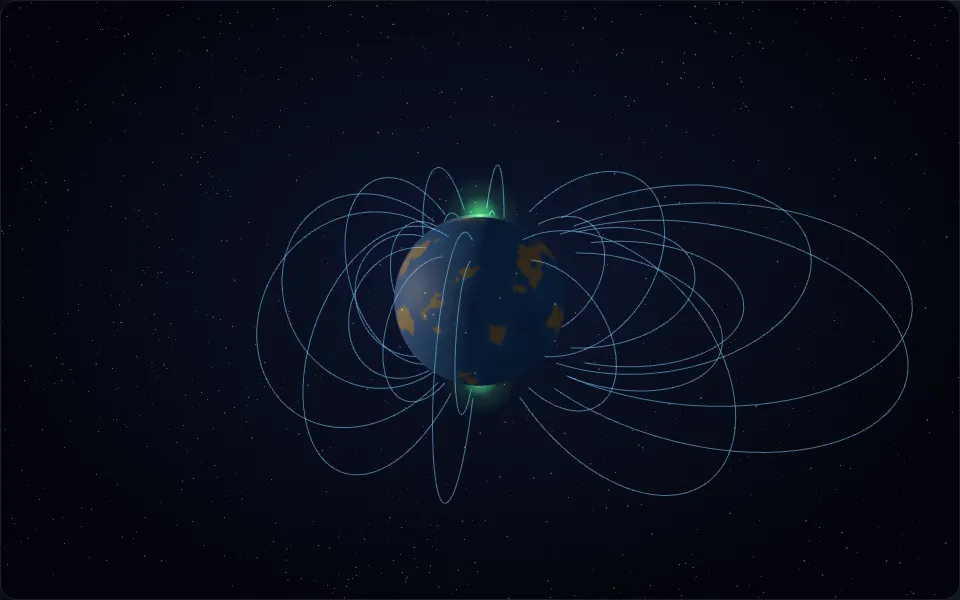
Earth’s magnetic field is made by molten iron churning in the outer core (the geodynamo). Magnetised minerals in ancient rocks show a field existed by at least 3.5 billion years ago, possibly over 4 billion. It deflects the solar wind, which helps protect the atmosphere and water.

Key milestones

  1. The solar windAlways

    A stream of charged particles flows out from the Sun.

  2. The geodynamo startsBy 3.5 billion years ago

    Churning molten iron in the outer core generates a magnetic field.

  3. A shieldEver since

    The field deflects the solar wind around Earth; some particles slide down to the poles and light up auroras.

Before and after

Start at the very beginning with the Big Bang. Then follow Earth throughthe Hadean Eon and on to today ona 3D globe of Earth through time.

Quick Answers

How old is Earth?
About 4.54 billion years, from the ages of meteorites and of the oldest Earth and Moon rocks.
Are these animations exact?
No. They illustrate the standard account of how Earth formed, simplified so each step can be seen. Dates in the text are standard measured values.