Skip to content
YearMaps
3 states1468 CE – 1910 CE

Early Modern and Modern States of Korea and Japan: Map & History

3 states of Korea and Japan on one map, from 1468 CE to 1910 CE.The largest, Tokugawa Shogunate, covered about 461,627 km². Each has its own section below with its rulers, capitals, wars and pictures where the records hold them.

Kawagoe castle's Honmaru Goden in Kawagoe, Saitama prefecture
Syohei Arai · CC BY-SA 4.0 · Commons
portrait of Tokugawa Ieyasu
Kanō Tan'yū · Public domain · Commons
대한제국 고종 황제 - 서양식 양복을 입고 앉아 있는 모습
This photo was taken in 1907. · Public domain · Commons
Base map
1468 AD
1600 AD
1910 AD
1468 AD
1575 AD
1700 AD
1800 AD
1910 AD
Epochs:
↗
↗
↗
↗
↗
↗
↗
↗

Each state in its own colour. Move the timeline to see which existed in any year from 1468 AD to 1910; select a territory to read about it. Borders: Cliopatria / Seshat (CC BY 4.0).

The Early Modern and Modern States of Korea and Japan Compared

StateYearsCapitalLargest extentRulers
Warring States Japan1468 CE – 1601 CE–356,125 km²–
Tokugawa Shogunate1600 CE – 1869 CEEdo, (Shōgun's residence), Heian-kyō, (Emperor's palace)461,627 km²2
Korean Empire1898 CE – 1910 CEHanseong (present-day Seoul)231,753 km²2

Timeline of the Early Modern and Modern States of Korea and Japan

When each state existed, 1468 CE to 1910 CE. Select a year to see the map then.

  1. Warring States Japan
    1468 CE – 1601 CE
  2. Tokugawa Shogunate
    1600 CE – 1869 CE
  3. Korean Empire
    1898 CE – 1910 CE

The 3 States

Warring States Japan

1468 CE – 1601 CE · 356,125 km²

Kawagoe castle's Honmaru Goden in Kawagoe, Saitama prefecture
Kawagoe castle's Honmaru Goden in Kawagoe, Saitama prefecture Syohei Arai · CC BY-SA 4.0 · Commons

The Sengoku period (戦国時代, Sengoku jidai; Japanese pronunciation: [seŋ.ɡo.kɯ (d)ʑiꜜ.dai, -ŋo.kɯ-] lit. 'Warring States period') was the period in Japanese history in which civil wars and social upheavals took place almost continuously in the 15th and 16th centuries.

From Wikipedia: Sengoku period (CC BY-SA 4.0)

Origins and Founding

During this period, although the Emperor of Japan was officially the ruler of the state and every lord swore loyalty to him, he was largely a marginalized, ceremonial, and religious figure who delegated power to the shōgun, a noble who was roughly equivalent to a military dictator.

Read more

From 1346 to 1358, during the Nanboku-cho period, the Ashikaga shogunate gradually expanded the authority of the shugo, the local military and police officials established by the Kamakura shogunate, giving the shugo jurisdiction over land disputes between gokenin and allowing the shugo to receive half of all taxes from the areas they controlled. The Shugo shared their newfound wealth with the local samurai, creating a hierarchical relationship between the shugo and the samurai, and the first early daimyo, called shugo daimyo, appeared.

From Wikipedia: Sengoku period · Background (CC BY-SA 4.0)

Founded
1468 CE

Achievements and Monuments

Tokugawa Shogunate

1600 CE – 1869 CE · Capital: Edo, (Shōgun's residence), Heian-kyō, (Emperor's palace) · 461,627 km²

portrait of Tokugawa Ieyasu
portrait of Tokugawa Ieyasu Kanō Tan'yū · Public domain · Commons

The Tokugawa shogunate, also known as the Edo shogunate, was the military government of Japan during the Edo period from 1603 to 1868. The Tokugawa shogunate was established by Tokugawa Ieyasu after victory at the Battle of Sekigahara, ending the civil wars of the Sengoku period following the collapse of the Ashikaga shogunate. Ieyasu became the shōgun, and the Tokugawa clan governed Japan from Edo Castle in the eastern city of Edo (Tokyo) along with the daimyō lords of the samurai class.

From Wikipedia: Tokugawa shogunate (CC BY-SA 4.0)

Origins and Founding

徳川家康公之像(静岡県静岡市葵区黒金町)、静岡市のシンボル
徳川家康公之像(静岡県静岡市葵区黒金町)、静岡市のシンボル Akahito Yamabe · CC BY-SA 4.0 · Commons
Founder
Tokugawa Ieyasu
Founded
1600 CE

Rulers

Government, Society and Religion

The principle was that each daimyō (including those who were previously independent of the Tokugawa family) submitted to the shogunate, and each han required the shogunate's recognition and was subject to its land redistributions. Daimyō swore allegiance to each shogun and acknowledged the Laws for Warrior Houses or buke shohatto.

Read more

The sankin-kōtai ("alternate attendance") system, required daimyō to travel to and reside in Edo every other year, and for their families to remain in Edo during their absence.

The ikkoku ichijyō rei (一国一城令), allowed each daimyō's han to retain only one fortification, at the daimyō's residence.

From Wikipedia: Tokugawa shogunate · Government: Policies to control the daimyō (CC BY-SA 4.0)

Government
Feudal
Languages
Early Modern Japanese
Religion
State religions: Others:

Economy and Trade

After the unification of Japan, the discovery of new silver mines and the improvement of mining techniques, the extraction and export of silver from Japan increased dramatically, particularly to Ming China. Between 1560 and 1600, the annual export of silver ranged from 33 to 49 tons, but due to the Ming ban on trade with Japan, the import of Japanese silver was facilitated by the Portuguese. In the early 17th century, Japanese silver exports continued to rise, with the import of luxury goods such as silk (reaching up to 280 tons per year in the 1630s). Silk was so abundant and inexpensive in Japan that even some peasants were able to afford it, leading to a rise in its popularity among the lower classes.

Read more

In 1601, the Hokusan region became the domain of Tokugawa Ieyasu.

From Wikipedia: Tokugawa shogunate · Economy (CC BY-SA 4.0)

Coins, Currency and Symbols

Keicho-koban
Keicho-koban As6673 · CC BY-SA 3.0 · Commons
Currency
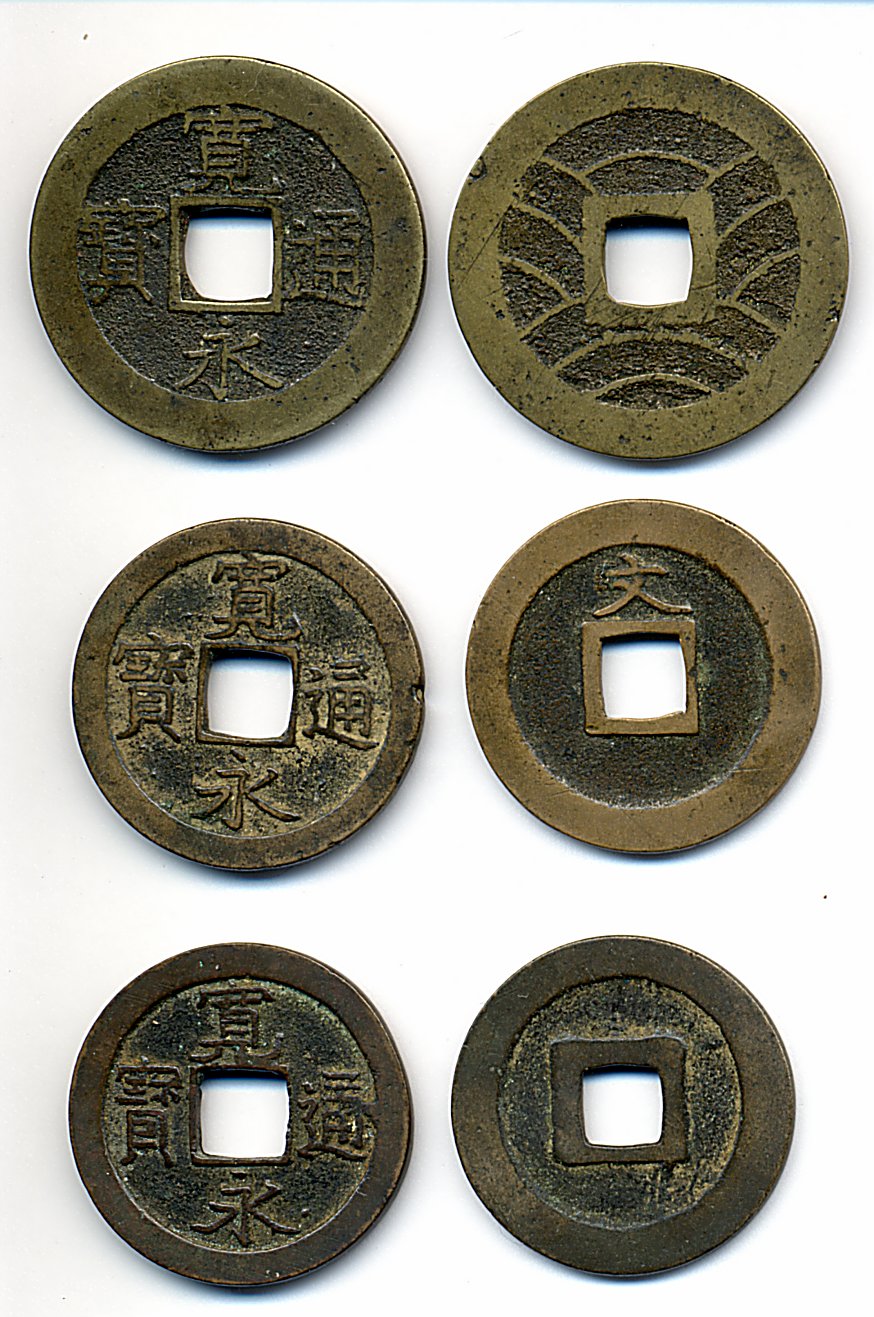
ryō, Tokugawa coinage

Wars and Battles

Achievements and Monuments

Decline and Fall

Ended
1869 CE
Last recorded ruler
Tokugawa Hidetada
Succeeded by
Empire of Japan

Korean Empire

1898 CE – 1910 CE · Capital: Hanseong (present-day Seoul) · 231,753 km²

대한제국 고종 황제 - 서양식 양복을 입고 앉아 있는 모습
대한제국 고종 황제 - 서양식 양복을 입고 앉아 있는 모습 This photo was taken in 1907. · Public domain · Commons

The Korean Empire (Korean: 대한국; Hanja: 大韓國; lit. 'Great Korean State'), officially the Empire of Korea or Imperial Korea in English and commonly called Taehan Cheguk (Korean: 대한제국; Hanja: 大韓帝國; lit. 'Empire of Great Korea') in Korean, was a Korean monarchical state proclaimed in October 1897 by King Gojong of the Joseon dynasty. The empire lasted until the Japanese annexation of Korea in August 1910. During this period, Emperor Gojong oversaw the Gwangmu Reform, a partial modernization and westernization of Korea's military, economy, land system, education system, and various industries.

From Wikipedia: Korean Empire (CC BY-SA 4.0)

Origins and Founding

Resistance against Korea having a tributary relationship with China increased in the 17th century. As the Ming dynasty was replaced by Qing dynasty, Western ideas entering Korea had caused anti-tributary sentiments to rise in Korea. Moreover, after the opening of Korea, members of the Gaehwa Party often declared independence from China, but China increased its interference in Korean affairs after the Imo Incident and Kapsin Coup.

Read more

However, following the Japanese victory in the First Sino-Japanese War, Joseon won independence from the Qing dynasty. Proclaiming an empire was seen by many politicians as a good way to maintain independence. After Gojong of Korea returned from his exile in the Russian legation, many officials requested Gojong to proclaim an empire to strengthen the country, and build a firm framework as an independent state.

From Wikipedia: Korean Empire · History: Formation (CC BY-SA 4.0)

Founded
1898 CE

Rulers

Government, Society and Religion

Government
Unitary absolute monarchy (de jure)Unitary constitutional monarchy (de facto)
Languages
Korean
Religion
Confucianism, Buddhism, Shamanism, Taoism, Christianity, Cheondoism (recognized in 1907)

Economy and Trade

Some modern enterprises emerged in the Korean Empire, including some hand-operated machinery. These enterprises faced a crisis when Japanese products were imported into the country and the enterprises lacked capital intensity. Although limited banking infrastructure existed, it was not able to adequately support economic development. Large Korean (South Korean) companies existing to this day such as Doosan and Korea Electric Power Corporation originated during the Imperial period.

Read more

Nonetheless, the Korean Empire was able to have good economic growth. The GDP per capita of the Korean Empire was $850 in 1900, which was 26th highest in the world and 2nd highest in Asia.

The economic progress of the Korean Empire was reflected in a secret report that Hayashi Gonsuke sent to Aoki Shūzō, indicating that the Korean Empire was becoming an economic participant on the global stage.

From Wikipedia: Korean Empire · Economy (CC BY-SA 4.0)

Coins, Currency and Symbols

An unissued specimen banknote of the Kingdom of Joseon denominated in "Yang" (兩).
An unissued specimen banknote of the Kingdom of Joseon denominated in "Yang" (兩). The Government of the Kingdom of Joseon · Public domain · Commons
Currency
Korean yang, Korean won
  • half Won 1905(Korea)
    half Won 1905(Korea) As6022014 · Public domain · Commons
  • A copper-alloy coin issued by the Kingdom of Great(er) Joseon nominally worth 1/100th Yang.
    A copper-alloy coin issued by the Kingdom of Great(er) Joseon nominally worth 1/100th Yang. The government of the Kingdom of Great(er) Joseon. · Public domain · Commons
  • Flag of Korea (1899)
    Flag of Korea (1899) Lumia1234 · Public domain · Commons
  • Imperial Seal of the Korean Empire
    Imperial Seal of the Korean Empire Samhanin · CC0 · Commons

Wars and Battles

Before the Russo-Japanese War, Korea tried to show its neutrality to different Western countries. On 27 January 1904, Russia, France, Germany, and the United Kingdom formally commended Korea's declaration of neutrality.

Read more

Later that year on August 22, the first treaty between Japan and Korea, known as the First Japan–Korea Convention, was signed. This allowed the creation of a Japanese garrison in Korea, the Japanese Korean Army. The Taft–Katsura Agreement (more appropriately known as the Taft–Katsura Memorandum) was issued on July 17, 1905. It was not actually a secret pact or agreement between the United States and Japan, but rather a set of notes regarding discussions on U.S.-Japanese relations between members of the governments of both countries, hence its more appropriate name memorandum.

From Wikipedia: Korean Empire · History: Taft-Katsura Agreement and the Russo-Japanese War (CC BY-SA 4.0)

Achievements and Monuments

Decline and Fall

Ended
1910 CE
Last recorded ruler
Sunjong of the Korean Empire

Early Modern and Modern States of Korea and Japan: Frequently Asked Questions

Which states existed in Korea and Japan in this period?

This page maps 3 states of Korea and Japan founded between 1468 CE and 1898 CE: Warring States Japan, Tokugawa Shogunate, Korean Empire.

Which was the largest of the Early Modern and Modern States of Korea and Japan?

Tokugawa Shogunate had the largest mapped extent, about 461,627 km².

Which of the Early Modern and Modern States of Korea and Japan lasted longest?

Tokugawa Shogunate lasted longest, 1600 CE – 1869 CE.

Sources

  • Reading text: Wikipedia articles on the group and each state, condensed (CC BY-SA 4.0).
  • Facts, rulers and wars: Wikidata (CC0).
  • Borders: Cliopatria, Seshat Global History Databank (CC BY 4.0).
  • Pictures: Wikimedia Commons; the author and licence are under each picture.

Largest state by mapped extent: Tokugawa Shogunate.