
Archean Eon · Paleoarchean
Earth 3.5 Billion Years Ago: Microbes, Stromatolites and an Orange Sky
Earth 3.5 billion years ago: the oldest accepted fossils, mounds built by microbes, under an orange methane haze with almost no oxygen in the air.
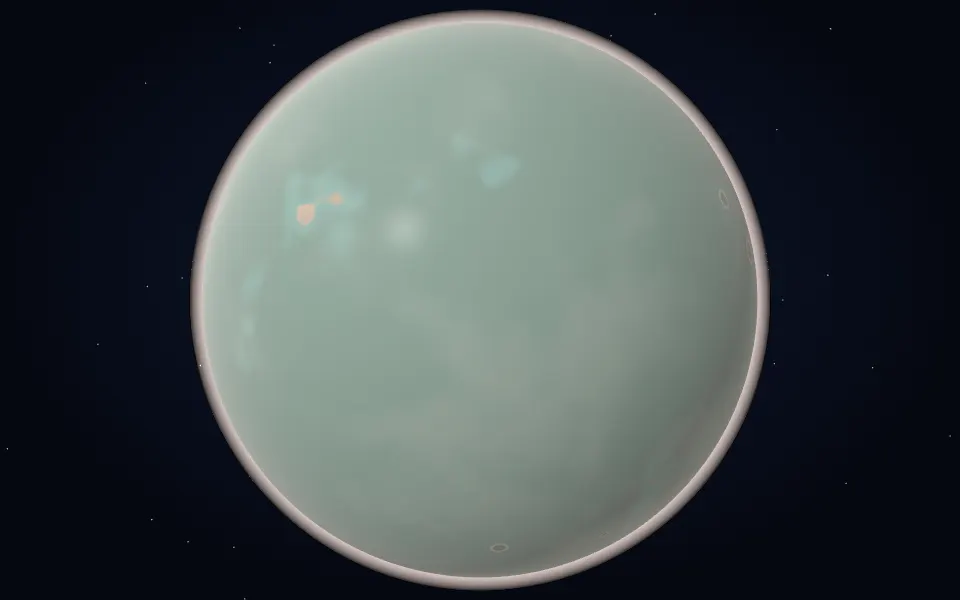 Spin it in 3D and move through time
No map of the land exists this far back: the globe is an illustration of what Earth was like.
Map: Ancient maps: PALEOMAP PaleoDEMs (Scotese & Wright 2018), CC BY 4.0.
Some of the oldest generally accepted signs of life are 3.48 billion years old: stromatolites, layered mounds built by mats of microbes, in the Dresser Formation of the Pilbara in Western Australia. Life was single-celled and lived in water.
Small continents were growing, with the oldest cores of Africa and Australia (the Kaapvaal and Pilbara cratons) already formed. The sky was probably tinted orange by a methane haze, the oceans greenish from dissolved iron, and a day lasted only about 12 to 13 hours.
The Sun was still about 25% fainter than today, yet Earth stayed warm thanks to greenhouse gases such as carbon dioxide and methane. The globe is an illustration of this world, not a reconstruction.
Events of the time
The first life
3.8 billion years ago · Deep-sea vents (position illustrative)
Life may have begun around hot springs on the sea floor, where minerals and energy were on hand. Its oldest generally accepted traces are about 3.5 billion years old.
Stromatolites
3.48 billion years ago · Pilbara, Western Australia (position illustrative)
Layered mounds built by mats of microbes, 3.48 billion years old: among the oldest accepted signs of life on Earth.
Part of the Origin of Life & Proterozoic Eon.