
Neoproterozoic Era · Ediacaran Period
Earth 600 Million Years Ago: After the Ice, Before the Animals Boom
Earth 600 million years ago in the Ediacaran: the Snowball Earths are over, oxygen is rising and the first large animals are about to appear.
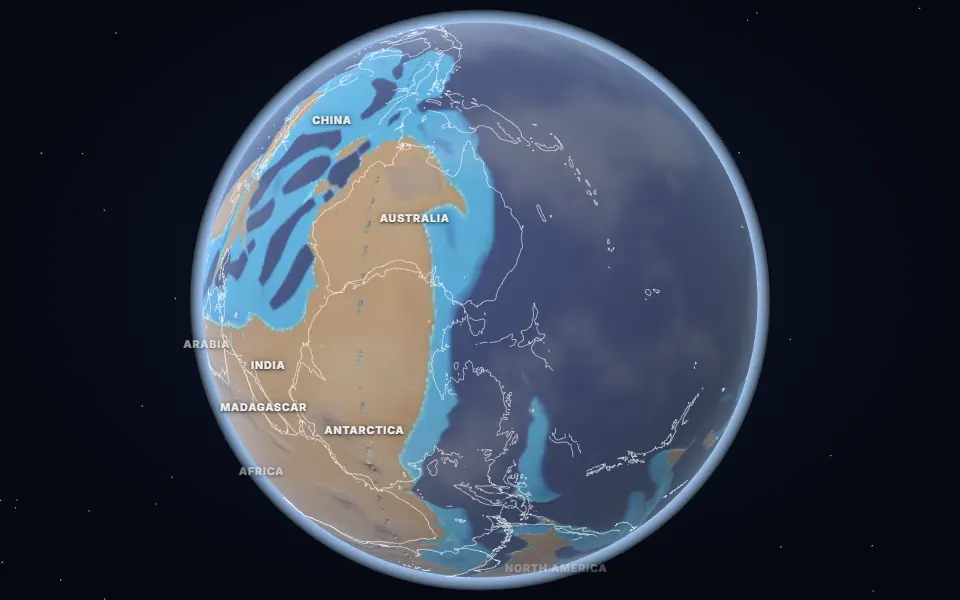 Spin it in 3D and move through time
Approximate: the continents of 540 million years ago, carried back to this time with the PALEOMAP plate model.
Map: Ancient maps: PALEOMAP PaleoDEMs (Scotese & Wright 2018), CC BY 4.0 · Natural Earth.
Six hundred million years ago the Snowball Earths were over and the Ediacaran Period had begun. Oxygen levels in the air and oceans were rising, a change many scientists link to the appearance of large animals.
Within a few tens of millions of years the Ediacaran biota appeared: soft-bodied creatures shaped like fronds, discs and quilts, such as Dickinsonia, found from Newfoundland to the Flinders Ranges of Australia. A shorter ice age, the Gaskiers glaciation, struck around 580 million years ago.
The pieces of Rodinia were drifting together again, towards Gondwana in the south. The globe shows the 540-million-year continents carried back by the PALEOMAP plate model, so their shapes are approximate.
Events of the time
Ediacara fossils
555 million years ago · Ediacara Hills, Australia
Imprints of soft-bodied animals such as Dickinsonia, now known to be an animal from the fats preserved in it.
Part of the Origin of Life & Proterozoic Eon.