Skip to content
YearMaps
4 states1450 CE – 1940 CE

Early Modern States of Scandinavia and the Baltic: Map & History

4 states of Scandinavia and the Baltic on one map, from 1450 CE to 1940 CE.The largest, House of Oldenburg, covered about 1,181,117 km²; the longest-lived, Denmark-Norway, lasted 1526 CE – 1940 CE. Each has its own section below with its rulers, capitals, wars and pictures where the records hold them.

Presumed portrait of Elizabeth of Denmark, Duchess of Brunswick-Wolfenbüttel (1573-1626), wife of Henry Julius, Duke of Brunswick-Lüneburg (1564-1613).
Circle of Robert Peake the elder · Public domain · Commons
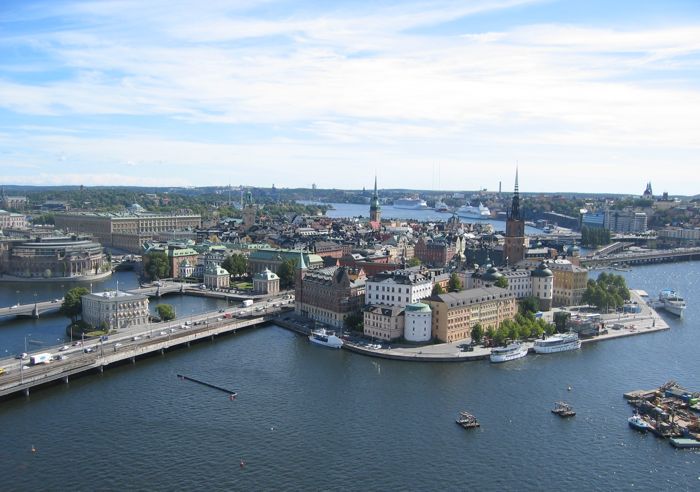
View of Gamla stan ("Old town") in Stockholm, and surroundings
JZ · CC BY-SA 3.0 · Commons
Aerial View of Jelgava. Academia Petrina, St. Simeon and Anna Orthodox Church (left), Catholic Church (right). Photo taken from air balloon.
Igors Jefimovs · CC BY 3.0 · Commons
Base map
1450 AD
1734 AD
1940 AD
1450 AD
1575 AD
1700 AD
1825 AD
1940 AD
Epochs:
↗
↗
↗
↗
↗
↗
↗
↗

Each state in its own colour. Move the timeline to see which existed in any year from 1450 AD to 1940; select a territory to read about it. Borders: Cliopatria / Seshat (CC BY 4.0).

The Early Modern States of Scandinavia and the Baltic Compared

StateYearsCapitalLargest extentRulers
House of Oldenburg1450 CE – 1458 CE–1,181,117 km²–
Denmark-Norway1526 CE – 1940 CECopenhagen634,295 km²5
Swedish Empire1612 CE – 1814 CEStockholm1,024,796 km²2
Duchy of Courland1734 CE – 1793 CEMitau28,201 km²2

Timeline of the Early Modern States of Scandinavia and the Baltic

When each state existed, 1450 CE to 1940 CE. Select a year to see the map then.

  1. House of Oldenburg
    1450 CE – 1458 CE
  2. Denmark-Norway
    1526 CE – 1940 CE
  3. Swedish Empire
    1612 CE – 1814 CE
  4. Duchy of Courland
    1734 CE – 1793 CE

The 4 States

House of Oldenburg

1450 CE – 1458 CE · 1,181,117 km²

The House of Oldenburg is a German dynasty whose members rule or have ruled in Denmark, Iceland, Greece, Norway, Russia, Sweden, the United Kingdom, Livonia, Schleswig, Holstein, and Oldenburg. The current kings of Norway and the United Kingdom are patrilineal descendants of the Glücksburg branch of this house. The dynasty rose to prominence when Count Christian of Oldenburg was elected King of Denmark in 1448, of Norway in 1450, and of Sweden in 1457. Elimar I, Count of Oldenburg is the earliest known direct male-line ancestor of King Haakon VIII and King Charles III.

From Wikipedia: House of Oldenburg (CC BY-SA 4.0)

Origins and Founding

Founder
Elimar I, Count of Oldenburg
Founded
1450 CE

Coins, Currency and Symbols

  • BlasonChristian Ier (1143-1167), comte d'Oldenbourg
    BlasonChristian Ier (1143-1167), comte d'Oldenbourg Unknown author · CC BY 3.0 · Commons

Denmark-Norway

1526 CE – 1940 CE · Capital: Copenhagen · 634,295 km²

Presumed portrait of Elizabeth of Denmark, Duchess of Brunswick-Wolfenbüttel (1573-1626), wife of Henry Julius, Duke of Brunswick-Lüneburg (1564-1613).
Presumed portrait of Elizabeth of Denmark, Duchess of Brunswick-Wolfenbüttel (1573-1626), wife of Henry Julius, Duke of Brunswick-Lüneburg (1564-1613). Circle of Robert Peake the elder · Public domain · Commons

Denmark–Norway was a 16th-to-19th-century multi-national and multi-lingual real union consisting of the Kingdom of Denmark, the Kingdom of Norway (including the then Norwegian overseas possessions: the Faroe Islands, Iceland, Greenland, and other possessions), the Duchy of Schleswig, and the Duchy of Holstein. The state also claimed sovereignty over three historical peoples: Frisians, Gutes and Wends. Denmark–Norway had several colonies, namely the Danish Gold Coast, Danish India (the Nicobar Islands, Serampore, Tharangambadi), and the Danish West Indies.

From Wikipedia: Denmark–Norway (CC BY-SA 4.0)

Origins and Founding

The three kingdoms of Denmark, Norway and Sweden united in the Kalmar Union in 1397. Sweden broke out of this union and re-entered it several times, until 1521, when Sweden finally left the Union, leaving Denmark–Norway (including overseas possessions in the North Atlantic and the island of Saaremaa in modern Estonia). During the Count's Feud, where the Danish crown was contested between Protestant Oldenburg King Christian III and Catholic King Christian II, the relatively Catholic realm of Norway also wished to leave the union in the 1530s, but was unable to do so due to Denmark's superior military might. Following this, King Christian III completely united the two kingdoms to reduce the chances of further uprisings, and made Lutheranism the state religion in both kingdoms.

From Wikipedia: Denmark–Norway · History: Origins of the Union (CC BY-SA 4.0)

Founded
1526 CE
Preceded by
Kalmar Union

Capitals

Montage with various landmarks of Oslo, the capital of Norway.
Montage with various landmarks of Oslo, the capital of Norway. Jonipoon · CC BY-SA 3.0 · Commons
Copenhagen
Capital

Rulers

Government, Society and Religion

Government
Denmark: Elective monarchy (1537–1660), Hereditary absolute monarchy (1660–1814), Norway: Hereditary monarchy (de jure 1537–1814, de facto 1537–1661), Hereditary absolute monarchy (de facto 1661–1814)
Languages
Norwegian, Icelandic, Faroese, Sámi languages, Kven, North Frisian
Religion
Lutheran

Coins, Currency and Symbols

Currency
Danish rigsdaler, (1625–1814), Norwegian rigsdaler, (1625–1814)
  • Flag of Denmark
    Flag of Denmark Madden and others · Public domain · Commons
  • Royal Arms of Denmark & Norway (1699–1819)
    Royal Arms of Denmark & Norway (1699–1819) TRAJAN 117 This W3C-unspecified vector image was created with Inkscape . · CC BY-SA 3.0 · Commons

Wars and Battles

Christian III, who had relied on Swedish aid in the Count's Feud, kept peaceful relations with Sweden throughout his reign. However, Frederick II was quite hostile towards the Swedes.

Read more

Another major factor in the war were Sweden's goals in Livonia. Both Denmark–Norway and Sweden, along with Russia, sought to control the previously Hanseatic region, as it was extremely important in controlling the Baltic Sea. When Denmark purchased Osel, Duke Magnus, brother of King Frederick II was granted control of the island. Magnus attempted to claim himself King of Estonia, but he was kicked out by the Russian army. The Estonians, who were fearful of the Russians, contacted King Eric XIV of Sweden for protection. Sweden then annexed Estonia, securing the region under their rule.

From Wikipedia: Denmark–Norway · History: Northern Seven Years' War (CC BY-SA 4.0)

Achievements and Monuments

Protestantism had been a religious movement in Denmark ever since the reign of Christian II. Though the country remained Catholic during the reign of Frederick I, and in Norway it was not a big movement at that time. But the victory in the Count's Feud secured Denmark under the Protestant King Christian III, and in 1537 he also secured Norway, creating the union between the two kingdoms.

Read more

In the following years, Denmark–Norway was among the countries to follow Martin Luther after the Protestant Reformation, and thus established Lutheran Protestantism as official religion in place of Roman Catholicism. Lutheran Protestantism prevailed through the union's life span. The Church of Denmark and the Church of Norway was founded during this time as well. The introduction of Lutheranism in Denmark–Norway was also a political move.

From Wikipedia: Denmark–Norway · Culture: Religion (CC BY-SA 4.0)

Decline and Fall

Denmark–Norway was defeated and King Frederick VI had to cede the Kingdom of Norway to the King Charles XIII of Sweden 14 January 1814 at the Treaty of Kiel, but Norway's overseas possessions were kept by Denmark. The Norwegians objected to the terms of this treaty, and a constitutional assembly declared Norwegian independence on 17 May 1814 and elected the Crown Prince Christian Frederik as king of independent Norway. Following a Swedish invasion, Norway was forced to accept a personal union between Sweden and Norway, but retained its liberal constitution and separate institutions, except for the foreign service. The union was dissolved in 1905.

From Wikipedia: Denmark–Norway · History: The end of the Union (CC BY-SA 4.0)

Ended
1940 CE

Legacy in the Modern World

Although the Dano–Norwegian union was generally viewed favourably in Denmark and Norway at the time of its dissolution in 1814, some 19th-century Norwegian writers disparaged the union as a "400-year night". Some modern historians describe the idea of a "400-year night" as a myth that was created as a rhetorical device in the struggle against the Swedish–Norwegian union, inspired by 19th-century national-romanticist ideas.

Read more

Since the late 19th century the Danish–Norwegian union was increasingly viewed in a more nuanced and favourable light in Norway with a stronger focus on empirical research, and historians have highlighted that the Norwegian economy thrived and that Norway was one of the world's wealthiest countries during the entire period of union with Denmark.

From Wikipedia: Denmark–Norway · Legacy (CC BY-SA 4.0)

Swedish Empire

1612 CE – 1814 CE · Capital: Stockholm · 1,024,796 km²

View of Gamla stan ("Old town") in Stockholm, and surroundings
View of Gamla stan ("Old town") in Stockholm, and surroundings JZ · CC BY-SA 3.0 · Commons

The Swedish Empire, referred to in Sweden as the Great Power Era (Swedish: stormaktstiden), was the period in Swedish history spanning much of the 17th and early 18th centuries during which Sweden was a European great power that exercised territorial control over much of the Baltic region. During this period, it also held territories on the North Sea including overseas colonies, such as New Sweden. The beginning of the period is usually taken as the reign of Gustavus Adolphus, who ascended the throne in 1611, and its end as the loss of territories in 1721 following the Great Northern War.

From Wikipedia: Swedish Empire (CC BY-SA 4.0)

Origins and Founding

Sweden emerged as a great European power under Axel Oxenstierna and King Gustavus Adolphus. As a result of acquiring territories seized from Russia and the Polish–Lithuanian Commonwealth, as well as its involvement in the Thirty Years' War, Sweden found itself transformed into the leader of Protestantism.

Read more

Sweden's rise was supported by a rapidly expanding metals economy. By the early seventeenth century, Sweden had become northern Europe's leading exporter of iron and copper; together the two metals accounted for nearly 63% of national exports in 1637 and more than 80% in 1685. Under Gustavus Adolphus, the Crown also exploited the Stora Kopparberg copper mine at Falun, then the largest copper mine in Europe, using its revenues to help finance the king's political and military ambitions.

From Wikipedia: Swedish Empire · History: Emergence as a great power (CC BY-SA 4.0)

Founded
1612 CE

Rulers

  • Gustavus Adolphus
  • Christina

Government, Society and Religion

Government
Absolute monarchy (1680–1719), Parliamentary constitutional monarchy (1611–1680; 1719–1721)
Languages
Swedish
Religion
Church of Sweden (official)

Coins, Currency and Symbols

Coin token, nominally 1 daler silvermynt 1719 (hoppet). A Swedish copper coin.
Coin token, nominally 1 daler silvermynt 1719 (hoppet). A Swedish copper coin. Daniel78 · CC BY-SA 2.5 · Commons
Currency
Swedish riksdaler
  • Flag of Sweden (1562–1650)
    Flag of Sweden (1562–1650) Original: Odengatan Vector: Kjoonlee · Public domain · Commons
  • Arms of the House of Vasa
    Arms of the House of Vasa Armoiries_rois_Vasa_de_Suède.svg: derivative work: Fry1989 (talk) 20:04, 14 February 2011 (UTC) · CC BY-SA 3.0 · Commons

Wars and Battles

A major reason why Sweden could be so successful in wars with such a scarce number of soldiers was its advanced military tactics. Sweden was able to reform its military tactics continuously throughout the period. Prior to Gustavus Adolphus's reforms, both his father, Charles IX, and his uncle Erik XIV had tried to reform the army but had effectively failed to do so. Charles IX, like most other rulers, had tried to implement the Dutch system into the army but with limited success. The lack of a strict organisation in the infantry caused the proportion of pikemen to musketeers to be far lower than the preferred ratio of 1 to 1. This, combined with the lack of funds to provide the soldiers with armour, caused the Swedish infantry to be dangerously lightly equipped and unable to deal with cavalry or heavier infantry in open terrain.

From Wikipedia: Swedish Empire · Military history (CC BY-SA 4.0)

Decline and Fall

Ended
1814 CE
Succeeded by
Age of Liberty

Duchy of Courland

1734 CE – 1793 CE · Capital: Mitau · 28,201 km²

Aerial View of Jelgava. Academia Petrina, St. Simeon and Anna Orthodox Church (left), Catholic Church (right). Photo taken from air balloon.
Aerial View of Jelgava. Academia Petrina, St. Simeon and Anna Orthodox Church (left), Catholic Church (right). Photo taken from air balloon. Igors Jefimovs · CC BY 3.0 · Commons

The Duchy of Courland and Semigallia was a duchy in the Baltic region, then known as Livonia, that existed from 1561 to 1569 as a nominal vassal state of the Grand Duchy of Lithuania and subsequently made part of the Crown of the Polish Kingdom from 1569 to 1726 and incorporated into the Polish–Lithuanian Commonwealth in 1726. On 24 October 1795, it was annexed by the Russian Empire in the Third Partition of Poland.

From Wikipedia: Duchy of Courland and Semigallia (CC BY-SA 4.0)

Origins and Founding

Founded
1734 CE
Preceded by
Terra Mariana

Rulers

  • Gotthard Kettler (first)
  • Peter von Biron (last)

Government, Society and Religion

Government
Monarchy
Languages
Official: German, hidden
Religion
Lutheran, Roman Catholic

Coins, Currency and Symbols

1 Riksdaler Specie 1845, 2
1 Riksdaler Specie 1845, 2 Agria · CC BY-SA 3.0 · Commons
Currency
thaler
  • Flag of Courland (state)
    Flag of Courland (state) Sir Iain · Public domain · Commons
  • Wapen hertogen van Koerland Kettler groot
    Wapen hertogen van Koerland Kettler groot A.Buks, SVG is Own work · CC0 · Commons

Wars and Battles

Early Modern States of Scandinavia and the Baltic: Frequently Asked Questions

Which states existed in Scandinavia and the Baltic in this period?

This page maps 4 states of Scandinavia and the Baltic founded between 1450 CE and 1734 CE: House of Oldenburg, Denmark-Norway, Swedish Empire, Duchy of Courland.

Which was the largest of the Early Modern States of Scandinavia and the Baltic?

House of Oldenburg had the largest mapped extent, about 1,181,117 km².

Which of the Early Modern States of Scandinavia and the Baltic lasted longest?

Denmark-Norway lasted longest, 1526 CE – 1940 CE.

Sources

  • Reading text: Wikipedia articles on the group and each state, condensed (CC BY-SA 4.0).
  • Facts, rulers and wars: Wikidata (CC0).
  • Borders: Cliopatria, Seshat Global History Databank (CC BY 4.0).
  • Pictures: Wikimedia Commons; the author and licence are under each picture.

Largest state by mapped extent: House of Oldenburg.