

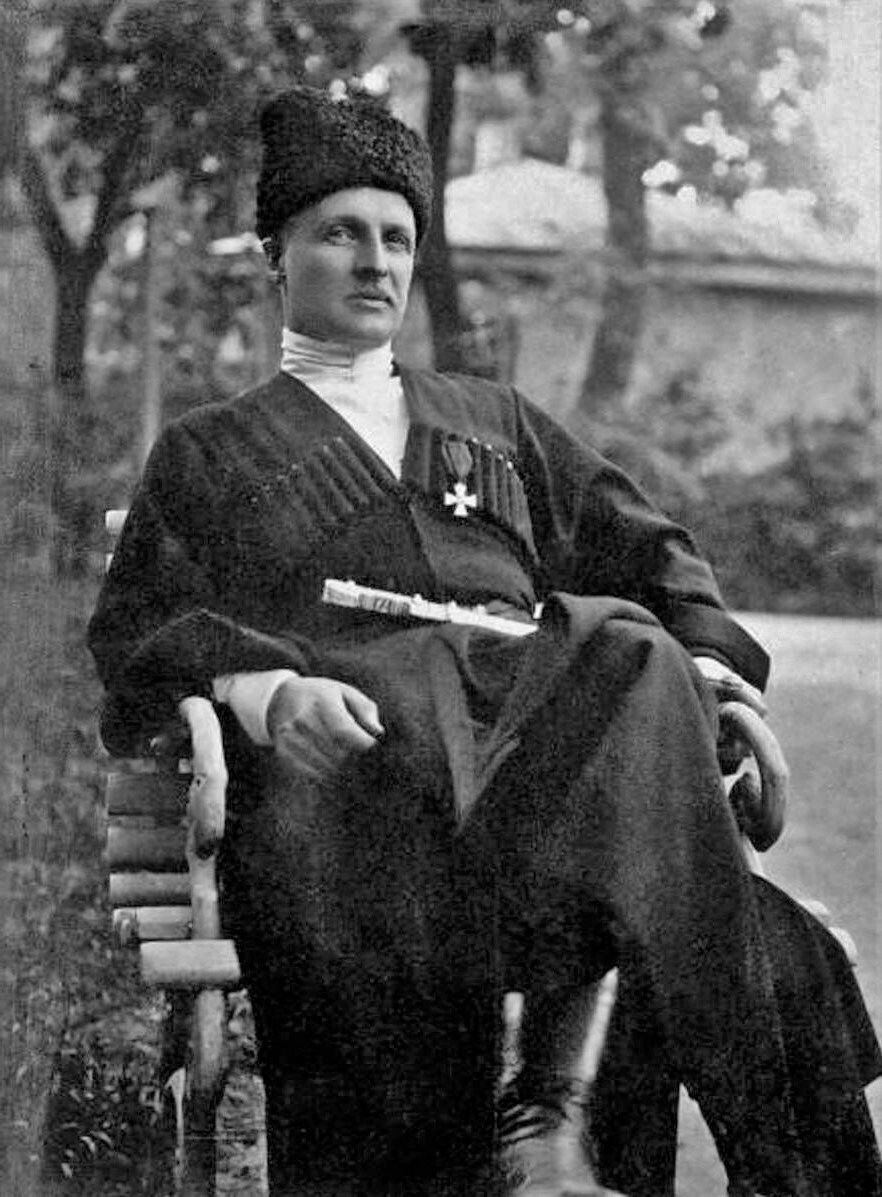

Caucasian Imamate
1828 CE – 1858 CE · Capital: Gimry, (Under Ghazi Muhammad), Gotsatl, Khunzakh, (Under Hamzat Bek), Ashilta, Akhulgo, Dargo, Vedeno, (Under Imam Shamil) · 38,173 km²

The Caucasian Imamate, also known as the North Caucasian Imamate (Arabic: إمامة شمال القوقاز, romanized: Imāmat Shamal al-Qawqāz), was a state founded by Muslim imams in the early-to-mid 19th century across Dagestan and Chechnya. After uniting Chechen and Avar tribes It emerged during the Caucasian War (1817–1864) as a resistance movement against the Russian Empire's expansion into the region.
From Wikipedia: Caucasian Imamate (CC BY-SA 4.0)
Origins and Founding
The Northeast Caucasus historically comprised numerous states. Caucasian Albania, centered in southern Dagestan, existed as a vassal state under the Parthian and later Sasanian Empires for much of its history. In the Early Middle Ages, the Turkic Khazars conquered the region. Following the Muslim conquest of Persia in the 7th century, the region's majority adopted Islam, mirroring their Persian overlords. Arab travelers played a pivotal role in spreading the religion, and their eventual withdrawal led to the emergence of Islamic polities such as Lezghia (centered in Derbent, a hub of Islamic scholarship) and Lakia (based in Kumukh, a rival scholarly center), alongside smaller neighboring entities. In ethnically diverse southern and southeastern Dagestan, where intercommunal tensions were common, Islam served as a unifying force, with clerics often mediating disputes.
From Wikipedia: Caucasian Imamate · Background (CC BY-SA 4.0)
- Founded
- 1828 CE
Capitals

Rulers
- Ghazi Muhammad
- Hamzat Bek
Government, Society and Religion
Imam Ghazi Muhammad (1828–1832), the founding leader, established the Imamate's governance structure.
Read more
Imam Hamzat Bek (1832–1834) succeeded Ghazi Muhammad but was assassinated in 1834 by a faction that included the defector Hadji Murad, a former ally.
Imam Shamil (1834–1859), the longest-reigning and most influential leader, oversaw the Imamate's territorial peak, extending its authority across the Muslim-majority regions of the North Caucasus.
The Imamate's governance was centrally focused on military and religious objectives, shaped by its perpetual state of war with the Russian Empire. Political decisions revolved around advancing Islamic law (sharia) and coordinating resistance during the Caucasian War (1817–1864).
From Wikipedia: Caucasian Imamate · Politics (CC BY-SA 4.0)
- Government
- divan
- Languages
- Arabic[1], Chechen, Avar and Kumyk[2], Northeast Caucasian languages[3], Northwest Caucasian languages
- Religion
- Sunni Islam
Coins, Currency and Symbols

Thirdimamateflag Thirdimamateflag.gif: Mikewazhere derivative work: Hydrox (talk) · Public domain · Commons
Wars and Battles
The Caucasian Imamate initially achieved significant victories against the Russian Empire, though early Russian military efforts were limited. Following its triumph over Napoleon in 1812, Russia initially dismissed the North Caucasian resistance as a minor "Asiatic" conflict. However, escalating Imamate successes prompted a full-scale Russian counteroffensive. In 1832, Imam Shamil and Ghazi Muhammad launched an unsuccessful attack on Vladikavkaz, a Russian fort whose name derived from Russian: влад-, romanized: vlad-, lit. 'rule' + Russian: Кавказ, romanized: Kavkaz, lit. 'Caucasus', lit. 'to rule the Caucasus'.
Read more
In response, Russian General Aleksei Aleksandrovich Velyaminov besieged Gimry, the Imamate's de facto capital, in October 1832. The battle resulted in the town's capture, Ghazi Muhammad's death, and Shamil's narrow escape. Presumed dead, Shamil retreated into hiding.
From Wikipedia: Caucasian Imamate · The war and the surrender of the Imamate (CC BY-SA 4.0)


