Skip to content
YearMaps
11 states1806 CE – 2024 CE

Modern States of Central Europe: Map & History

11 states of Central Europe on one map, from 1806 CE to 2024 CE.The largest, Austria-Hungary, covered about 931,840 km²; the longest-lived, Free City of Danzig, lasted 1809 CE – 1939 CE. Each has its own section below with its rulers, capitals, wars and pictures where the records hold them.

German: Kaiser Franz I. (II.) (1768-1835) von Österreich im österreichischen Kaiserornat Emperor Francis I. of Austria (1768-1835) wearing the Austrians imperial robeslabel QS:Les,"Francisco I de Austria en traje de…
Friedrich von Amerling · Public domain · Commons
Castle Square, Warsaw
Rhododendrites · CC BY-SA 4.0 · Commons
Dlugie Pobrzeze St., Gdansk, Poland Żuraw: This is a photo of an object of cultural heritage inscribed in the registry of the Pomeranian Voivodeship with number A-132 z 18.12.1959.
Diego Delso · CC BY-SA 3.0 · Commons
Marketplace in Meiningen, Germany, 2011.
Kramer96 · CC BY 3.0 · Commons
Base map
1806 AD
1830 AD
2024 AD
1806 AD
1850 AD
1925 AD
1975 AD
2024 AD
Epochs:
↗
↗
↗
↗
↗
↗
↗
↗

Each state in its own colour. Move the timeline to see which existed in any year from 1806 to 2024; select a territory to read about it. Borders: Cliopatria / Seshat (CC BY 4.0).

The Modern States of Central Europe Compared

StateYearsCapitalLargest extentRulers
Austrian Empire1806 CE – 1867 CEVienna810,554 km²3
Duchy of Warsaw1809 CE – 1813 CEWarsaw, Toruń (de facto, April – May 1809)147,014 km²1
Free City of Danzig1809 CE – 1939 CEDanzig4,912 km²2
Saxe-Meiningen1820 CE – 1870 CEMeiningen3,294 km²1
Poles1830 CE – 1833 CE–113,460 km²–
Hungarian Nationalists1849 CE – 1957 CEVienna271,818 km²2
Austria-Hungary1868 CE – 1918 CEVienna931,840 km²2
Czechoslovakia1919 CE – 1991 CEPrague145,016 km²9
Second Polish Republic1919 CE – 1939 CEWarsaw374,080 km²2
Hungarian People's Republic1950 CE – 1989 CEBudapest92,074 km²6
Slovakia1992 CE – 2024 CEBratislava49,241 km²8

Timeline of the Modern States of Central Europe

When each state existed, 1806 CE to 2024 CE. Select a year to see the map then.

  1. Austrian Empire
    1806 CE – 1867 CE
  2. Duchy of Warsaw
    1809 CE – 1813 CE
  3. Free City of Danzig
    1809 CE – 1939 CE
  4. Saxe-Meiningen
    1820 CE – 1870 CE
  5. Poles
    1830 CE – 1833 CE
  6. Hungarian Nationalists
    1849 CE – 1957 CE
  7. Austria-Hungary
    1868 CE – 1918 CE
  8. Czechoslovakia
    1919 CE – 1991 CE
  9. Second Polish Republic
    1919 CE – 1939 CE
  10. Hungarian People's Republic
    1950 CE – 1989 CE
  11. Slovakia
    1992 CE – 2024 CE

The 11 States

Austrian Empire

1806 CE – 1867 CE · Capital: Vienna · 810,554 km²

German: Kaiser Franz I. (II.) (1768-1835) von Österreich im österreichischen Kaiserornat Emperor Francis I. of Austria (1768-1835) wearing the Austrians imperial robeslabel QS:Les,"Francisco I de Austria en traje de…
German: Kaiser Franz I. (II.) (1768-1835) von Österreich im österreichischen Kaiserornat Emperor Francis I. of Austria (1768-1835) wearing the Austrians imperial robeslabel QS:Les,"Francisco I de Austria en traje de… Friedrich von Amerling · Public domain · Commons

The Austrian Empire, officially known as the Empire of Austria, was a multinational European great power from 1804 to 1867, created by proclamation out of the realms of the Habsburgs. During its existence, it was the third most populous nation in Europe after the Russian Empire and the United Kingdom, while geographically, it was the third-largest empire in Europe after the Russian Empire and the First French Empire. The empire was proclaimed by Francis II in 1804 in response to Napoleon's declaration of the First French Empire, unifying all Habsburg possessions under one central government.

From Wikipedia: Austrian Empire (CC BY-SA 4.0)

Origins and Founding

Changes shaping the nature of the Holy Roman Empire took place during conferences in Rastatt (1797–1799) and Regensburg (1801–1803). On 24 March 1803, the Imperial Recess (German: Reichsdeputationshauptschluss) was declared, which reduced the number of ecclesiastical states from 81 to only 3 and the free imperial cities from 51 to 6. This measure was aimed at replacing the old constitution of the Holy Roman Empire, but the actual consequence of the Imperial Recess, along with the French occupying the Electorate of Hanover in the same month and various Holy Roman states becoming allied with or against France, was the end of the empire. Taking this significant change into consideration, Holy Roman Emperor Francis II created the title Emperor of Austria for himself and his successors, thereby becoming Francis I of Austria.

From Wikipedia: Austrian Empire · History: Foundation (CC BY-SA 4.0)

Founded
1806 CE

Rulers

Government, Society and Religion

The Austrian Empire was multi-national and multi-ethnic, with Germans, Hungarians (constituent in the Kingdom of Hungary), Slavs (Czechs, Poles, Ruthenians, Croats, Slovaks, Serbs, Slovenes) and Romanians, with smaller numbers of other ethnic groups. According to Dr. Becher's statistics, the population number was 36,950,401 in 1840. An estimation made in 1842 gives 35,500,000. Slavs made up an estimated 16 million, roughly 12 million north of the Danube and 4 million south of it. Germans made up an estimated 6,5 million, of which 3 million in Upper and Lower Austria, Tyrol and one-half of Styra, and the rest scattered in the other provinces. The Hungarians made up an estimated 5,5 million. Italians made up an estimated 4,6 million, in Lombardy, Venice, south Tyrol, and south Illyria. Wallachians made up an estimated 1,560,000 in Hungary and Transylvania.

From Wikipedia: Austrian Empire · Demographics (CC BY-SA 4.0)

Government
Absolute monarchy (1804–1861), Constitutional monarchy (1861–1867)
Languages
German, Hungarian, Czech, Slovak, Polish, Ruthenian, Slovene, Croatian, Serbian, Romanian, Istro-Romanian, Lombard, Venetian, Istriot, Friulian, Ladin, Italian, Ukrainian, Yiddish
Religion
Majority: Roman Catholic (official), Minorities: Lutheranism, Calvinist, Eastern Orthodox, Eastern Catholic, Judaism

Economy and Trade

The war drained the Austrian economy. The Austrian foreign trade was one-third of that of France and one-fifth of Great Britain based on 1823–37 numbers. Direct tax netto was 47,159,168 of which 37,599,496 were land-tax (1842).

From Wikipedia: Austrian Empire · Economy (CC BY-SA 4.0)

Coins, Currency and Symbols

1 Riksdaler Specie 1845, 2
1 Riksdaler Specie 1845, 2 Agria · CC BY-SA 3.0 · Commons
Currency
thaler
  • Flag of the Habsburg Monarchy
    Flag of the Habsburg Monarchy ThrashedParanoid and Peregrine981. · Public domain · Commons
  • Imperial Coat of Arms of the Empire of Austria (1815)
    Imperial Coat of Arms of the Empire of Austria (1815) Sodacan · CC BY-SA 3.0 · Commons

Wars and Battles

Achievements and Monuments

Decline and Fall

Ended
1867 CE
Last recorded ruler
Franz Joseph I of Austria
Succeeded by
Austria–Hungary
Succeeded by
Kingdom of Italy

Duchy of Warsaw

1809 CE – 1813 CE · Capital: Warsaw, Toruń (de facto, April – May 1809) · 147,014 km²

Castle Square, Warsaw
Castle Square, Warsaw Rhododendrites · CC BY-SA 4.0 · Commons

The Duchy of Warsaw (Polish: Księstwo Warszawskie; French: Duché de Varsovie; German: Herzogtum Warschau) was a Polish French client state established by Emperor Napoleon Bonaparte in 1807, during the Napoleonic Wars. It initially consisted of ethnically Polish lands ceded to France by Prussia under the terms of the Treaties of Tilsit, and was augmented in 1809 with territory ceded by Austria in the Treaty of Schönbrunn. It was the first attempt to re-establish Poland as a sovereign state after the 18th century partitions and covered the central and southeastern parts of present-day Poland.

From Wikipedia: Duchy of Warsaw (CC BY-SA 4.0)

Rulers

  • Frederick Augustus I

Government, Society and Religion

The heavy drain on its resources by forced military recruitment, combined with a drop in exports of grain, caused significant problems for the duchy's economy. To make matters worse, in 1808 the French Empire imposed on the duchy an agreement at Bayonne to buy from France the debts owed to it by Prussia. The debt, amounting to more than 43 million francs in gold, was bought at a discounted rate of 21 million francs.

Read more

Although the duchy made its payments in installments to France over a four-year period, Prussia was unable to pay it (due to a very large indemnity it owed to France), causing the Polish economy to suffer heavily. Indeed, to this day the phrase "sum of Bayonne" is a synonym in Polish for a huge amount of money. All these problems resulted in both inflation and over-taxation.

From Wikipedia: Duchy of Warsaw · Government and politics: Economy (CC BY-SA 4.0)

Government
Parliamentary monarchy
Languages
Polish, French, German, Yiddish, Lithuanian, Belarusian, Baltic Romani
Religion
Catholicism, Eastern Orthodoxy, Judaism

Coins, Currency and Symbols

Currency
Złoty
  • Grand Coat of Arms of Duchy of Warsaw
    Grand Coat of Arms of Duchy of Warsaw Avalokitesvara This W3C-unspecified vector image was created with Inkscape . using by Sodacan and unpublished Orders and Postument created by Steifer · CC BY-SA 3.0 · Commons

Wars and Battles

As a result of Napoleon's campaign in 1812 against Russia, the Poles expected that the duchy would be upgraded to the status of a kingdom and that during Napoleon's invasion of Russia, they would be joined by the liberated territories of the Grand Duchy of Lithuania, Poland's historic partner in the Polish–Lithuanian Commonwealth. On 28 June, the Sejm formed the General Confederation of the Kingdom of Poland, establishing a system of government similar to the former commonwealth with the hope of reclaiming the partitioned territories. However, Napoleon did not want to make a permanent decision that would tie his hands before his anticipated peace settlement with Russia, and did not recognize the confederation. Nevertheless, he proclaimed the attack on Russia as a second Polish war and allowed the Lithuanian Provisional Governing Commission to fall under Polish influence.

From Wikipedia: Duchy of Warsaw · History: Napoleon's campaign against Russia (CC BY-SA 4.0)

Decline and Fall

Although many European states and ex-rulers were represented at the Congress of Vienna in 1815, the decision-making was largely in the hands of the major powers. It was perhaps inevitable, therefore, that both Prussia and Russia would effectively partition Poland between them; Austria was to more or less retain its gains of the First Partition of 1772.

Read more

Russia sought all territories of the Duchy of Warsaw. It kept all its gains from the three previous partitions, together with Białystok and the surrounding territory that it had obtained in 1807. Its demands for the whole Duchy of Warsaw were denied by other European powers.

Prussia regained some of the territory it had lost to the Duchy of Warsaw in 1807: a portion of what it had conquered in the Second Partition.

From Wikipedia: Duchy of Warsaw · History: The Congress of Vienna and the Fourth Partition (CC BY-SA 4.0)

Ended
1813 CE

Legacy in the Modern World

Superficially, the Duchy of Warsaw was just one of the various states set up during Napoleon's dominance over Eastern and Central Europe, lasting only a few years and passing with his fall. However, its establishment a little over a decade after the Second and Third Partitions, that had appeared to wipe Poland off the map, meant that Poles had their hopes rekindled of a resurrected Polish state. Even with Napoleon's defeat, a Polish state continued in some form until the increasingly autocratic Russian state eliminated Poland once again as a separate entity. Altogether, this meant that an identifiable Polish state was in existence for at least a quarter of a century.

Read more

At the 200th anniversary of the creation of this iteration of the Polish state, numerous commemorative events dedicated to that event were held in the Polish capital of Warsaw.

From Wikipedia: Duchy of Warsaw · Legacy (CC BY-SA 4.0)

Free City of Danzig

1809 CE – 1939 CE · Capital: Danzig · 4,912 km²

Dlugie Pobrzeze St., Gdansk, Poland Żuraw: This is a photo of an object of cultural heritage inscribed in the registry of the Pomeranian Voivodeship with number A-132 z 18.12.1959.
Dlugie Pobrzeze St., Gdansk, Poland Żuraw: This is a photo of an object of cultural heritage inscribed in the registry of the Pomeranian Voivodeship with number A-132 z 18.12.1959. Diego Delso · CC BY-SA 3.0 · Commons

The Free City of Danzig (German: Freie Stadt Danzig; Polish: Wolne Miasto Gdańsk) was a city-state under the protection and oversight of the League of Nations between 1920 and 1939, consisting of the Baltic Sea port of Danzig (now Gdańsk, Poland) and nearly 200 other small localities in the surrounding areas. The country was established on 15 November 1920, per the terms of Article 100 (Section XI of Part III) of the 1919 Treaty of Versailles, following the end of World War I.

From Wikipedia: Free City of Danzig (CC BY-SA 4.0)

Origins and Founding

Danzig had an early history of independence. It was a leading player in the Prussian Confederation, which was directed against the Monastic State of the Teutonic Knights. The Confederation stipulated with the Polish king, Casimir IV Jagiellon, that the Polish Crown would be invested as head of state of the western parts of Prussia (Royal Prussia). In contrast, Ducal Prussia remained a Polish fief. Danzig and other cities, such as Elbing and Thorn, financed most of the warfare and enjoyed high city autonomy.

Read more

In 1569, when Royal Prussia's estates agreed to incorporate the region into the Polish–Lithuanian Commonwealth, the city insisted on preserving its special status. It defended itself through the Siege of Danzig in 1577 to protect its special privileges. Subsequently, it insisted on negotiating by sending emissaries directly to the Polish king.

From Wikipedia: Free City of Danzig · Establishment: Periods of independence and autonomy (CC BY-SA 4.0)

Founded
1809 CE
Preceded by
Weimar Republic
Preceded by
West Prussia

Rulers

  • Reginald Tower
  • C. J. Burckhardt

Government, Society and Religion

The German policy openly changed immediately after the Munich Conference in October 1938, when German Minister of Foreign Affairs Joachim von Ribbentrop demanded the incorporation of the Free City into the Reich. The Polish ambassador to Germany, Józef Lipski, declined Ribbentrop's offer, saying that Polish public opinion would not tolerate the Free City joining Germany and predicated that if Warsaw allowed that to happen, then the Sanation military dictatorship that had ruled Poland since 1926 would be overthrown. Ernst von Weizsäcker on 29 March 1939 told the Danzig government the Reich would carry out a policy to the Zermürbungspolitik (point of destruction) towards Poland, saying a compromise solution was not wanted, and on 5 April 1939 told Hans-Adolf von Moltke under no conditions was he to negotiate with the Poles.

From Wikipedia: Free City of Danzig · Politics: Danzig crisis (CC BY-SA 4.0)

Government
Republic
Languages
Official: German, hidden
Religion
Lutheranism

Coins, Currency and Symbols

20 guldens of the w:Free City of Danzig
20 guldens of the w:Free City of Danzig AnonymousUnknown author · Public domain · Commons
Currency
Danzig gulden, Papiermark
  • Flag of the Free City of Danzig
    Flag of the Free City of Danzig Mnmazur · Public domain · Commons
  • Wappen Freie Stadt Danzig
    Wappen Freie Stadt Danzig Fornax · Public domain · Commons

Wars and Battles

On 1 September 1939, the day of the German invasion of the Free City of Danzig, Forster signed a law declaring the Free City to be incorporated into Germany. On the same day, Hitler signed a law declaring the law signed by Forster to be German law and the Free City of Danzig was officially incorporated into Germany.

Read more

Danzig served as a key arrival port in the Nazi-organised resettlement of Baltic Germans under the Heim ins Reich program, where ethnic German evacuees were ceremonially received as part of the regime's propagandised "homecoming" to the Reich.

Up to 4,500 members of the Polish minority were arrested with many of them executed. In the city itself hundreds of Polish prisoners were subjected to cruel executions and experiments, which included castration of men and sterilization of women considered dangerous to the "purity of Nordic race" and beheading by guillotine.

From Wikipedia: Free City of Danzig · World War II and aftermath (CC BY-SA 4.0)

Decline and Fall

Ended
1939 CE
Succeeded by
Nazi Germany

Saxe-Meiningen

1820 CE – 1870 CE · Capital: Meiningen · 3,294 km²

Marketplace in Meiningen, Germany, 2011.
Marketplace in Meiningen, Germany, 2011. Kramer96 · CC BY 3.0 · Commons

Saxe-Meiningen (SAKS MY-ning-ən; German: Sachsen-Meiningen [ˌzaksn̩ ˈmaɪnɪŋən]) was one of the Saxon duchies held by the Ernestine line of the House of Wettin, located in the southwest of the present-day German state of Thuringia. Established in 1681, by partition of the Ernestine Duchy of Saxe-Gotha among the seven sons of deceased Duke Ernest the Pious, the Saxe-Meiningen line of the House of Wettin lasted until the end of the German monarchies in 1918.

From Wikipedia: Saxe-Meiningen (CC BY-SA 4.0)

Rulers

Government, Society and Religion

Government
Duchy (1680–1918), Republic (1918–1920)
Languages
German

Coins, Currency and Symbols

  • Flagge Herzogtum Sachsen-Coburg-Gotha (1826-1911)
    Flagge Herzogtum Sachsen-Coburg-Gotha (1826-1911) David Liuzzo · Public domain · Commons
  • Coat of Arms of the Duchy of Saxe-Meiningen-Hildburghausen
    Coat of Arms of the Duchy of Saxe-Meiningen-Hildburghausen Glasshouse, using elements of Sodacan, Trondivers and Avalokitesvara · CC BY-SA 4.0 · Commons

Decline and Fall

In the German Revolution after World War I, Duke Bernhard III, brother-in-law of Emperor Wilhelm II, was forced to abdicate and his brother Ernst on 11/12 November 1918 refused the succession. The succeeding Free State of Saxe-Meiningen became part of the new state of Thuringia on 1 May 1920.

From Wikipedia: Saxe-Meiningen · History: End of the Duchy (CC BY-SA 4.0)

Ended
1870 CE

Poles

1830 CE – 1833 CE · 113,460 km²

35 Notable Poles
35 Notable Poles Various (See source images for details) · CC BY-SA 4.0 · Commons

Polish people, or Poles, are a West Slavic ethnic group and a nation who share a common history, culture, the Polish language and are identified with the country of Poland in Central Europe. The preamble to the Constitution of the Republic of Poland defines the Polish nation as comprising all the citizens of Poland, regardless of heritage or ethnicity. The majority of Poles adhere to Roman Catholicism. The population of self-declared Poles in Poland is estimated at 37,394,000 out of an overall population of 38,512,000 (based on the 2011 census), of whom 36,522,000 declared Polish alone.

From Wikipedia: Polish people (CC BY-SA 4.0)

Origins and Founding

The Polish people are descended from a blend of various ancient ethnic groups that inhabited the territory of modern-day Poland before and during late antiquity. The area was settled by numerous tribes and cultures, including Baltic, Celtic, Germanic, Slavic, Thracian, and possibly remnants of earlier Proto-Indo-Europeans and non-Indo-European peoples. Archaeological evidence from the Lusatian culture (c. 1300–500 BCE), as well as the successive Pomeranian, Przeworsk and Wielbark cultures, points to a diverse demographic landscape in prehistoric Poland. These cultures were associated with different ethnic groups, such as the Celts (notably in southern Poland), Germanic tribes like the Vandals and Goths, and the Balts in the northeast.

Read more

During the Migration Period, the region was becoming increasingly settled by the early Slavs (c. 500–700 AD).

From Wikipedia: Polish people · Ethnogenesis (CC BY-SA 4.0)

Founded
1830 CE

Government, Society and Religion

Poles have traditionally adhered to the Christian faith; an overwhelming majority belongs to the Roman Catholic Church, with 87.5% of Poles in 2011 identifying as Roman Catholic. According to Poland's Constitution, freedom of religion is ensured to everyone. It also allows for national and ethnic minorities to have the right to establish educational and cultural institutions, institutions designed to protect religious identity, as well as to participate in the resolution of matters connected with their cultural identity.

Read more

There are smaller communities primarily comprising Protestants (especially Lutherans), Orthodox Christians (migrants), Jehovah's Witnesses, those irreligious, and Judaism (mostly from the Jewish populations in Poland who have lived in Poland prior to World War II) and Sunni Muslims (Polish Tatars).

From Wikipedia: Polish people · Religion (CC BY-SA 4.0)

Religion
Predominantly Roman Catholicism
Population
c. 60 million

Coins, Currency and Symbols

  • Flag of Poland
    Flag of Poland See below. · Public domain · Commons

Wars and Battles

Achievements and Monuments

During the Middle Ages and the Renaissance, Poland absorbed Western European artistic influences while developing its own unique expressions. Gothic architecture, in particular Brick Gothic, as well as religious iconography, and illuminated manuscripts flourished in the medieval period, followed by a Renaissance golden age in music and architecture influenced by Italy and the Netherlands. Artists like Jan Matejko in the 19th century brought national history to life with historical painting, which played a significant role in fostering Polish identity. In the 20th and 21st centuries, Polish art reflected the country’s shifting political and cultural landscape; the various styles comprised Modernism, Art Deco, Surrealism, Socialist Realism and Abstract art. In general, Polish art is deeply engaged with questions of history, identity, and resilience.

From Wikipedia: Polish people · Culture: Art (CC BY-SA 4.0)

Hungarian Nationalists

1849 CE – 1957 CE · Capital: Vienna · 271,818 km²

Depicted person: Franz Joseph I of Austria – Emperor of Austria and King of Hungary (1830-1916)
Depicted person: Franz Joseph I of Austria – Emperor of Austria and King of Hungary (1830-1916) Carl Pietzner · Public domain · Commons

Austria-Hungary, also referred to as the Austro-Hungarian Empire and officially as the Austro-Hungarian Monarchy, was a multi-national empire in Central Europe under a constitutional dual monarchy that existed between 1867 and 1918. A military and diplomatic real union, it consisted of two largely self governing states with a single monarch who was titled both the Emperor of Austria and the Apostolic King of Hungary.

From Wikipedia: Austria-Hungary (CC BY-SA 4.0)

Origins and Founding

Following Hungary's defeat against the Ottoman Empire in the Battle of Mohács of 1526, the Habsburg Empire became more involved in the Kingdom of Hungary, and subsequently assumed the Hungarian throne. However, as the Ottomans expanded further into Hungary, the Habsburgs came to control only a small north-western portion of the former kingdom's territory. Eventually, following the Treaty of Passarowitz in 1718, all former territories of the Hungarian kingdom were ceded from the Ottomans to the Habsburgs. In the revolutions of 1848, the Kingdom of Hungary called for greater self-government and later even independence from the Austrian Empire. The ensuing Hungarian Revolution of 1848 was crushed by the Austrian military with Russian military assistance, and the level of autonomy that the Hungarian state had enjoyed was replaced with absolutist rule from Vienna.

From Wikipedia: Austria-Hungary · History: Background and establishment (CC BY-SA 4.0)

Founded
1849 CE
Preceded by
Austrian Empire

Capitals

Vienna - view from the north tower of the St. Stephen's cathedral
Vienna - view from the north tower of the St. Stephen's cathedral Andrzej Otrębski · CC BY-SA 4.0 · Commons
Vienna
Capital
Budapest
Capital

Rulers

Government, Society and Religion

The Compromise of 1867 turned the Habsburg domains into a real union between the Austrian Empire ("Lands Represented in the Imperial Council", or Cisleithania) in the western and northern half and the Kingdom of Hungary ("Lands of the Crown of Saint Stephen", or Transleithania) in the eastern half.

Read more

The government of Austria, which had ruled the monarchy until 1867, became the government of the Austrian part, and another government was formed for the Hungarian part. The common government (officially designated Ministerial Council for Common Affairs, or Ministerrat für gemeinsame Angelegenheiten in German) formed for the few matters of common national security - the Common Army, Navy, foreign policy and the imperial household, and the customs union.

From Wikipedia: Austria-Hungary · Government (CC BY-SA 4.0)

Government
Two constitutional monarchies (Cisleithania and Transleithania) in real union and customs union (dual monarchy)
Languages
German, Hungarian, Croatian, Czech, Polish, Ruthenian, Romanian, Bosnian, Serbian, Slovak, Slovene, Italian, Romani (Carpathian), Yiddish, s "Rumäni or Wallachian" refers to what is today known as Romanian; Rusyn and Ukrainian correspond to dialects of what the EB refers to as "Ruthenian"; and Yiddish was the common language of the Austrian Jews, although Hebrew was also known by many. and others (Friulian, Istro-Romanian, Istriot, Ladin)
Religion
8.9% Protestant, 8.7% Eastern Orthodox, 4.4% Jewish, 1.3% Muslim

Economy and Trade

The heavily rural Austro-Hungarian economy slowly modernised after 1867. Railroads opened up once-remote areas, and cities grew. Many small firms promoted capitalist way of production. Technological change accelerated industrialization and urbanization. The first Austrian stock exchange (the Wiener Börse) was opened in 1771 in Vienna, the first stock exchange of the Kingdom of Hungary (the Budapest Stock Exchange) was opened in Budapest in 1864. Several central banks or banks of issue were founded, including the Wiener Stadtbank then the Austrian National Bank in 1816. In 1878 after a decade of negotiations, the monarchy established the Austro-Hungarian Bank with principal offices in both Vienna and Budapest. The central bank was governed by alternating Austrian or Hungarian governors and vice-governors.

From Wikipedia: Austria-Hungary · Economy (CC BY-SA 4.0)

Coins, Currency and Symbols

100 Austro-Hungarian Krone/korona (1912) - obverse
100 Austro-Hungarian Krone/korona (1912) - obverse Österreichisch-Ungarischen Bank (Osztrák-Magyar Bank) · Public domain · Commons
Currency
Austro-Hungarian krone, Austro-Hungarian gulden
  • Österreich - Goldmünze, 8 Florin (Gulden), 1892
    Österreich - Goldmünze, 8 Florin (Gulden), 1892 C.Stadler/Bwag · CC BY-SA 4.0 · Commons
  • Австро-Венгрия. Франц Иосиф, 10 крейцеров 1864 A
    Австро-Венгрия. Франц Иосиф, 10 крейцеров 1864 A Rick.huszar · CC BY-SA 4.0 · Commons
  • 1 Kreuzer 1879 hinten - Feder berührt nicht - 1200dpi.jpg
    1 Kreuzer 1879 hinten - Feder berührt nicht - 1200dpi.jpg User:DJGrandfather · CC BY-SA 4.0 · Commons
  • Imperial Coat of Arms of the Empire of Austria
    Imperial Coat of Arms of the Empire of Austria Sodacan · CC BY-SA 3.0 · Commons

Wars and Battles

The Austro-Hungarian Army was under the command of Archduke Albrecht, Duke of Teschen (1817–1895), an old-fashioned bureaucrat who opposed modernization. The military system of the Austro-Hungarian monarchy was similar in both states, and rested since 1868 upon the principle of the universal and personal obligation of the citizen to bear arms. Its military force was composed of the Common Army; the special armies, namely the Austrian Landwehr, and the Hungarian Honvéd, which were separate national institutions, and the Landsturm or levy-en masse. As stated above, the common army stood under the administration of the joint minister of war, while the special armies were under the administration of the respective ministries of national defence.

From Wikipedia: Austria-Hungary · Military (CC BY-SA 4.0)

Achievements and Monuments

The first university in the Austrian half of the Empire (Charles University) was founded by Emperor Charles IV in Prague in 1347, the second oldest university was the Jagiellonian University established in Kraków by the King of Poland Casimir III the Great in 1364, while the third oldest (University of Vienna) was founded by Duke Rudolph IV in 1365.

Read more

The higher educational institutions were predominantly German, but beginning in the 1870s, language shifts began to occur. These establishments, which in the middle of the 19th century were predominantly of German character, underwent in Galicia a conversion into Polish national institutions, in Bohemia and Moravia a separation into German and Czech ones. Thus Germans, Czechs and Poles were provided for. But the smaller nations also made their voices heard: the Ruthenians, Slovenes and Italians.

From Wikipedia: Austria-Hungary · Education: Universities in Cisleithania (CC BY-SA 4.0)

Decline and Fall

By 1918, the economic situation had deteriorated and governmental failure on the homefront ended popular support for the war. The Austro-Hungarian monarchy collapsed with dramatic speed in the autumn of 1918. Leftist and pacifist political movements organized strikes in factories, and uprisings in the army had become commonplace. As the war went on, the ethnic unity declined; the Allies encouraged breakaway demands from minorities and the Empire faced disintegration. With apparent Allied victory approaching, nationalist movements seized ethnic resentment to erode social unity. The military breakdown of the Italian front marked the start of the rebellion for the numerous ethnicities who made up the multiethnic Empire, as they refused to keep on fighting for a cause that now appeared senseless. The Emperor had lost much of his power to rule, as his realm disintegrated.

From Wikipedia: Austria-Hungary · History: 1918: Demise, disintegration, dissolution (CC BY-SA 4.0)

Ended
1957 CE
Last recorded ruler
Charles I of Austria
Succeeded by
Kingdom of Hungary

Legacy in the Modern World

The 1919 Treaties of Saint-Germain-en-Laye (between the victors of World War I and Austria) and Trianon (between the victors and Hungary) regulated the new borders of Austria and Hungary, reducing them to small-sized and landlocked states. The Entente not only assumed without question that the minority peoples wished to leave Austria and Hungary, but allowed them to claim vast territories containing sizeable German- and Hungarian-speaking populations. With this in mind, in regard to areas without a decisive national majority, the Entente powers ruled in many cases in favour of the newly emancipated independent nation-states. The Republic of Austria lost roughly 60% of the old Austrian Empire's territory. It also had to drop its plans for union with Germany, as it was not allowed to unite with Germany without League approval.

From Wikipedia: Austria-Hungary · Successor states (CC BY-SA 4.0)

Austria-Hungary

1868 CE – 1918 CE · Capital: Vienna · 931,840 km²

Depicted person: Franz Joseph I of Austria – Emperor of Austria and King of Hungary (1830-1916)
Depicted person: Franz Joseph I of Austria – Emperor of Austria and King of Hungary (1830-1916) Carl Pietzner · Public domain · Commons

Austria-Hungary, also referred to as the Austro-Hungarian Empire and officially as the Austro-Hungarian Monarchy, was a multi-national empire in Central Europe under a constitutional dual monarchy that existed between 1867 and 1918. A military and diplomatic real union, it consisted of two largely self governing states with a single monarch who was titled both the Emperor of Austria and the Apostolic King of Hungary.

From Wikipedia: Austria-Hungary (CC BY-SA 4.0)

Origins and Founding

Following Hungary's defeat against the Ottoman Empire in the Battle of Mohács of 1526, the Habsburg Empire became more involved in the Kingdom of Hungary, and subsequently assumed the Hungarian throne. However, as the Ottomans expanded further into Hungary, the Habsburgs came to control only a small north-western portion of the former kingdom's territory. Eventually, following the Treaty of Passarowitz in 1718, all former territories of the Hungarian kingdom were ceded from the Ottomans to the Habsburgs. In the revolutions of 1848, the Kingdom of Hungary called for greater self-government and later even independence from the Austrian Empire. The ensuing Hungarian Revolution of 1848 was crushed by the Austrian military with Russian military assistance, and the level of autonomy that the Hungarian state had enjoyed was replaced with absolutist rule from Vienna.

From Wikipedia: Austria-Hungary · History: Background and establishment (CC BY-SA 4.0)

Founded
1868 CE
Preceded by
Austrian Empire

Capitals

Vienna - view from the north tower of the St. Stephen's cathedral
Vienna - view from the north tower of the St. Stephen's cathedral Andrzej Otrębski · CC BY-SA 4.0 · Commons
Vienna
Capital
Budapest
Capital

Rulers

Government, Society and Religion

The Compromise of 1867 turned the Habsburg domains into a real union between the Austrian Empire ("Lands Represented in the Imperial Council", or Cisleithania) in the western and northern half and the Kingdom of Hungary ("Lands of the Crown of Saint Stephen", or Transleithania) in the eastern half.

Read more

The government of Austria, which had ruled the monarchy until 1867, became the government of the Austrian part, and another government was formed for the Hungarian part. The common government (officially designated Ministerial Council for Common Affairs, or Ministerrat für gemeinsame Angelegenheiten in German) formed for the few matters of common national security - the Common Army, Navy, foreign policy and the imperial household, and the customs union.

From Wikipedia: Austria-Hungary · Government (CC BY-SA 4.0)

Government
Two constitutional monarchies (Cisleithania and Transleithania) in real union and customs union (dual monarchy)
Languages
German, Hungarian, Croatian, Czech, Polish, Ruthenian, Romanian, Bosnian, Serbian, Slovak, Slovene, Italian, Romani (Carpathian), Yiddish, s "Rumäni or Wallachian" refers to what is today known as Romanian; Rusyn and Ukrainian correspond to dialects of what the EB refers to as "Ruthenian"; and Yiddish was the common language of the Austrian Jews, although Hebrew was also known by many. and others (Friulian, Istro-Romanian, Istriot, Ladin)
Religion
8.9% Protestant, 8.7% Eastern Orthodox, 4.4% Jewish, 1.3% Muslim

Economy and Trade

The heavily rural Austro-Hungarian economy slowly modernised after 1867. Railroads opened up once-remote areas, and cities grew. Many small firms promoted capitalist way of production. Technological change accelerated industrialization and urbanization. The first Austrian stock exchange (the Wiener Börse) was opened in 1771 in Vienna, the first stock exchange of the Kingdom of Hungary (the Budapest Stock Exchange) was opened in Budapest in 1864. Several central banks or banks of issue were founded, including the Wiener Stadtbank then the Austrian National Bank in 1816. In 1878 after a decade of negotiations, the monarchy established the Austro-Hungarian Bank with principal offices in both Vienna and Budapest. The central bank was governed by alternating Austrian or Hungarian governors and vice-governors.

From Wikipedia: Austria-Hungary · Economy (CC BY-SA 4.0)

Coins, Currency and Symbols

100 Austro-Hungarian Krone/korona (1912) - obverse
100 Austro-Hungarian Krone/korona (1912) - obverse Österreichisch-Ungarischen Bank (Osztrák-Magyar Bank) · Public domain · Commons
Currency
Austro-Hungarian krone, Austro-Hungarian gulden
  • Österreich - Goldmünze, 8 Florin (Gulden), 1892
    Österreich - Goldmünze, 8 Florin (Gulden), 1892 C.Stadler/Bwag · CC BY-SA 4.0 · Commons
  • Австро-Венгрия. Франц Иосиф, 10 крейцеров 1864 A
    Австро-Венгрия. Франц Иосиф, 10 крейцеров 1864 A Rick.huszar · CC BY-SA 4.0 · Commons
  • 1 Kreuzer 1879 hinten - Feder berührt nicht - 1200dpi.jpg
    1 Kreuzer 1879 hinten - Feder berührt nicht - 1200dpi.jpg User:DJGrandfather · CC BY-SA 4.0 · Commons
  • Imperial Coat of Arms of the Empire of Austria
    Imperial Coat of Arms of the Empire of Austria Sodacan · CC BY-SA 3.0 · Commons

Wars and Battles

The Austro-Hungarian Army was under the command of Archduke Albrecht, Duke of Teschen (1817–1895), an old-fashioned bureaucrat who opposed modernization. The military system of the Austro-Hungarian monarchy was similar in both states, and rested since 1868 upon the principle of the universal and personal obligation of the citizen to bear arms. Its military force was composed of the Common Army; the special armies, namely the Austrian Landwehr, and the Hungarian Honvéd, which were separate national institutions, and the Landsturm or levy-en masse. As stated above, the common army stood under the administration of the joint minister of war, while the special armies were under the administration of the respective ministries of national defence.

From Wikipedia: Austria-Hungary · Military (CC BY-SA 4.0)

Achievements and Monuments

The first university in the Austrian half of the Empire (Charles University) was founded by Emperor Charles IV in Prague in 1347, the second oldest university was the Jagiellonian University established in Kraków by the King of Poland Casimir III the Great in 1364, while the third oldest (University of Vienna) was founded by Duke Rudolph IV in 1365.

Read more

The higher educational institutions were predominantly German, but beginning in the 1870s, language shifts began to occur. These establishments, which in the middle of the 19th century were predominantly of German character, underwent in Galicia a conversion into Polish national institutions, in Bohemia and Moravia a separation into German and Czech ones. Thus Germans, Czechs and Poles were provided for. But the smaller nations also made their voices heard: the Ruthenians, Slovenes and Italians.

From Wikipedia: Austria-Hungary · Education: Universities in Cisleithania (CC BY-SA 4.0)

Decline and Fall

By 1918, the economic situation had deteriorated and governmental failure on the homefront ended popular support for the war. The Austro-Hungarian monarchy collapsed with dramatic speed in the autumn of 1918. Leftist and pacifist political movements organized strikes in factories, and uprisings in the army had become commonplace. As the war went on, the ethnic unity declined; the Allies encouraged breakaway demands from minorities and the Empire faced disintegration. With apparent Allied victory approaching, nationalist movements seized ethnic resentment to erode social unity. The military breakdown of the Italian front marked the start of the rebellion for the numerous ethnicities who made up the multiethnic Empire, as they refused to keep on fighting for a cause that now appeared senseless. The Emperor had lost much of his power to rule, as his realm disintegrated.

From Wikipedia: Austria-Hungary · History: 1918: Demise, disintegration, dissolution (CC BY-SA 4.0)

Ended
1918 CE
Last recorded ruler
Charles I of Austria
Succeeded by
Kingdom of Hungary

Legacy in the Modern World

The 1919 Treaties of Saint-Germain-en-Laye (between the victors of World War I and Austria) and Trianon (between the victors and Hungary) regulated the new borders of Austria and Hungary, reducing them to small-sized and landlocked states. The Entente not only assumed without question that the minority peoples wished to leave Austria and Hungary, but allowed them to claim vast territories containing sizeable German- and Hungarian-speaking populations. With this in mind, in regard to areas without a decisive national majority, the Entente powers ruled in many cases in favour of the newly emancipated independent nation-states. The Republic of Austria lost roughly 60% of the old Austrian Empire's territory. It also had to drop its plans for union with Germany, as it was not allowed to unite with Germany without League approval.

From Wikipedia: Austria-Hungary · Successor states (CC BY-SA 4.0)

Czechoslovakia

1919 CE – 1991 CE · Capital: Prague · 145,016 km²

Czechoslovakia 1920-1938, physical/Czechoslowacja 1920-38, fizyczna
Czechoslovakia 1920-1938, physical/Czechoslowacja 1920-38, fizyczna Mariusz Pazdziora · CC BY 3.0 · Commons

Czechoslovakia was a country in Central Europe. The country was bordered by Austria and Hungary to the south, Germany to the west and northwest, Poland to the northeast, and Ukraine to the southeast. Czechoslovakia had a hilly and mostly mountainous landscape that covered an area of 127,906 square kilometers (49,385 sq mi) with a mostly temperate continental and oceanic climate. The capital and largest city was Prague; other major cities and urban areas include Brno, Ostrava, Plzeň, Liberec, Bratislava and Košice.

From Wikipedia: Czechoslovakia (CC BY-SA 4.0)

Origins and Founding

The area was part of the Austro-Hungarian Empire until it collapsed at the end of World War I. The new state was founded by Tomáš Garrigue Masaryk, who served as its first president from 14 November 1918 to 14 December 1935. He was succeeded by his close ally Edvard Beneš (1884–1948).

Read more

The roots of Czech nationalism go back to the 19th century, when philologists and educators, influenced by Romanticism, promoted the Czech language and pride in the Czech people. Nationalism became a mass movement in the second half of the 19th century. Taking advantage of the limited opportunities for participation in political life under Austrian rule, Czech leaders such as historian František Palacký (1798–1876) founded various patriotic self-help organizations which provided a chance for many of their compatriots to participate in communal life before independence.

From Wikipedia: Czechoslovakia · History: Origins (CC BY-SA 4.0)

Founded
1919 CE

Rulers

Government, Society and Religion

1918–1923: Different systems in former Austrian territory (Bohemia, Moravia, a small part of Silesia) compared to former Hungarian territory (Slovakia and Ruthenia): three lands (země) (also called district units (kraje)): Bohemia, Moravia, Silesia, plus 21 counties (župy) in today's Slovakia and three counties in today's Ruthenia; both lands and counties were divided into districts (okresy).

Read more

1923–1927: As above, except that the Slovak and Ruthenian counties were replaced by six (grand) counties ((veľ)župy) in Slovakia and one (grand) county in Ruthenia, and the numbers and boundaries of the okresy were changed in those two territories.

1928–1938: Four lands (Czech: země, Slovak: krajiny): Bohemia, Moravia-Silesia, Slovakia and Sub-Carpathian Ruthenia, divided into districts (okresy).

Late 1938 – March 1939: As above, but Slovakia and Ruthenia gained the status of "autonomous lands."

From Wikipedia: Czechoslovakia · Government and politics: Administrative divisions (CC BY-SA 4.0)

Government
republic
Languages
Czechoslovak, after 1948 CzechSlovak

Economy and Trade

Before World War II, the economy was about the fourth in all industrial countries in Europe.The state was based on strong economy, manufacturing cars (Škoda, Tatra), trams, aircraft (Aero, Avia), ships, ship engines (Škoda), cannons, shoes (Baťa), turbines, guns (Zbrojovka Brno). It was the industrial workshop for the Austro-Hungarian empire. The Slovak lands relied more heavily on agriculture than the Czech lands.

Read more

After World War II, the economy was centrally planned, with command links controlled by the communist party, similarly to the Soviet Union. The large metallurgical industry was dependent on imports of iron and non-ferrous ores.

Industry: Extractive industry and manufacturing dominated the sector, including machinery, chemicals, food processing, metallurgy, and textiles.

From Wikipedia: Czechoslovakia · Economy (CC BY-SA 4.0)

Coins, Currency and Symbols

1 Kčs of First Czechoslovak Republic (1919) - 1939
1 Kčs of First Czechoslovak Republic (1919) - 1939 Otakar Španiel · Public domain · Commons
Currency
Czechoslovak koruna

Wars and Battles

Achievements and Monuments

Education was free at all levels and compulsory from ages 6 to 15. The vast majority of the population was literate. There was a highly developed system of apprenticeship training and vocational schools supplemented general secondary schools and institutions of higher education.

From Wikipedia: Czechoslovakia · Education (CC BY-SA 4.0)

Decline and Fall

Ended
1991 CE
Last recorded ruler
Václav Havel

Second Polish Republic

1919 CE – 1939 CE · Capital: Warsaw · 374,080 km²

Castle Square, Warsaw
Castle Square, Warsaw Rhododendrites · CC BY-SA 4.0 · Commons

The Second Polish Republic, officially known at the time as the Republic of Poland, was the Polish state that existed between 7 October 1918 and 6 October 1939 after being established in the final stage of World War I. The Second Republic was taken over in 1939 on the eve of its twenty-first anniversary, after it was invaded by Nazi Germany, the Soviet Union, and the Slovak Republic, marking the beginning of the European theatre of the Second World War. The Polish government-in-exile was established in Paris and later London after the fall of France in 1940.

From Wikipedia: Second Polish Republic (CC BY-SA 4.0)

Origins and Founding

In 1918–1919, over 100 workers' councils sprang up on Polish territories; on 5 November 1918, in Lublin, the first Soviet of Delegates was established. On 6 November, socialists proclaimed the Republic of Tarnobrzeg at Tarnobrzeg in the Austrian Galicia. The same day, the Socialist, Ignacy Daszyński, set up a Provisional People's Government of the Republic of Poland (Tymczasowy Rząd Ludowy Republiki Polskiej) in Lublin. On Sunday, 10 November at 7 a.m., Józef Piłsudski, newly freed from 16 months in a German prison in Magdeburg, returned by train to Warsaw. Piłsudski, together with Colonel Kazimierz Sosnkowski, was greeted at Warsaw's railway station by Regent Zdzisław Lubomirski and by Colonel Adam Koc. The next day, due to his popularity and support from most political parties, the Regency Council appointed Piłsudski as Commander in Chief of the Polish Armed Forces.

From Wikipedia: Second Polish Republic · Background: Formation of the Republic (CC BY-SA 4.0)

Founded
1919 CE
Preceded by
Regency Council

Rulers

  • Józef Piłsudski
  • Gabriel Narutowicz

Government, Society and Religion

The Second Polish Republic was a parliamentary democracy from 1919 (see Small Constitution of 1919) to 1926, with the President having limited powers. The Parliament elected him, and he could appoint the Prime Minister as well as the government with the Sejm's (lower house's) approval, but he could only dissolve the Sejm with the Senate's consent. Moreover, his power to pass decrees was limited by the requirement that the Prime Minister and the appropriate other Minister had to verify his decrees with their signatures. Poland was one of the first countries in the world to recognise women's suffrage. Women in Poland were granted the right to vote on 28 November 1918 by a decree of General Józef Piłsudski.

From Wikipedia: Second Polish Republic · Politics and government (CC BY-SA 4.0)

Government
1918–1926: Unitary parliamentary republic, 1926–1939: Unitary semi-presidential republic, under an authoritarian dictatorship (1930–1939)
Languages
Lithuanian (since 1924), Ukrainian (since 1924)
Religion
Majority: 75.3% Catholicism, 64.8% Roman Catholic, 10.5% Greek Catholic

Economy and Trade

After regaining its independence, Poland was faced with major economic difficulties. In addition to the devastation brought by the First World War, the exploitation of the Polish economy by the German and Russian occupying powers, and the sabotage performed by retreating armies, the new republic was faced with the task of economically unifying disparate economic regions, which had previously been part of different countries and different empires. Within the borders of the Republic were the remnants of three different economic systems, with five different currencies (the German mark, the Imperial Russian rouble, the Austrian krone, the Polish marka and the Ostrubel) and with little or no direct infrastructural links.

From Wikipedia: Second Polish Republic · Economy (CC BY-SA 4.0)

Coins, Currency and Symbols

1 Marka Polska, Polish currency unit from 1916 (first series).
1 Marka Polska, Polish currency unit from 1916 (first series). „Kaiserlich-deutsche Zivilverwaltung beim Generalgouvernement Warschau“ (Zarzad jeneral-gubernatorstwa warszawskiego) · Public domain · Commons
Currency
złoty, Polish marka
  • Cours du Zloty face à l'Euro (en rouge) et au Dollar (en bleu) entre le 1er janvier 2004 et le 30 juin 2008.
    Cours du Zloty face à l'Euro (en rouge) et au Dollar (en bleu) entre le 1er janvier 2004 et le 30 juin 2008. Brial10 · CC BY-SA 3.0 · Commons
  • 0.5 marki polskiej 1920 awers
    0.5 marki polskiej 1920 awers Gabinet Numizmatyczny Damian Marciniak · CC BY-SA 4.0 · Commons
  • Flag of Poland (1928–1980)
    Flag of Poland (1928–1980) Arvedui89 · Public domain · Commons
  • Coat of arms of Poland (1928–1939)
    Coat of arms of Poland (1928–1939) Osipov Georgiy Nokka · Public domain · Commons

Wars and Battles

Over the course of World War I (1914–1918), the German Empire gradually dominated the Eastern Front as the Imperial Russian Army fell back. German and Austro-Hungarian armies seized the Russian-ruled part of what became Poland. In a failed attempt to resolve the Polish question as quickly as possible, Berlin set up the puppet Kingdom of Poland on 14 January 1917, with a governing Provisional Council of State and (from 15 October 1917) a Regency Council (Rada Regencyjna Królestwa Polskiego). The Council administered the country under German auspices (see also Mitteleuropa), pending the election of a king. More than a month before Germany surrendered on 11 November 1918 and the war ended, the Regency Council had dissolved the Provisional Council of State and announced its intention to restore Polish independence (7 October 1918).

From Wikipedia: Second Polish Republic · Background: End of World War I (CC BY-SA 4.0)

Achievements and Monuments

In 1919, the Polish government introduced compulsory education for all children aged 7 to 14, in an effort to limit illiteracy, which was widespread, especially in the former Russian Partition and the Austrian Partition of eastern Poland. In 1921, one-third of the citizens of Poland remained illiterate (38% in the countryside). The process was slow, but by 1931 the illiteracy level had dropped to 23% overall (27% in the countryside) and further down to 18% in 1937. By 1939, over 90% of children attended school.

From Wikipedia: Second Polish Republic · Education and culture (CC BY-SA 4.0)

Decline and Fall

Ended
1939 CE
Succeeded by
General Government

Hungarian People's Republic

1950 CE – 1989 CE · Capital: Budapest · 92,074 km²

Árpád Szakasits, Head of State of Hungary in 1949
Árpád Szakasits, Head of State of Hungary in 1949 Rádió és Televízió Újság (RTV) (cropped by Norden1990) · CC BY-SA 3.0 · Commons

The Hungarian People's Republic was the Hungarian state from 20 August 1949 until the establishment of the current Republic of Hungary on 23 October 1989. It was a professed communist state, governed first by the Hungarian Working People's Party and after the Hungarian Revolution of 1956, the Hungarian Socialist Workers' Party. Both governments were closely tied to the Soviet Union as part of the Eastern Bloc.

From Wikipedia: Hungarian People's Republic (CC BY-SA 4.0)

Origins and Founding

Following the occupation of Hungary by the Red Army, Soviet military occupation ensued. After seizing most material assets from German hands, the Soviets tried to control Hungarian political affairs, with some success. Using force, the Red Army set up police organs to persecute the opposition, assuming this would enable the Soviet Union to seize the upcoming elections, together with intense communist propaganda to attempt to legitimize their rule. Despite all efforts, in the elections of November 1945 the Hungarian Communist Party was trounced by a Smallholder-led coalition, receiving only 17% of votes. The coalition, under Prime Minister Zoltán Tildy, thus frustrated the Kremlin's expectations of ruling through a democratically elected government.

From Wikipedia: Hungarian People's Republic · History: Formation (CC BY-SA 4.0)

Founded
1950 CE

Rulers

Government, Society and Religion

Government
Communist state
Languages
Hungarian
Religion
Secular state (de jure)

Economy and Trade

As a member of the Eastern Bloc, initially, Hungary was shaped by various directives of Joseph Stalin that served to undermine Western institutional characteristics of market economies, liberal democracy (considered as bourgeoisie democracy in Marxist thought), and rule of law. The Soviets modeled economies in the rest of the Eastern Bloc, such as Hungary, along Soviet command economy lines. Economic activity was governed by Five Year Plans, divided into monthly segments, which were drafted in order to meet plan targets for the period, and made use of methods such as material balance planning similar to other Soviet-type command economies.

Read more

Great social progress was made in this era.

From Wikipedia: Hungarian People's Republic · Economy (CC BY-SA 4.0)

Coins, Currency and Symbols

: B3 Savings Cooperrative Bank, sign. Its shows a 1 forint coin (no longer trading with it). - Szent István Square, Alsó-Dabas quarter, Dabas, Pest County, Hungary.
: B3 Savings Cooperrative Bank, sign. Its shows a 1 forint coin (no longer trading with it). - Szent István Square, Alsó-Dabas quarter, Dabas, Pest County, Hungary. Globetrotter19 · CC BY-SA 3.0 · Commons
Currency
forint
  • Flag of Hungary
    Flag of Hungary SKopp · Public domain · Commons
  • Coat of arms of Hungary (1949-1956)
    Coat of arms of Hungary (1949-1956) Thommy · Public domain · Commons

Wars and Battles

Decline and Fall

Ended
1989 CE
Last recorded ruler
Brunó Ferenc Straub
Succeeded by
Hungary

Slovakia

1992 CE – 2024 CE · Capital: Bratislava · 49,241 km²

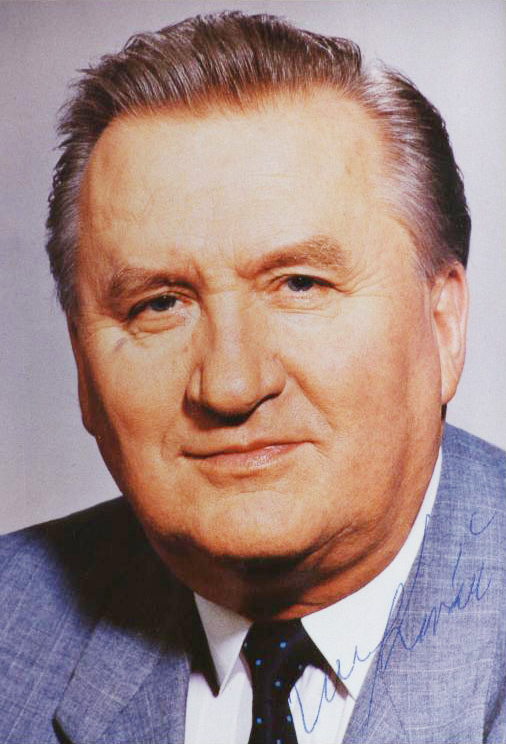
Portrét bývalého prezidenta SR Michala Kováča
Portrét bývalého prezidenta SR Michala Kováča Bodajozef · CC BY-SA 3.0 · Commons

Slovakia, officially the Slovak Republic, is a landlocked country in Central Europe. It is bordered by Poland to the north, Ukraine to the east, Hungary to the south, Austria to the west, and the Czech Republic to the northwest. Slovakia's mostly mountainous territory spans about 49,000 km2 (19,000 sq mi), hosting a population exceeding 5.4 million. The capital and largest city is Bratislava, while the second largest city is Košice. The Slavs arrived in the territory of the present-day Slovakia in the 5th and 6th centuries.

From Wikipedia: Slovakia (CC BY-SA 4.0)

Origins and Founding

Founded
1992 CE

Rulers

Government, Society and Religion

The Ministry of Foreign and European Affairs (Slovak: Ministerstvo zahraničných vecí a európskych záležitostí) is responsible for maintaining the Slovak Republic's external relations and the management of its international diplomatic missions. The ministry's director is Juraj Blanár. The ministry oversees Slovakia's affairs with foreign entities, including bilateral relations with individual nations and its representation in international organisations.

Read more

Slovakia joined the European Union and NATO in 2004, the Schengen Area in 2007 and the eurozone in 2009.

Slovakia is a member of the United Nations (since 1993) and participates in its specialised agencies. The country was, on 10 October 2005, elected to a two-year term on the UN Security Council from 2006 to 2007.

From Wikipedia: Slovakia · Government and politics: Foreign relations (CC BY-SA 4.0)

Government
Unitary parliamentary republic
Languages
Slovak
Religion
68.8% Christianity, 59.8% Catholicism, 7.6% Protestantism, 1.4% other Christian

Economy and Trade

Slovakia has a high-income developed economy. In 2026, with a population of only 5 million, it ranked as the 47th richest country with a per capita gross domestic product based on purchasing power parity of $49,376, and the 58th largest economy in the World with a GDP of $167,730 billion. Its GDP per capita equalling 74% of the average of the European Union in 2023. Major privatisations are completed, the banking sector is almost completely in private hands, and foreign investment has risen.

Read more

In 2024, more than 80% of Slovak exports went to the European Union, and more than 65% of Slovak imports came from other European Union member states. Main export partners are Germany (23% of total exports), Czech Republic (12.4%), Poland (8.3%) and Austria (5.7%).

The country has difficulties addressing regional imbalances in wealth and employment.

From Wikipedia: Slovakia · Economy (CC BY-SA 4.0)

Coins, Currency and Symbols

реверс 2 словацьких крон 1995
реверс 2 словацьких крон 1995 Artemco · CC BY-SA 4.0 · Commons
Currency
Slovak koruna, euro
  • Author: User:Ondrejk Image:History Exchange Rate SKK EUR 1999 to 2005.sxc - source table
    Author: User:Ondrejk Image:History Exchange Rate SKK EUR 1999 to 2005.sxc - source table No machine-readable author provided. Ondrejk assumed (based on copyright claims). · Public domain · Commons
  • 50 Euro Banknote
    50 Euro Banknote StefanosAndreadis · CC BY-SA 4.0 · Commons
  • Flag of Slovakia
    Flag of Slovakia Original: Ladislav Čisárik and Ladislav Vrtel Vector: SKopp · Public domain · Commons
  • Coat of arms of Slovakia
    Coat of arms of Slovakia Tlusťa · Public domain · Commons

Wars and Battles

After the Munich Agreement and its Vienna Award, Nazi Germany threatened to annex part of Slovakia and allow the remaining regions to be partitioned by Hungary or Poland unless independence was declared. Thus, Slovakia seceded from Czecho-Slovakia in March 1939 and allied itself, as demanded by Germany, with Hitler's coalition. Secession had created the first Slovak state in history.

Read more

A one-party clerical fascist Slovak Republic governed by the far-right Hlinka's Slovak People's Party was led by President Jozef Tiso and Prime Minister Vojtech Tuka. The (First) Slovak Republic is primarily known for its collaboration with Nazi Germany, which included sending troops to the invasion of Poland in September 1939 and the Soviet Union in 1941. On 24 November 1940, Slovakia joined the Axis when its leaders signed the Tripartite Pact.

From Wikipedia: Slovakia · History: Fascist regime during World War II (1939–1945) (CC BY-SA 4.0)

Achievements and Monuments

Sporting activities are practised widely in Slovakia, many of them on a professional level. Ice hockey and football have traditionally been regarded as the most popular sports in Slovakia, though tennis, handball, basketball, volleyball, whitewater slalom, cycling, alpine skiing, biathlon and athletics are also popular.

Read more

One of the most popular team sports in Slovakia is ice hockey. Slovakia became a member of the IIHF on 2 February 1993. Since then, the team has won four medals in Ice Hockey World Championships, consisting of one gold, two silver and a bronze. The most recent success was a silver medal at the 2012 IIHF World Championship in Helsinki. The Slovak national hockey team made eight appearances in the Olympic games, finishing fourth in the 2010 Winter Olympics in Vancouver and third with bronze medal at the 2022 Winter Olympics in Beijing.

From Wikipedia: Slovakia · Culture: Sport (CC BY-SA 4.0)

Decline and Fall

Ended
2024 CE
Last recorded ruler
Peter Pellegrini

Modern States of Central Europe: Frequently Asked Questions

Which states existed in Central Europe in this period?

This page maps 11 states of Central Europe founded between 1806 CE and 1992 CE: Austrian Empire, Duchy of Warsaw, Free City of Danzig, Saxe-Meiningen, Poles, Hungarian Nationalists, Austria-Hungary, Czechoslovakia, Second Polish Republic, Hungarian People's Republic, Slovakia.

Which was the largest of the Modern States of Central Europe?

Austria-Hungary had the largest mapped extent, about 931,840 km².

Which of the Modern States of Central Europe lasted longest?

Free City of Danzig lasted longest, 1809 CE – 1939 CE.

Sources

  • Reading text: Wikipedia articles on the group and each state, condensed (CC BY-SA 4.0).
  • Facts, rulers and wars: Wikidata (CC0).
  • Borders: Cliopatria, Seshat Global History Databank (CC BY 4.0).
  • Pictures: Wikimedia Commons; the author and licence are under each picture.

Largest state by mapped extent: Austria-Hungary.