Tulunids
875 CE – 910 CE · Capital: Al-Qata'i · 972,562 km²
The Tulunid State, also known as the Tulunid Emirate or the State of Banu Tulun, and popularly referred to as the Tulunids (Arabic: الطولونيون) was a Mamluk dynasty of Turkic origin who ruled Egypt on behalf of the Abbasid Caliphate. They were autonomous from 868 until 905, when the Abbasids restored the Tulunid domains to their control. The Tulunid State emerged during a period marked by the growing power of the Turkic military within the Abbasid Caliphate.
From Wikipedia: Tulunids (CC BY-SA 4.0)
Origins and Founding
Shu'ubiyya tendency is characterized by a preference for non-Arab "Ajam" over Arab "tribes". The etymology of this term can be traced back to an interpretation of a Quranic verse: "and made you peoples and tribes that you may know one another." (Quran 49:13). Some interpreters have proposed that the term "peoples" in this context may be understood to refer to "civilized peoples". This inclination first manifested during the Abbasid Caliphate, emerging as a consequence of several factors, most notably the ethnic diversity that characterized the vast Abbasid state and the appointment of non-Arabs to positions within the courts and administrative apparatus of the Abbasid caliphs.
Read more
In establishing their rule, the Abbasids relied on the Persians, who held resentment towards the Umayyads.
From Wikipedia: Tulunids · Background: Emergence of Shu'ubiyya in the Abbasid State (CC BY-SA 4.0)
- Founded
- 875 CE
- Preceded by
- Abbasids
Rulers
- Aḥmad ibn Ṭūlūn
- Shayban ibn Ahmad ibn Tulun
Government, Society and Religion
- Government
- De jure caliphal Governorate Emirate, De facto Autonomous Emirate from Caliphate
- Languages
- Arabic
- Religion
- Sunni Islam, Twelver Shi'ism, Christianity, Judaism (minority)
Economy and Trade
Before Ibn Tulun's arrival, Egypt's economic situation was severely compromised. The economic instability commenced during the tenure of Caliph Abu Ja'far al-Mansur, who required that a fixed amount of kharaj be remitted by provincial governors to the capital while failing to oversee their activities. Consequently, the governors levied supplementary taxes on the populace and collected them with considerable rigor. This situation further deteriorated during the second Abbasid era with the advent of Turkic feudalism. Provinces were divided among Turkic military leaders, who implemented oppressive tax and agricultural policies to increase revenues by any means necessary. Upon assuming responsibility for the collection of kharaj, Ibn al-Mudabbir increased taxes fourfold.
From Wikipedia: Tulunids · Economy (CC BY-SA 4.0)
Coins, Currency and Symbols
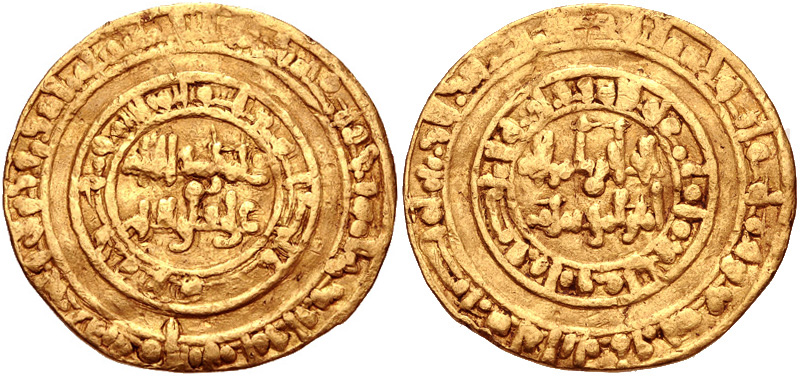
- Currency
- Dinar
Wars and Battles
Ahmad ibn Tulun was keenly aware of the pivotal role that a well-trained military force could play in realizing his ambitious goals. From the moment he set foot in Egypt, he sought to establish a military that was loyal to him and could be relied upon as a tool to achieve his goals and maintain his independence. Ahmad ibn Tulun's aspiration to establish a distinctive military force was first revealed when he observed the personal guard of Ahmad ibn al-Mudabbir and sought to emulate this structure for his purposes. However, his initial political caution, concern about inciting suspicion from the Abbasid Caliphate, and the need for financial resources, which were controlled by Ibn al-Mudabbir, prevented him from taking this bold step immediately.
From Wikipedia: Tulunids · Military (CC BY-SA 4.0)
Achievements and Monuments
Following Ahmad ibn Tulun's declaration of Egypt's independence from the Abbasid Caliphate, he initiated a program to elevate Fustat to a status comparable to that of the Caliphate's centers in Baghdad and Samarra. As his residence became insufficient to accommodate the growing number of servants and soldiers, he opted to expand it. He selected a site in the distant northeastern section of al-Askar, situated between Mount Yashkur and the foothills of the Mokattam, near the governor's residence. In 257 AH (870 AD), a new suburb, designated "al-Qata'i," was established over an area estimated at one square mile. He then proceeded to lay out his palace in this location and instructed his companions, servants, and followers to construct buildings around it. The construction continued until it became integrated with the wider development of Fustat.
From Wikipedia: Tulunids · Culture: Urban construction (CC BY-SA 4.0)
Decline and Fall
Khumārawayh constructed a palace at the base of Mount Qasioun, situated near Damascus and the Dayr Murran, where he would often imbibe Alcoholic. He was assassinated in this palace by his servants due to his excessive indulgence in wine and other vices on the 28th of Dhu al-Qi'dah, 282 AH, corresponding to January 18, 896 CE. On that night, the governor of the Levant, Prince Tughj ibn Juff, was present at the palace. Upon learning of the murder, he pursued the perpetrators, who were more than twenty servants, and apprehended them. They were subsequently executed. He subsequently transported Khumārawayh's body in a coffin from Damascus to Egypt. The day of his arrival was notable for the wailing and customary mourning practices of women observed by his concubines, male slaves, and the wives of his leaders upon his arrival.
From Wikipedia: Tulunids · History: Rupture and Demise of the Tulunid Emirate (CC BY-SA 4.0)
- Ended
- 910 CE
Legacy in the Modern World
The capital of the Abbasid caliphate was moved to Samarra, which served as the seat of the Abbasid state for almost fifty years and became the center of the new Turkic dominance. From the time of al-Mu'tasim, prominent Turkic figures began to emerge on the political scene and play a significant role in public life. Among them were al-Afshin, Ashinas, Itakh, Wasif, and Sima al-Dimashqi, who served the state and supported it in its internal wars against various insurgent movements in its territories, as well as in its external wars against the Byzantine Empire. Over time, these Turks began to seek their power base, either within the Caliphate or independently, as some of them began to aspire to control the affairs of the capital, realizing that the Caliphate could not function without their services.
From Wikipedia: Tulunids · Background: Increasing Turkic influence and its impact on the caliphate (CC BY-SA 4.0)