16 states of North Africa on one map, from 750 CE to 1571 CE.The largest, Almoravid Dynasty, covered about 1,923,812 km²; the longest-lived, Hafsid Dynasty, lasted 1236 CE – 1571 CE. Each has its own section below with its rulers, capitals, wars and pictures where the records hold them.
Each state in its own colour. Move the timeline to see which existed in any year from 750 AD to 1571; select a territory to read about it. Borders: Cliopatria / Seshat (CC BY 4.0).
750 CE – 756 CE · Capital: Al-Qayrawan, Ifriqiya, Qurtubah, Al-Andalus · 251,323 km²
The Fihrids (Arabic: الفهريون, romanized: al-Fihriyyūn), also known as Banū Fihr (Arabic: بنو فهر), were an Arab family and clan, prominent in Ifriqiya and Al-Andalus in the 8th century.
The Fihrids were from the Arabian clan of Banu Fihr, part of the Quraysh, the tribe of the Prophet. Probably the most illustrious of the Fihrids was Uqba ibn Nafi al-Fihri, the Arab Muslim conqueror of North Africa in 670-680s, and founder of al-Qayrawan. Several of his sons and grandsons participated in the subsequent conquest of Hispania in 712.
The Kharijites (Arabic: الخوارج, romanized: al-Khawārij, singular Arabic: خارجي, romanized: khārijī) were an Islamic sect which emerged during the First Fitna (656–661). The first Kharijites were supporters of Ali who rebelled against his acceptance of arbitration talks to settle the conflict with his challenger, Mu'awiya, at the Battle of Siffin in 657. They asserted that "judgment belongs to God alone", which became their motto, and that rebels such as Mu'awiya had to be fought and overcome according to Qur'anic injunctions.
The later years of Uthman's reign were marked by growing discontent from multiple groups within the Muslim community. His favoritism and enrichment of his Umayyad relatives was disdained by the Muslim elite in Medina. The early Muslim settlers of the garrison towns of Kufa and Fustat, in the conquered regions of Iraq and Egypt, felt their status threatened by several factors during this period. These were Uthman's interference in provincial affairs, overcrowding of the garrison towns by a continuous tribal influx from Arabia, diminishing revenue from the conquests, and the growing influence of the pre-Islamic tribal nobility.
Read more
Among the rebels who marched on Medina, a specific faction primarily composed of the qurra viewed Uthman's policies not merely as political failures but as religious deviations.
In addition to their insistence on rule according to the Qur'an, the view common to all Kharijite groups was that any Muslim was qualified to become caliph, regardless of origin, if he had the credentials of belief and piety. They rejected Qurayshite descent or close kinship with Muhammad as a prerequisite for the office, a view espoused by most Muslims at the time. This differs from the position of both Sunnis, who accepted the leadership of those in power provided that they were Qurayshite, and Shi'a, who asserted that the leadership belonged to Ali and his descendants. The Kharijites held that the first four caliphs had not been elected for their Qurayshite descent or kinship with Muhammad, but because they were among the most eminent and qualified Muslims for the position, and hence were all legitimate caliphs.
According to Rudolf Ernst Brünnow (1858–1917), the first academic historian to systematically study the Kharijites, the qurra supported the arbitration proposal because, as pious believers in the Qur'an, they felt obliged to respond to the call of making the Qur'an the arbitrator. The people who objected to the treaty were Bedouin Arabs, and hence separate from the qurra who had settled in Kufa and Basra following the wars of conquest. They had devoted themselves to the cause of Islam and perceived the arbitration by two people as an acute religious injustice, which drove them into secession and later into open rebellion.
Read more
The orientalist Julius Wellhausen (1844–1918) criticized Brünnow's hypothesis because all Basrans and Kufans of that time were Bedouin, and since Brünnow regards these Bedouin as pious anyway, it distinguishes them little from the qurra.
The Rustamid dynasty (Arabic: الرستميون) was an Ibadi dynasty of Persian origin which ruled a state that was centered in present-day Algeria. The dynasty governed as a Muslim theocracy for a century and a half from its capital Tahert (present day Tagdemt) until the Isma'ili Fatimid Caliphate defeated it. Rustamid authority extended over what is now central and western Algeria, parts of southern Tunisia, and the Jebel Nafusa and Fezzan regions in Libya as far as Zawila.
The Ibadi movement reached North Africa by 719, when the missionary Salama ibn Sa'd was sent from the Ibadi jama'a of Basra to Kairouan. By 740, their efforts had converted the major Berber tribes of Hawwara around Tripoli, in the Nafusa Mountains and at Zenata in western Tripolitania. In 757 (140 AH), a group of four Basra-educated missionaries including Abd al-Rahman ibn Rustam proclaimed an Ibadi imamate in Tripolitania, starting an abortive state led by Abu al-Khattab Abdul-A'la ibn as-Samh which lasted until the Abbasid Caliphate dispatched Muhammad ibn al-Ash'ath al-Khuza'i to suppress it in 761. During that period, Abd al-Rahman served as governor of Qayrawan from 758 to 761. Ifriqiya was conquered by the Abbasids from Kharijite control and Abu al-Khattab ibn as-Samh was killed.
The Rustamid dynasty, "developed a cosmopolitan reputation in which Christians, non-Kharijite Muslims, and adherents of different sects of Kharijites lived". On the intellectual field, the Rustamids had many scholars and learned men, such as Abd al-Rahman ibn Rustam, Abd al-Wahhab ibn Abd al-Rahman, Aflah ibn ‘Abd al-Wahhab, dan Abu al-Yaqzhan ibn Aflah, Mahdi an-Nafusi, ‘Abd Allah al-Lamthi, and Mahmud ibn Bakr. ‘Abd ar-Rahman had an exegesis of the Qur’an. ‘Abd al-Wahhab wrote his Masa'il Nafusah on Islamic jurisprudence. Aflah mastered Arabic literature, mathematics, and astronomy. Abu al-Yaqzhan wrote about 40 works. Because of their intellectual enthusiasm, the Rustamids vigorously transferred valuable works from the Mashriq to the Maghrib, especially to the library of al-Ma‘shumah (in Tahert) and that of Khizanah Nafusah (in Jabal Nafusah).
In 873, a succession crisis occurred as the third imam Abu Bakr, fearing the loss of his title to his older brother Mohammed Abu al-Yaqzan, attempted to assassinate him. However, his plot failed, leading to the population uprising against Abu Bakr, resulting in his overthrow and death in 874. Consequently, Mohammed Abu al-Yaqzan assumed the title.
Read more
After Abd al-Wahhab, the Rustamids grew militarily weak; they were easily conquered by the Isma'ili Fatimids in 909, upon which many Ibadis – including the last imam – fled to the Sedrata tribe of Ouargla, whence they would ultimately emigrate to M'zab. Among the reasons behind the fall of the Rustamid state was their non-compliance with the Kharijite requirement that the imam must be elected by consultation.
В центре Касабланки.Иерей Максим Массалитин from Rabat, Maroc · CC BY-SA 2.0 · Commons
Casablanca is the largest city in Morocco and the country's economic and business centre. Located on the Atlantic coast of the Chaouia plain in the central-western part of Morocco, the city has a population of about 3.22 million in the urban area, and over 4.27 million in Greater Casablanca, making it the most populous city in the Maghreb region, and the ninth-largest in the Arab world.
The Port of Casablanca is one of the largest artificial ports in Africa, and the third-largest port in North Africa, after Tanger-Med (40 km or 25 mi east of Tangier) and Port Said.
The area that is today Casablanca was founded and settled by Berbers by the seventh century BC. It was used as a port by the Phoenicians, then the Romans. In his book Description of Africa, Leo Africanus refers to ancient Casablanca as "Anfa", a great city of Tamasna founded in the Berber kingdom of Barghawata in 744 AD. He believed Anfa was the most "prosperous city on the Atlantic Coast because of its fertile land." Barghawata rose as an independent state around this time, and continued until it was conquered by the Almoravids in 1068. After the defeat of the Barghawata in the 12th century, Arab tribes of Hilal and Sulaym descent settled in the region, mixing with the local Berbers, which led to widespread Arabization. During the 14th century, under the Merinids, Anfa rose in importance as a port. The last of the Merinids were ousted by a popular revolt in 1465.
The municipality of Casablanca is divided into 16 local districts (arrondissements).
Read more
Each year, the 16 districts each receive a small budget from the municipality of Casablanca. However, they each determine how to use that budget. Each district has a president who is accountable to 15 to 20 district council members. For instance, the president of Anfa is accountable to the council of Anfa. Only people living in Anfa can vote for the Anfa council.
Each of the 16 local councils meets 3 times a year, in January, June, and September.
The president of the 16 districts can ask the mayor of Casablanca to give them special powers.
The city hosts the Technopark, a hub for IT companies and startups specializing in digital content and video gaming in Morocco.
Read more
Several national agencies are headquartered in Casablanca, including the Moroccan Office of Industrial and Commercial Property (OMPIC).
The Grand Casablanca region is considered the locomotive of the development of the Moroccan economy. It attracts 32% of the country's production units and 56% of industrial labor. The region uses 30% of the national electricity production. With MAD 93 billion, the region contributes to 44% of the industrial production of the kingdom. About 33% of national industrial exports, MAD 27 billion, comes from the Grand Casablanca: 30% of the Moroccan banking network is concentrated in Casablanca, headquartering major Moroccan banks; Attijariwafa Bank, BCP Group, BMCI, Crédit du Maroc, and Bank of Africa.
After Philippe Pétain of France signed the armistice with the Nazis, he ordered French troops in France's colonial empire to defend French territory against any aggressors—Allied or otherwise—applying a policy of "asymmetrical neutrality" in favour of the Germans. French colonists in Morocco generally supported Pétain, while Moroccans tended to favour de Gaulle and the Allies.
Read more
Operation Torch, which started on 8 November 1942, was the British-American invasion of French North Africa during the North African campaign of World War II. The Western Task Force, composed of American units led by Major General George S. Patton and Rear Admiral Henry Kent Hewitt, carried out the invasions of Mehdia, Fedhala, and Asfi.
In the first half of the 20th century, Casablanca had many movie theaters, such as Cinema Rialto, Cinema Lynx and Cinema Vox, the largest in Africa when it was built.
Read more
The 1942 American film Casablanca is set in Casablanca and has had a lasting impact on the city's image although it was filmed in the United States. Rick's Café Casablanca, which opened in 2004, was inspired by the film.
Salut Casa! was a propaganda film brandishing France's purported colonial triumph in its mission civilisatrice in the city.
Mostafa Derkaoui's revolutionary independent film About Some Meaningless Events (1974) took place in Casablanca. It was the main subject of Ali Essafi's documentary Before the Dying of the Light.
French control of Casablanca was formalized March 1912 when the Treaty of Fez established the French Protectorat. Under French imperial control, Casablanca became a port of colonial extraction.
Read more
Right at the beginning of the twentieth century, when Morocco was officially declared a French protectorate, the French decided to shift power to Morocco's coastal areas (i.e. Rabat and Casablanca) at the expense of its interior areas (i.e. Fez and Marrakesh). Rabat was made the administrative capital of the country, and Casablanca its economic capital.
General Hubert Lyautey assigned the planning of the new colonial port city to Henri Prost. As he did in other Moroccan cities, Prost designed a European ville nouvelle outside the walls of the medina. In Casablanca, he also designed a new "ville indigène" to house Moroccans arriving from other cities.
793 CE – 979 CE · Capital: Walilli (788–808), Fez (808–927), Hajar an-Nasar (927–985) · 194,486 km²
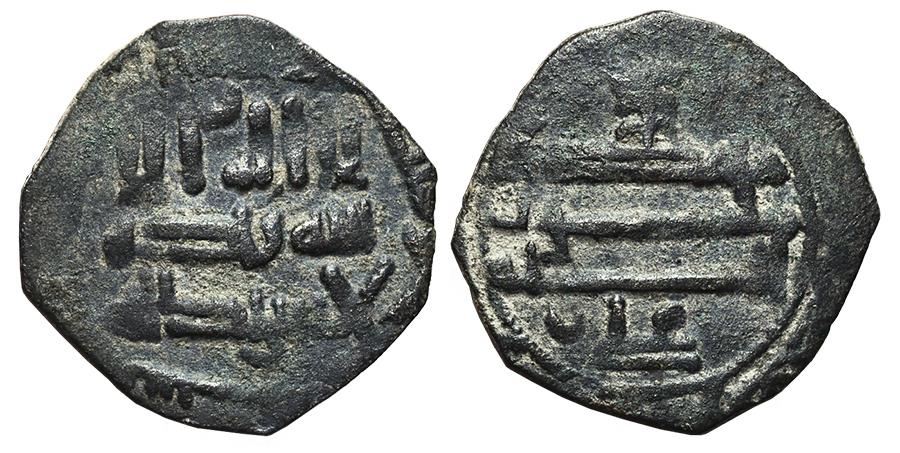
Idrisids_coin_minted_at_Al_Aliyah_Morocco_840 CEPHGCOM · Public domain · Commons
The Idrisid dynasty or Idrisids (Arabic: الأدارسة al-Adārisah) were an Arab Muslim dynasty from 788 to 974, ruling most of present-day Morocco and parts of present-day western Algeria. Named after the founder, Idris I, the Idrisids were an Alid dynasty descended from Muhammad through his grandson Hasan. Their reign played an important role in the early Islamization of Morocco, and they also presided over an increase in Arab immigration and Arabization in major urban centers.
According to Encyclopædia Britannica, "although Idrīs I had Shīʿite sympathies, the state founded by his son was Sunni in matters of religious doctrine." Primary source material and contemporary scholars have described them as a Sunni Muslim dynasty. Certain contemporary academics have described them as Shi'a or Zaydi Shi'a to one extent or another, most likely because of their political affiliation. The Idrisids were political opponents of the Abbasid Caliphate. Others have criticized this claim for conflating Shia theology with a political movement in a historical period where there was no Shia theology distinct from Sunni theology in this area as of yet. Amira Bennison argues that Idrisid coinage suggests that Idris I portrayed himself as a religious leader whose legitimacy was based on his descent from Muhammad, which Bennison describes as a "proto-Shi'i or 'Alid position."
After the death of Yahya I in 863 he was succeeded by his less competent son, Yahya II, who divided up the Idrisid realm yet again among the extended families. Yahya II died in uncertain circumstances in 866 after fleeing his palace. After an episode of disorder in Fes his cousin Ali ibn Umar took over power. In 868, under the leadership of the Abd al-Razzaq the Berber Khariji Sufri tribes of Madyuna, Ghayata and Miknasa of the Fes region formed a common front against the Idrisids. From their base in Sefrou they were able to defeat Ali ibn Umar and occupy Fes. Fes refused to submit, however, and another Yahya, the son of al-Qasim, was able to retake the city and establish himself as the new ruler, Yahya III. Thus the ruling line had passed from the sons of Muhammad to the son of Umar and now the sons of al-Qasim.
Despite having fallen from power, the Idrisids spawned many sharifian families which continued to be present for centuries to come. Some Moroccans today still claim descent from them. In the 11th century, an Idrisid family descended from Umar (son of Idris II), the Hammudids, were able to gain power in several cities of northern Morocco and southern Spain.
Read more
In Fes and in the town of Moulay Idriss (near Volubilis), the tombs of Idris II and Idris I, respectively, eventually developed into important religious complexes and pilgrimage sites, like the Zawiya of Moulay Idris II. Several prominent sharifian families in Fez traced their lineages to Idris I, and some of these played a role in maintaining or rebuilding the Zawiya of Idris II in the city.
800 CE – 910 CE · Capital: Kairouan, with royal court at: al-Abbasiyya (800–876), Raqqada (876–909) · 252,479 km²
Photograph of Kairouan from the Minaret of the Great Mosque, Tunisia. This color photochrome print was taken in 1899 in Kairouan, Tunisia.Unknown authorUnknown author · Public domain · Commons
The Aghlabid dynasty (Arabic: الأغالبة) was an Arab dynasty that ruled Ifriqiya from 800 to 909, nominally as vassals of the Abbasid Caliphate. During this time, they also conquered Sicily, Malta, parts of southern Italy, and possibly Sardinia. The dynasty originated from the tribe of Banu Tamim and was founded by Ibrahim ibn al-Aghlab, who was appointed by the Abbasid caliph in 800 to rule this province.
The Aghlabids adhered to the Mu'tazilite rationalist doctrine within Hanafi Sunni Islam, which they imposed as the state doctrine of Ifriqiya.
The Aghlabids adhered to the Mu'tazilite theological movement within Hanafi Sunni Islam. The Aghlabids adopted the Mu'tazilite rationalist doctrine after it became the official doctrine of the Abbasid Caliphate of Baghdad during the reign of caliph al-Ma'mun (813–833). The officialization of this doctrine faced strong opposition from the Maliki majority of Ifriqiya, particularly due to the Mu'tazilite rejection of the orthodox belief that the Qur'an was God's eternal word and therefore uncreated. Although the Aghlabids recognized the political influence of the Maliki religious leaders, they were both unable and unwilling to alter their governmental system to align with their beliefs. The qāḍī (judge) of Kairouan adhered to the Hanafi school and endorsed the concept of Khalq al-Qur'an (createdness of the Qur'an).
In 827, soon after Ziyadat Allah defeated the rebellion, the Aghlabid conquest of Sicily began. Asad ibn al-Furat, a qadi from Kairouan, was appointed as commander of the Aghlabid forces. The pretense for this invasion was an internal revolt in Byzantine Sicily led by a military commander named Euphemios who requested support from the Aghlabids.
Read more
Despite the political differences and rivalry between the Aghlabids, who served under the Abbasid Caliphate, and the Umayyad Emirate of Córdoba, the Muslims of al-Andalus (in the Iberian Peninsula) also sent a fleet under Asba' ibn Wakil to aid the Aghlabid conquest of Sicily. Ibn Kathir recorded that a joint force of 300 Umayyad and Aghlabid ships were present.
The Aghlabids were major builders and erected many of the oldest Islamic-era monuments in present-day Tunisia, including military structures like the Ribat of Sousse and the Ribat of Monastir, religious buildings like the Great Mosque of Sousse and the Great Mosque of Sfax, and practical infrastructure works like the Aghlabid Reservoirs of Kairouan. Much of their architecture, even their mosques, had a heavy and almost fortress-like appearance, but they nonetheless left an influential artistic legacy.
Read more
One of the most important Aghlabid monuments is the Great Mosque of Kairouan, which was completely rebuilt by the emir Ziyadat Allah I in 836, although various additions and repairs were effected later which complicate the chronology of its construction.
The decline of the dynasty began under Ibrahim II (875–902). An attack by the Tulunids of Egypt had to be repelled and a revolt of the Berbers put down with much loss of life. In 893 there began amongst the Kutama Berbers the movement of the Isma'ili Fatimids, led by Abu Abdallah al-Shi'i, the dā'ī of the future caliph Abdallah al-Mahdi, although it took almost a decade before they were able to seriously threaten Aghlabid power.
Read more
In 902 Ibrahim II became the only Aghlabid emir to personally lead a military campaign in Sicily and the Italian mainland. While he was away in Sicily, Abu Abdallah struck the first significant blow against Aghlabid authority in North Africa by attacking and capturing the city of Mila (present-day eastern Algeria). This news triggered a serious response from the Aghlabids, who sent a punitive expedition of 12,000 men from Tunis in October of the same year.
1018 CE – 1151 CE · Capital: Qal'at Bani Hammad (c. 1007–1090), Bejaia (c. 1090–1152) · 165,043 km²
Ville de Béjaia - Algérie مدينة بجاية - الجزائرHabib kaki · CC0 · Commons
The Hammadid dynasty (Arabic: الحماديون, romanized: Al-Hammādiyyūn, lit. 'children of Hammad'), also known as the Hammadid Emirate or the Kingdom of Bejaia, was a medieval Islamic kingdom in the central Maghreb, encompassing what is now Algeria. It was established at the beginning of the 11th century when Hammad ibn Buluggin declared himself emir, thus splitting the Zirid domains into two separate dynasties.
In 987 and 989, al-Mansur ibn Buluggin, the emir of the Berber Zirid dynasty, appointed his uncle Hammad ibn Buluggin as governor of Ashir and western Zirid lands. Hammad subsequently defended the territory against Zenata incursions and was granted additional lands by al-Mansur's successor Badis ibn Mansur. In 1007 and 1008, forces under Hammad left Ashir and built a new citadel-capital, Qal'at Bani Hammad (also called Al Qal'a of Beni Hammad), in M'Sila Province in the Hodna Mountains; a thriving city sprang up around the fortress.
Read more
In 1014, Hammad declared his independence from Zirid suzerainty and switched his spiritual allegiance from the Shi'a Fatimid caliphs to the Sunni Abbasid caliphs of Baghdad.
The governmental structure represented an Islamic absolute monarchy, where the head of state held the title of Emir or Sultan and the governance of the emirate was exclusively within the Hammadid dynasty. They did recognize the spiritual authority of the Fatimid Caliphate at first until the arrival of the Banu Hilal tribes, and then the Abbasid Caliphate at different times. The Qada (from Arabic: القضاء) or Jurisdiction was separated from the administration and derived its rulings and legislative texts from the Maliki school of thought, which was prevalent among the people of the Maghreb and Al-Andalus. Arabic was the official language in the jurisdiction. Each city had a judge appointed by the Hammadid Emirs who was responsible for the affairs of Muslims, including complaints and other matters.
Anillos iberorromanos, lingote, estátera escita (siglo I a. C.), dinar indio (325-345) e histamenon bizantino (1059-1067). Exposición permante de la Historia del dinero. Museo de Prehistoria de ValenciaDorieo · CC BY-SA 4.0 · Commons
Qal'at Beni Hammad, the dynasty's capital, was described by Al-Bakri in the 11th century as a large and powerful military stronghold and a centre of commerce that attracted caravans from all over the Maghreb, Iraq, Syria, Egypt and the Hejaz. 14th-century Arab historian and philosopher Ibn Khaldun noted that the abundance of travellers was due to the wealth of resources offered to those interested in sciences, commerce and arts. The Qal'at attracted poets, sages and theologians. It was filled with various richly decorated palaces, caravanserai, gardens and what remained the largest mosque built in North Africa until the twentieth century. The art and architecture of the Hammadids influenced that of the Arabs, Almohads, Almoravids and Normans.
Read more
Hammadid emirs constructed five palaces, most of which are now destroyed.
In 1103–1104 the Hammadids defeated the Almoravids and took control of Tlemcen. During the reign of al-Mansur's son Abd al-Aziz ibn Mansur (r. 1105–1121), Béjaïa had about 100,000 people, and the Hammadids consolidated their power in the city. The dynasty suffered a decline after this point; efforts to develop more sea power in the Mediterranean were foiled by the Normans, who by the 12th century had conquered Sicily and had also occupied a number of settlements on the coast of Tunisia and Algeria. However, Abd al-Aziz did expel the Hilalians from Hodna and capture Jerba.
Read more
The last dynastic emir was Yahya ibn Abd al-Aziz (r. 1121–1152). Yahya repulsed Bedouin incursions and subdued uprisings by Berber clans, but during his reign the Genoese also raided Béjaïa (1136), and the Kingdom of Sicily occupied the settlement of Djidjelli and destroyed a pleasure palace that had been built there.
1040 CE – 1235 CE · Capital: Tumbere Jiinge (Dya'ogo, Manna dynasties), Taaga (Laam Taga), Hoorewendu (Laam Termess) · 74,469 km²
Takrur, Tekrur, or Tekrour (c. 500 – c. 1456) was a state based in the Senegal River in modern-day Senegal which was at its height in the 11th and 12th centuries, roughly parallel to the Ghana Empire. It lasted in some form into the 18th century.
There are a number of conflicting theories about the deep past of the Senegal River valley, where the Kingdom of Takrur would take root. The formation of the state may have taken place as an influx of Fulani from the east settled in the Senegal valley. John Donnelly Fage suggests that Takrur was formed through the interaction of Berbers from the Sahara and "Negro agricultural peoples" who were "essentially Serer". The outsiders may, however, have been Soninke rather than Berber, and the native population may have already spoken Fula. Regardless, the region has been an ethnic melting pot from the earliest traceable periods up to the present, although Fula have come to dominate in more recent centuries.
Read more
Historian Andrew Clark writes that the state may have been founded as early as 100 CE. The founding dynasty was called Dya'ogo.
The 13th century was a period of political crisis in Takrur. The last Manna king, Cengaan Sumaare, is remembered as a bloodthirsty tyrant who was overthrown by his own people. The western parts of the kingdom became independent. Around 1286, the Mali Empire conquered Takrur and put it under a military dictatorship ruled by farba (governors), remembered locally as the Tonjon dynasty. Mali's power in the region diminished in the 14th century, however, and the Fula Lam Termess and Lam Taaga dynasties were able to take power. The region may also have been controlled by the Kingdom of Diarra.
Read more
Takrur was conquered by the Jolof emperor Tyukuli N'Diklam in the 15th century, who split the region between multiple farba. By 1506, however, the Burba's authority was weakening, and the farba fell to fighting amongst themselves.
1056 CE – 1205 CE · Capital: Aghmat (1058–c. 1070), Marrakesh (c. 1070–1147) · 1,923,812 km²
Gold dinar issued under Yusuf ibn Tashfin, leader of the Almoravids in the Iberian Peninsula during the 11th century CE. Minted in Aghmat, nowadays in Morocco.Numismática Pliego · CC BY-SA 3.0 · Commons
The Almoravid dynasty (Arabic: المرابطون, romanized: Al-Murābiṭūn, lit. 'those from the ribats') was a Berber Muslim dynasty centered in the territory of present-day Morocco. It established an empire that stretched over the western Maghreb and al-Andalus, starting in the 1050s and lasting until its fall to the Almohads in 1147.
The Almoravids emerged from a coalition of the Lamtuna, Gudala, and Massufa, nomadic Berber tribes living in what is now Mauritania and the Western Sahara, traversing the territory between the Draa, the Niger, and the Senegal rivers.
The Almoravids, sometimes called "al-mulathamun" ("the veiled ones", from litham, Arabic for "veil") trace their origins back to several Saharan Sanhaja nomadic tribes, dwelling in an area that stretches between the Senegal River in the south and the Draa River in the north. The first and main Almoravid founding tribe was the Lamtuna. It occupied the region around Awdaghust (Aoudaghost) in the southern Sahara according to contemporary Arab chroniclers such as al-Ya'qubi, al-Bakri and Ibn Hawqal. According to French historian Charles-André Julien: "The original cell of the Almoravid empire was a powerful Sanhaja tribe of the Sahara, the Lamtuna, whose place of origin was in the Adrar in Mauritania." The Tuareg people are believed to be their descendants.
Read more
These nomads had been converted to Islam in the 9th century.
The capture of Murcia brought the Almoravids within reach of Valencia, which was officially under the control of al-Qadir, the former Taifa ruler of Toledo. He had been installed here in 1086 by the Castilians after they took control of Toledo. Al-Qadir's unpopular rule in Valencia was supported by a Castilian garrison headed by Rodrigo Díaz de Vivar, a Castilian noble and mercenary better known today as El Cid. In October 1092, when El Cid was away from the city, there was an insurrection and coup d'état led by the qadi (judge) Abu Ahmad Ja'far Ibn Jahhaf. The latter called for help from the Almoravids in Murcia, who sent a small group of warriors to the city. The Castilian garrison was forced to leave and al-Qadir was captured and executed.
The Almoravid period, along with the subsequent Almohad period, is considered one of the most formative stages of Moroccan and Moorish architecture, establishing many of the forms and motifs of this style that were refined in subsequent centuries. Manuel Casamar Perez remarks that the Almoravids scaled back the Andalusi trend towards heavier and more elaborate decoration which had developed since the Caliphate of Córdoba and instead prioritized a greater balance between proportions and ornamentation.
Read more
The two centers of artistic production in the Islamic west before the rise of the Almoravids were Kairouan and Córdoba, both former capitals in the region which served as sources of inspiration. The Almoravids were responsible for establishing a new imperial capital at Marrakesh, which became a major center of architectural patronage thereafter.
Almoravid fortunes began to turn definitively after 1117. While Léon and Castile were in disarray following the death of Alfonso VI, other Christian kingdoms exploited opportunities to expand their territories at the expense of the Almoravids. In 1118, Alfonso I El Batallador ('The Battler'), king of Aragon, launched a successful attack on Zaragoza with the help of the French crusader Gaston de Béarn. The siege of the city began on 22 May and, after no significant reinforcements arrived, it surrendered on 18 December. Ali ibn Yusuf ordered a major expedition to recover the loss, but it suffered a serious defeat at the Battle of Cutanda in 1120.
Read more
The crisis is evidence that Almoravid forces were over-extended across their vast territories.
1056 CE – 1151 CE · Capital: 'Ashir, (936–1014), al-Mansuriyya, (972–1057), Mahdia, (1057–1148) · 113,557 km²
Photograph of Kairouan from the Minaret of the Great Mosque, Tunisia. This color photochrome print was taken in 1899 in Kairouan, Tunisia.Unknown authorUnknown author · Public domain · Commons
The Zirid dynasty (Arabic: الزيريون, romanized: az-zīriyyūn), also known as the Banu Ziri (Arabic: بنو زيري, romanized: banū zīrī), was a Sanhaja Berber dynasty from what is now Algeria which ruled the central Maghreb from 972 to 1014 and Ifriqiya in eastern Maghreb from 972 to 1148.
Descendants of Ziri ibn Manad, a military leader of the Fatimid Caliphate and the eponymous founder of the dynasty, the Zirids were emirs who ruled in the name of the Fatimids.
The Zirids were Sanhaja Berbers, from the sedentary Talkata tribe, originating from the area of modern Algeria. In the 10th century this tribe served as vassals of the Fatimid Caliphate, an Isma'ili Shi'a state that challenged the authority of the Sunni Abbasid caliphs. The progenitor of the Zirid dynasty, Ziri ibn Manad (r. 935–971) was installed as governor of the central Maghreb (roughly north-eastern Algeria today) on behalf of the Fatimids, guarding the western frontier of the Fatimid Caliphate.
Read more
With Fatimid support Ziri founded his own capital and palace at 'Ashir, south-east of Algiers, in 936. He proved his worth as a key ally in 945 during the Kharijite rebellion of Abu Yazid, when he helped break Abu Yazid's siege of the Fatimid capital, Mahdia. After playing this valuable role, he expanded 'Ashir with a new palace circa 947.
Islam (Shia Islam, Sunni, Ibadi), Christianity (Roman Catholicism), Judaism
Economy and Trade
The Zirid period was a time of great economic prosperity. The departure of the Fatimids to Cairo, far from ending this prosperity, saw its amplification under the Zirid and Hammadid rulers. Referring to the government of the Zirid emir al-Mu'izz ibn Badis, the historian Ibn Khaldun reports: "It [has] never [been] seen by the Berbers of that country a kingdom more vast and more flourishing than his own." The northern regions produced wheat in large quantities, while the region of Sfax was a major hub of olive production and the cultivation of the date was an important part of the local economy in Biskra. Other crops such as sugar cane, saffron, cotton, sorghum, millet and chickpea were grown. The breeding of horses and sheep flourished and fishing provided plentiful food.
Anillos iberorromanos, lingote, estátera escita (siglo I a. C.), dinar indio (325-345) e histamenon bizantino (1059-1067). Exposición permante de la Historia del dinero. Museo de Prehistoria de ValenciaDorieo · CC BY-SA 4.0 · Commons
The Zirids were also patrons of the arts. Important examples of woodwork commissioned for mosques have survived from this period. Buluggin ibn Ziri commissioned the production of a minbar for the Mosque of the Andalusians in Fez. The minbar, whose original fragments are now preserved in a museum, bears an inscription that dates it to the year 980, around the time of Buluggin's military expedition to this region. The wooden maqsura in the Great Mosque of Kairouan is believed to date from al-Mu'izz ibn Badis's restoration of the building. It is the oldest maqsura in the Islamic world to be preserved in situ and was commissioned by al-Mu῾izz ibn Badis in the first half of the 11th century (though later restored).
Nurse's Qur'anThis file was donated to Wikimedia Commons as part of a project by the Metropolitan Museum of Art. See the Image and Data Resources Open Access Policy · CC0 · Commons
Almohad Caliphate
1139 CE – 1343 CE · Capital: Tinmel · 949,022 km²
Abdul-Mu'min ben Ali Agoumi Statue in Nedroma (Algeria)Askelaadden · CC BY-SA 4.0 · Commons
The Almohad Caliphate or Almohad Empire was a North African Muslim empire ruled by a Berber dynasty from 1130 to 1269 (AH 524–667), which at its height controlled much of the Maghreb and the Iberian Peninsula (al-Andalus). The Spanish name "Almohads" derives from the Arabic al-Muwaḥḥidūn, "those who espouse Oneness", reflecting the dynasty's emphasis on divine unity and its protest against what it regarded as the lax character of prevailing Islam, particularly under the Almoravids.
The Almohad movement originated with Ibn Tumart, a member of the Masmuda, an Amazigh tribal confederation of the Atlas Mountains of southern Morocco. At the time, present-day Morocco, Mauritania, western Algeria and parts of Spain and Portugal (al-Andalus) were under the rule of the Almoravids, a Sanhaja Berber dynasty. Early in his life, Ibn Tumart went to Spain to pursue his studies, and thereafter to Baghdad to deepen them. In Baghdad, Ibn Tumart attached himself to the theological school of al-Ash'ari, and came under the influence of the teacher al-Ghazali. He soon developed his own system, combining the doctrines of various masters. Ibn Tumart's main principle was a strict unitarianism (tawhid), which denied the independent existence of the attributes of God as being incompatible with His unity, and therefore a polytheistic idea.
After the defeat of the Arab tribes at the Battle of Sétif, Abd al-Mumin integrated them into the Almohad army. He treated the Arabs with great leniency after Setif and to intice the Arabs into joining the Almohad army, Abd al-Mumin kept their wives and children captive (although he did not sell them into slavery). After they came to Marrakesh, he showered them with gifts and told them to return to the Eastern Maghreb with their families. Abd al-Mumin's claimed Qaysi Arab lineage included the Banu Hilal and Banu Sulaym and was an effective propogandistic tactic used for rallying these tribes.
Read more
The recruitment and relocation of the Arabs was used to counterbalance the power of the original Almohad tribes and to pacify Ifriqya and the Central Maghreb by diluting the power of the Arabs in those regions.
Along with the Almoravid period preceding it, the Almohad period is considered one of the most formative stages of Moroccan and Moorish architecture, establishing many of the forms and motifs that were refined in subsequent centuries. The main sites of Almohad architecture and art include Fez, Marrakesh, Rabat and Seville. In general, Almohad architecture was built mostly in rammed earth and brick rather than stone. These two materials were relatively cheap, readily available at most sites, and already widely used in the preceding centuries. Almohad architects refined both the manufacturing process of these materials and their on-site assembly, making the execution of numerous and ambitious construction projects possible. According to scholar Felix Arnold, during the Almohad period "construction became an industry on a scale not seen since Roman times."
In 1225, Abd Allah al-Bayyasi's band of rebels, accompanied by a large Castilian army, descended from the hills, besieging cities such as Jaén and Andújar. They raided throughout the regions of Jaén, Córdoba and Vega de Granada and, before the end of the year, al-Bayyasi had established himself in the city of Córdoba. Sensing a power vacuum, both Alfonso IX of León and Sancho II of Portugal opportunistically ordered raids into Andalusian territory that same year. With Almohad arms, men and cash dispatched to Morocco to help Caliph al-Adil impose himself in Marrakesh, there was little means to stop the sudden onslaught. In late 1225, with surprising ease, the Portuguese raiders reached the environs of Seville.
The Kingdom of Africa was an extension of the frontier zone of the Kingdom of Sicily in the former Roman province of Africa (Ifrīqiya in Arabic), corresponding to Tunisia and parts of Algeria and Libya today. The main primary sources for the kingdom are Arabic (Muslim); the Latin (Christian) sources are scanter.
While the island of Djerba was conquered by Roger II in 1135, conquests of mainland Africa started between 1146–1148. Sicilian rule consisted of military garrisons in the major towns, exactions on the local Muslim population, protection of Christians, and the minting of coin.
Regarding the motive for the Normans' military involvement in Africa, historian David Abulafia raises three possibilities: religious ("the extension of crusading activity into a relatively neglected arena"), economic (such as "the protection of key trade routes"), or imperialistic ("an attempt to build a vast Mediterranean empire").
Control of Africa gave Sicily control of all the sea routes between the western and eastern Mediterranean. Roger II taxed shipping, although he seems to have allowed the local Muslims princelings to collect some tariffs of their own. Ibn Abī Dīnār states that the wāli of Gabès collected taxes in Roger's name. Because of Sicily's good relations with Fatimid Egypt, Italian merchant ships could travel along the entire north African shore in peace during this period. Roger also taxed the overland caravan routes from Morocco to Egypt ("Kairouan" and "caravan" are cognates.) More profitable than these were the trans-Saharan caravans carrying paiole gold dust for the mints of northern African and southern Italy.
Sicily and Africa had close and growing economic ties during the period 1050–1150. The Sicilians imported gold, shipped by caravan across the Sahara to Kairouan (Qayrawan) and Mahdia (al-Mahdiyya), and cloth manufactured of Egyptian and local flax or cotton imported from India and Sicily. Besides this cotton, the Sicilians exported large quantities of wheat, cheese and processed meats. The Greek Orthodox monastery of San Salvatore in Messina was permitted to export its surplus wheat to north Africa in return for wax for its candles. During this time, Africa (i.e., the old Roman province) underwent rapid urbanisation as famines depopulated the countryside and industry shifted from agriculture to manufactures. The depredations of the Banū Hilal and the Banū Sulaym also destroyed many fields and orchards, and forced the population to seek refuge in the towns.
In 1142/3, Roger II attacked Tripoli but failed, further south down the coast from Mahdia. In 1146 he successfully besieged it. The city had already been depleted by a series of famines and was practically in a state of civil war when Roger's troops assaulted it. It was still an important port on the sea route from the Maghreb to Egypt. Several of the minor emirs in the vicinity of Tripoli sought Sicilian overlordship after this. Yūsuf, the ruler of Gabès, wrote to Roger requesting "the robes and letter of appointment making me wāli of Gabès, and I shall be your deputy there, as are the Banū Matrūh who hold Tripoli from you." Roger complied and Yūsuf, in his new robes, read out the letter of appointment to an assemblage of notables. Gabès had long been an irritant to Mahdia, and al-Hasan of Mahdia attacked it and brought back Yūsuf to Mahdia, and stoned him to death.
Moulay Hassan, souverain hafside de Tunis. Portrait exécuté pendant le séjour de Moulay Hassan en ItalieUnknown authorUnknown author · Public domain · Commons
The Hafsid dynasty (Arabic: الحفصيون, romanized: al-Ḥafṣiyūn) was a Sunni Muslim dynasty of Berber descent that ruled Ifriqiya (modern day Tunisia, western Libya, and eastern Algeria) from 1229 to 1574. The dynasty was founded by Abu Zakariya Yahya, who was initially appointed governor of the region by the Almohad caliph before declaring his independence.
Under the reigns of Abu Zakariya and his successor, al-Mustansir (r. 1249–1277), the Hafsids consolidated and expanded their power, with Tunis as their capital.
A year later, in 1229, al-Ma'mun officially renounced Almohad doctrine. Abu Zakariya used this as a pretext to repudiate his authority and to declare himself independent. By this point, Al-Ma'mun did not have the means to stop him or to reassert control over Ifriqiya. Initially, Abu Zakariya had his name mentioned in the khutba (the sermon during Friday prayer) with the title of amir, but in 1236 or 1237 he began to adopt the caliphal title of Amir al-Mu'minin, in direct challenge to the Almohad caliph in Marrakesh. He also initially organized the state around the Almohad elites, portraying his regime as a continuation of the Almohad system and placing Hafsid family members and Almohad shaykhs (tribal chiefs) in most important positions.
Under Almohad rule, Jews were treated poorly, and their communities nearly disappeared. Under the Hafsids, a policy of tolerance returned and allowed their communities to recover. Jews were prominent as merchants, moneylenders, and craftsmen. The recovery was also aided by the arrival of Jewish refugees fleeing persecution on the Iberian Peninsula, particularly after their 1492 expulsion from Spain. Jews elected a leader who represented them before the sultan and were allowed to govern themselves according to rabbinical law, though Islamic law and tribunals still had priority where relevant.
Read more
What was left of indigenous Christianity in Ifriqiya had disappeared in the 13th century under Almohad rule.
The Hafsids, with their location in Ifriqiya, was rich in agriculture and trade. Instead of placing the capital at inland cities such as Kairouan, Tunis was chosen as the capital due to its position on the coast as a port linking the Western and Eastern Mediterranean. Christian merchants from Europe were given their own enclaves in various cities on the Mediterranean coast, promoting trans-Mediterranean trade. Under the Hafsids, commerce and diplomatic relations with Christian Europe grew significantly, however piracy against Christian shipping grew as well, particularly during the rule of Abd al-Aziz II (1394–1434). The Hafsids also had a large stake in trans-Saharan trade through the caravan routes from Tunis to Timbuktu and from Tripoli to sub-Saharan Africa.
Anillos iberorromanos, lingote, estátera escita (siglo I a. C.), dinar indio (325-345) e histamenon bizantino (1059-1067). Exposición permante de la Historia del dinero. Museo de Prehistoria de ValenciaDorieo · CC BY-SA 4.0 · Commons
The Hafsids were significant builders, particularly under the reigns of successful leaders like Abu Zakariya (r. 1229–1249) and Abu Faris (r. 1394–1434), though not many of their monuments have survived intact to the present-day. While Kairouan remained an important religious center, Tunis was the capital and progressively replaced it as the main city of the region and the main center of architectural patronage. Unlike the architecture further west, Hafsid architecture was built primarily in stone (rather than brick or mudbrick) and appears to have featured much less decoration. In reviewing the history of architecture in the western Islamic world, scholar Jonathan Bloom remarks that Hafsid architecture seems to have "largely charted a course independent of the developments elsewhere in the Maghrib."
In the 16th century, the Hafsids became increasingly caught up in the power struggle between Spain and the Ottoman Empire-supported Corsairs. The Ottomans conquered Tunis in 1534 and held it for one year, driving out the Hafsid ruler Moulay Hassan. A year later the King of Spain and Holy Roman Emperor Charles V seized Tunis, drove the Ottomans out and restored Muley Hassan as a Habsburg tributary. Due to the Ottoman threat, the Hafsids were vassals of Spain after 1535. The Ottomans again conquered Tunis in 1569 and held it for four years. Don Juan of Austria recaptured it in 1573. The Ottomans reconquered Tunis in 1574, and Muhammad VI, the last Caliph of the Hafsids, was brought to Constantinople and was subsequently executed due to his collaboration with Spain and the desire of the Ottoman Sultan to take the title of Caliph as he now controlled Mecca and Medina.
1236 CE – 1555 CE · Capital: Tlemcen · 126,172 km²
A general view of Tlemcen from the heights of Lalla Setti.Riad Salih · CC BY 4.0 · Commons
The Zayyanid dynasty or Ziyanids (Arabic: زيانيون, Ziyāniyyūn) or Abd al-Wadids (Arabic: بنو عبد الواد, Bānu ʿAbd āl-Wād) was a Berber Zenata dynasty that ruled the Kingdom of Tlemcen, mainly in modern Algeria centered on the town of Tlemcen in northwest Algeria. The Zayyanid dynasty's rule lasted from 1235 to 1557.
Anillos iberorromanos, lingote, estátera escita (siglo I a. C.), dinar indio (325-345) e histamenon bizantino (1059-1067). Exposición permante de la Historia del dinero. Museo de Prehistoria de ValenciaDorieo · CC BY-SA 4.0 · Commons
The Marinid dynasty (Arabic: المرينيون, romanized: al-Marīniyyūn) was a Berber Zenata dynasty that ruled much of the Maghreb, chiefly present-day Morocco, from the mid-13th to the 15th century. At various times, they also extended their authority over parts of present-day Algeria, Tunisia, and southern Spain around Gibraltar. Although of Berber origin, the Marinid rulers were culturally Arabized. The dynasty takes its name from the Banū Marīn (Arabic: بنو مرين; Berber languages: Ayt Mrin), the Zenata Berber tribe from which it originated.
After arriving in present-day Morocco, they initially submitted to the Almohad dynasty, which was at the time the ruling regime. Their leader Mahyu contributed to the Almohad victory at Battle of Alarcos in 1195, in central Iberian Peninsula, though he died of his wounds. His son and successor, Abd al-Haqq, was the effective founder of the Marinid dynasty. Later, the Almohads suffered a severe defeat against Christian kingdoms of Iberia on 16 July 1212 in the Battle of Las Navas de Tolosa. The severe loss of life at the battle left the Almohad state weakened and some of its regions somewhat depopulated. Starting in 1213 or 1214, the Marinids began to tax farming communities of today's north-eastern Morocco (the area between Nador and Berkane).
In many respects, the Marinids reproduced or continued the social and political structures that existed under the Almohads, ruling a primarily tribal state that relied on the loyalty of their own tribe and allies to maintain order and that imposed very little official civil administrative structures in the provinces beyond the capital. They also maintained the Berber traditions of democratic or consultative government, particularly through the existence of a council of Marinid tribal chiefs whom the sultan consulted when necessary, primarily on military matters. To maintain their control over the provinces beyond the capital of Fez, the Marinids mostly relied on appointing their family members to governorships or on securing local alliances through marriage. These local governors were in charge of both the administration and the military.
Anillos iberorromanos, lingote, estátera escita (siglo I a. C.), dinar indio (325-345) e histamenon bizantino (1059-1067). Exposición permante de la Historia del dinero. Museo de Prehistoria de ValenciaDorieo · CC BY-SA 4.0 · Commons
Currency
dinar
Wars and Battles
The Marinid army was largely composed of tribes loyal to the Marinids or associated with the ruling dynasty. However, the number of men these tribes could field had its limits, which required the sultans to recruit from other tribes and from mercenaries. Additional troops were drawn from other Zenata tribes of the central Maghreb and from the Arab tribes such as the Banu Hilal and Banu Ma'qil, who had moved further west into the Maghreb during the Almohad period. The Marinids also continued to hire Christian mercenaries from Europe, as their Almohad predecessors had done, who consisted mainly of cavalry and served as the sultan's bodyguard. This heterogeneity of the army is one of the reasons that direct central government control was not possible across the entire Marinid realm.
The Marinids were eager patrons of Islamic scholarship and intellectual culture. It was in this period that the Qarawiyyin, the main center of learning in Fes, reached its apogee in terms of prestige, patronage, and intellectual scope. Additionally, the Marinids were prolific builders of madrasas, a type of institution which originated in northeastern Iran by the early 11th century and was progressively adopted further west. These establishments served to train Islamic scholars, particularly in Islamic law and jurisprudence (fiqh). The madrasa in the Sunni world was generally antithetical to more heterodox religious doctrines, including the doctrine espoused by the preceding Almohads. As such, it only came to flourish in Morocco under the Marinids that followed them. To the Marinids, madrasas played a part in bolstering the political legitimacy of their dynasty.
After the death of Abu Inan Faris in 1358, the real power lay with the viziers, while the Marinid sultans were paraded and forced to succeed each other in quick succession. The county was divided and political anarchy set in, with different viziers and foreign powers supporting different factions. In 1359 Hintata tribesmen from the High Atlas came down and occupied Marrakesh, capital of their Almohad ancestors, which they would govern independently until 1526. To the south of Marrakesh, Sufi mystics claimed autonomy, and in the 1370s Azemmour broke off under a coalition of merchants and Arab clan leaders of the Banu Sabih. To the east, the Zianid and Hafsid families reemerged and to the north, the Europeans were taking advantage of this instability by attacking the coast.
1279 CE – 1343 CE · Capital: Palma and Perpignan · 13,502 km²
Alfons III the Liberaltitle QS:P1476,en:"Alfons III the Liberal"label QS:Len,"Alfons III the Liberal"Jaume Mateu (Before 1402 - After 1452) Born in Documented in Valencia. Details on Google Art Project · Public domain · Commons
The Kingdom of Majorca was an insular realm off the east coast of modern day Spain, which included the islands of Mallorca, Menorca, Ibiza and Formentera. The islands were conquered from the Almohad Caliphate by James I of Aragon, and were integrated in the Crown of Aragon. The king became known as James the Conqueror due to the Conquest of Majorca.
When James I died in 1276, he divided his territories between his three surviving sons. Peter, the eldest, succeeded his father in the mainland as Peter III of Aragon or Peter the Great.
This image was copied from wikipedia:fr. The original description was: Perpignan vu depuis le Palais des Rois de Majorque Photo Jean Tosti Libre de droitsJean Tosti · Public domain · Commons
The extinction of the Kingdom of Majorca was inevitable given the conflicts by which it was affected: the Hundred Years War between France and England; the War with the Benimerines, which involved Castile and the Crown of Aragon as well as attempts by the Genoese to make the Balearics a satellite state. The Kingdom of Majorca, which had bonds of vassalage with the crowns of France (through Montpellier) and Aragon, could not remain neutral during the conflicts. In addition, increased taxes to fund the kingdom's treasury during its neutrality caused substantial unrest.
Read more
The Kingdom of Majorca continued for nearly another four hundred years in personal union with the Crown of Aragon, retaining its own viceroy and political identity.
Medieval States of North Africa: Frequently Asked Questions
Which states existed in North Africa in this period?
This page maps 16 states of North Africa founded between 750 CE and 1279 CE: Fihrids, Kharijites, Rustamid dynasty, Barghawata Conference, Idrisids, Aghlabid Dynasty, Hammadid Dynasty, Takrur, Almoravid Dynasty, Zirid dynasty, Almohad Caliphate, Kingdom of Africa and 4 more.
Which was the largest of the Medieval States of North Africa?
Almoravid Dynasty had the largest mapped extent, about 1,923,812 km².
Which of the Medieval States of North Africa lasted longest?
Hafsid Dynasty lasted longest, 1236 CE – 1571 CE.
↑↓ to navigate↵ to open
12,754 Planetary Entities Indexed
We use Google Analytics cookies to understand which pages are useful. Necessary storage only keeps your theme and this choice on your device. Privacy policy