Skip to content
YearMaps
5 states650 BCE – 533 CE

Ancient States of North Africa: Map & History

5 states of North Africa on one map, from 650 BCE to 533 CE.The largest, Carthage, covered about 454,097 km². Each has its own section below with its rulers, capitals, wars and pictures where the records hold them.

Dido listening to Aeneas.
Unknown authorUnknown author · Public domain · Commons
Libia, Cirene (sito archeologico), Tempio di Apollo
MM · Public domain · Commons
Possible coin of Bocchus I
Louis Charrier · Public domain · Commons
Coin depicting Masinissa, the first king of Numidia, who reigned from 202 BCE-148 BC, Archaeological Museum of Setif, Algeria
Carole Raddato from FRANKFURT, Germany · CC BY-SA 2.0 · Commons
Base map
650 BC
194 BC
533 AD
650 BC
400 BC
200 BC
100 AD
300 AD
533 AD
Epochs:
↗
↗
↗
↗
↗
↗
↗
↗

Each state in its own colour. Move the timeline to see which existed in any year from 650 BC to 533 AD; select a territory to read about it. Borders: Cliopatria / Seshat (CC BY 4.0).

The Ancient States of North Africa Compared

StateYearsCapitalLargest extentRulers
Carthage650 BCE – 145 BCECarthage454,097 km²1
Cyrenaica331 BCE – 92 BCEBenghazi116,348 km²–
Mauretania212 BCE – 42 CEVolubilis, Iol / Caesarea215,292 km²2
Kingdom of Numidia197 BCE – 47 BCE–307,188 km²6
Vandal Kingdom439 CE – 533 CEHippo Regius, (435–439), Carthage, (439–534)271,182 km²7

Timeline of the Ancient States of North Africa

When each state existed, 650 BCE to 533 CE. Select a year to see the map then.

  1. Carthage
    650 BCE – 145 BCE
  2. Cyrenaica
    331 BCE – 92 BCE
  3. Mauretania
    212 BCE – 42 CE
  4. Kingdom of Numidia
    197 BCE – 47 BCE
  5. Vandal Kingdom
    439 CE – 533 CE

The 5 States

Carthage

650 BCE – 145 BCE · Capital: Carthage · 454,097 km²

Dido listening to Aeneas.
Dido listening to Aeneas. Unknown authorUnknown author · Public domain · Commons

Ancient Carthage (KAR-thij; Punic: 𐤒𐤓𐤕𐤟𐤇𐤃𐤔𐤕, lit. 'New City') was an ancient civilization based in North Africa. It grew from a small settlement in present-day Tunisia into the Carthaginian Empire, a major power that dominated the western half of the Mediterranean Sea. Carthage was settled around 814 BC by merchants from Tyre, a leading Phoenician city-state located in present-day Lebanon. In the 7th century BC, following Phoenicia's conquest by the Neo-Assyrian Empire, Carthage became independent of its eastern neighbors.

From Wikipedia: Ancient Carthage (CC BY-SA 4.0)

Origins and Founding

The suicide of Dido: Dido throwing herself on a pyre surrounded by distressed servants. Etching by G.C. Testa after P. Testa. Iconographic Collections Keywords: Giovanni Cesare Testa; Pietro Testa
The suicide of Dido: Dido throwing herself on a pyre surrounded by distressed servants. Etching by G.C. Testa after P. Testa. Iconographic Collections Keywords: Giovanni Cesare Testa; Pietro Testa https://wellcomeimages.org/indexplus/obf_images/4a/f2/b732c801bbb55cf6747675927ed1.jpg Gallery: https://wellcomeimages.org/indexplus/image/V0041576.html… · CC BY 4.0 · Commons

The specific date, circumstances, and motivations concerning Carthage's founding are unknown. Most surviving accounts of the city's origins come from Latin and Greek literature, which are generally legendary in nature and reflect Greco-Roman culture values.

Read more

The official Carthaginian foundation account as reported by the Phoenician prophet Cleodemus Malchus and transmitted by the Judean Flavius Joseph is that Carthaginians and other Tyrian migrants in North Africa were the descendants of Epher, a son of Midian and also a grandson of Abraham.

There are various conflicting Greco-Roman accounts of Carthage's founding. The oldest one is first recorded by Philistus of Syracuse, and corroborated by Eudoxus of Cnidus. Philistus claims Carthage was founded by the Tyrian brothers, Azoros (Phoenician: 𐤏𐤆𐤓 ʿAzar) and Karkhedon.

From Wikipedia: Ancient Carthage · History: Foundation narratives (CC BY-SA 4.0)

Founder
Dido
Founded
650 BCE
Preceded by
Phoenicia

Rulers

Government, Society and Religion

The Carthaginian republic was characterized by an intricate system of checks and balances, a complex administrative system, civil society, and a fairly high degree of public accountability and participation. The most detailed information about the Carthaginian government after this point comes from the Greek philosopher Aristotle, whose fourth-century BC treatise, Politics, discusses Carthage as its only non-Greek example.

Read more

At the top of this hierarchy stood the most influential and affluent merchant families, who exercised a form of executive power. Historical evidence suggests that leadership rotated among different families rather than being passed down through a single hereditary line—implying that political authority rested on the approval of the ruling council.

At the head of the Carthaginian state were two sufetes, or "judges", who held judicial and executive power.

From Wikipedia: Ancient Carthage · Government and politics: Family oligarchy (CC BY-SA 4.0)

Government
Monarchy until mid-to-late 6th century BC, republic led by shophets thereafter.
Languages
Punic
Religion
Punic religion

Economy and Trade

Carthage's commerce extended by sea throughout the Mediterranean and perhaps as far as the Canary Islands, and by land across the Sahara desert. According to Aristotle, the Carthaginians had commercial treaties with various trading partners to regulate their exports and imports. Their merchant ships, which surpassed in number even those of the original Phoenician city-states, visited every major port of the Mediterranean, as well as Britain and the Atlantic coast of Africa. These ships were able to carry over 100 tons of goods. Archaeological discoveries show evidence of all kinds of exchanges, from the vast quantities of tin needed for bronze-based civilizations, to all manner of textiles, ceramics, and fine metalwork.

From Wikipedia: Ancient Carthage · Economy (CC BY-SA 4.0)

Coins, Currency and Symbols

Gades Cádiz as 13457
Gades Cádiz as 13457 Numismática Pliego · CC BY-SA 3.0 · Commons
Currency
Carthaginian currency
  • Greek Gallery, Altes Museum, Berlin, Germany. Complete indexed photo collection at WorldHistoryPics.com.
    Greek Gallery, Altes Museum, Berlin, Germany. Complete indexed photo collection at WorldHistoryPics.com. Gary Todd from Xinzheng, China · CC0 · Commons

Wars and Battles

Since at least the reign of Mago I in the early sixth century BC, Carthage regularly utilized its military to advance its commercial and strategic interests. According to Polybius, Carthage relied heavily, though not exclusively, on foreign mercenaries, especially in overseas warfare. Modern historians regard this as an oversimplification, as many foreign troops were actually auxiliaries from allied or client states, provided through formal agreements, tributary obligations, or military pacts. The Carthaginians maintained close relations, sometimes through political marriages, with the rulers of various tribes and kingdoms, most notably the Numidians (based in modern northern Algeria). These leaders would in turn provide their respective contingent of forces, sometimes even leading them in Carthaginian campaigns.

From Wikipedia: Ancient Carthage · Military: Army (CC BY-SA 4.0)

Achievements and Monuments

As with most other aspects of Carthaginian civilization, little is known about its culture and society beyond what can be inferred from foreign accounts and archaeological findings. As a Phoenician people, the Carthaginians had an affinity for trade, seafaring, and exploration; most foreign accounts about their society focus on their commercial and maritime prowess. Unlike the Phoenicians, however, the Carthaginians also became known for their military expertise and sophisticated republican government; their approach to warfare and politics feature heavily in foreign accounts.

Read more

During the peak of its wealth and power in the fourth and third centuries BC, Carthage was among the largest metropolises in antiquity; its free male population alone may have numbered roughly 200,000 in 241 BC, excluding resident foreigners.

From Wikipedia: Ancient Carthage · Society and culture (CC BY-SA 4.0)

Decline and Fall

Ended
145 BCE
Succeeded by
Africa
Succeeded by
Sicilia
Succeeded by
Hispania
Succeeded by
Mauretania

Legacy in the Modern World

At the height of its power before the First Punic War, Greek and Roman observers often wrote admiringly about Carthage's wealth, prosperity, and sophisticated republican government. But during the Punic Wars and the years following Carthage's destruction, accounts of its civilization generally reflected biases and even propaganda shaped by these conflicts. Aside from some grudging respect for the military brilliance of Hannibal, or for its economic and naval prowess, Carthage was often portrayed as the political, cultural, and military foil to Rome, a place where "cruelty, treachery, and irreligion" reigned. The dominant influence of Greco-Roman perspectives in Western history left in place this slanted depiction of Carthage for centuries.

From Wikipedia: Ancient Carthage · Legacy (CC BY-SA 4.0)

Cyrenaica

331 BCE – 92 BCE · Capital: Benghazi · 116,348 km²

Libia, Cirene (sito archeologico), Tempio di Apollo
Libia, Cirene (sito archeologico), Tempio di Apollo MM · Public domain · Commons

Cyrenaica (SY-rə-NAY-ik-ə-,-SIRR-ə) or Kyrenaika (Arabic: برقة, romanized: Barqah, Koine Greek: Κυρηναϊκή [ἐπαρχία], romanized: Kūrēnaïkḗ [eparkhíā], after the city of Cyrene), is the eastern region of Libya. Cyrenaica includes all of the eastern part of Libya between the 16th and 25th meridians east, including the Kufra District. The coastal region, also known as Pentapolis ("Five Cities") in antiquity, was part of the Roman province of Crete and Cyrenaica, later divided into Libya Pentapolis and Libya Sicca.

From Wikipedia: Cyrenaica (CC BY-SA 4.0)

Government, Society and Religion

Government
Kingdom (632–440 BC; 276–249 BC; 163–96 BC; 34–30 BC), Republic (440–322 BC; 249–246 BC), Nome (322–276 BC; 246–96 BC), Roman province (74 BC-643 AD), Vilayet (1879–1888 AD), Mutasarrıf (1888–1911 AD)

Wars and Battles

For much of the Libyan civil war, Cyrenaica was largely under the control of the National Transitional Council while Tripolitania and Fezzan remained under Gaddafi's government control. Some proposed a "two-state solution" to the conflict, with Cyrenaica becoming an independent state, but this concept was strongly rejected by both sides, and the three regions were united again in October 2011, as rebel forces took Tripolitania and Fezzan and the government collapsed.

Read more

Since 2017, all of eastern Libya has been controlled by the Libyan National Army, led by Marshal Khalifa Haftar, who has governed the region as a military dictator.

From Wikipedia: Cyrenaica · History: Libyan civil war (CC BY-SA 4.0)

Mauretania

212 BCE – 42 CE · Capital: Volubilis, Iol / Caesarea · 215,292 km²

Possible coin of Bocchus I
Possible coin of Bocchus I Louis Charrier · Public domain · Commons

Mauretania (Classical Latin: [mau̯reːˈtaːni.a]) is the Latin name for a region in the ancient Mediterranean Maghreb. Originally established in the northwest of Morocco, it encompassed at its height northern-central Morocco and western-central Algeria. Its Indigenous inhabitants (of Imazighen and Phoenician ancestry) were known to the peninsular Romans as the Mauri, and the Masaesyli. The population was also called Libyan or Libu, a label used to indicate all the populations of Berber origin who lived west of Egypt. In 25 BC, Mauretania became a Roman client kingdom.

From Wikipedia: Mauretania (CC BY-SA 4.0)

Capitals

Volubilis (Capitol), Morocco. There is a stork nest on one of the columns.
Volubilis (Capitol), Morocco. There is a stork nest on one of the columns. Marcin Sochacki (Wanted) · CC BY-SA 4.0 · Commons
Volubilis
Capital
Cherchell
Capital

Rulers

Government, Society and Religion

Christianity is known to have existed in Mauretania as early as the 3rd century. It spread rapidly in these areas despite its relatively late appearance in the region. Although it was adopted in the urban areas of Mauretania Caesariensis, the hinterlands retained the Romano-Berber religion.

From Wikipedia: Mauretania · Religion (CC BY-SA 4.0)

Government
Monarchy
Languages
Berbers, Latin and Punic
Religion
Roman religion, Traditional Berber religion, Judaism, Christianity

Wars and Battles

Bocchus I reigned over Mauretania from 110 BC to 80 BC but his reign probably began earlier. Departing from the strict neutrality of his predecessors, he took an active role in regional conflicts. He initially aligned himself with the Numidian king Jugurtha, sealing their alliance by giving him his daughter in marriage. During the Jugurthine War, Bocchus fought alongside Jugurtha; however, diplomatic negotiations with the Roman aristocrat Lucius Cornelius Sulla persuaded him to betray his ally. In exchange for the western part of Numidian territory, Bocchus lured Jugurtha into a diplomatic meeting, captured him, and handed him over to Rome. Following this territorial expansion, the Massaesyli, the Berbers inhabiting western Numidia became citizens of Mauretania.

From Wikipedia: Mauretania · History: Jugurthine War (CC BY-SA 4.0)

Decline and Fall

Ended
42 CE

Kingdom of Numidia

197 BCE – 47 BCE · 307,188 km²

Coin depicting Masinissa, the first king of Numidia, who reigned from 202 BCE-148 BC, Archaeological Museum of Setif, Algeria
Coin depicting Masinissa, the first king of Numidia, who reigned from 202 BCE-148 BC, Archaeological Museum of Setif, Algeria Carole Raddato from FRANKFURT, Germany · CC BY-SA 2.0 · Commons

Numidia (Latin: Regnum Numidiae) was the ancient Libyan kingdom of the indigenous Numidian Berbers in Northwest Africa during the Hellenistic period. Initially comprising the northern part of what is now Algeria, Numidia expanded into western modern Tunisia and Libya. The polity was originally divided between the Massylii state in the east, with its capital at Cirta, and the Masaesyli state in the west, with its capital at Siga.

From Wikipedia: Numidia (CC BY-SA 4.0)

Origins and Founding

The emergence of Libyan monarchical states was probably stimulated, at least partly, from a combination of internal developments and external political pressure from Carthage. Internally, population growth and the widespread adoption of iron technology significantly increased the agricultural carrying capacity of the land. This allowed for more complex social organization and ultimately led to institutionalized inequality. In addition, a key internal factor was the military shift in the early third century BC from war chariots to cavalry. This change greatly increased mobility and allowed chiefs to extend their authority over much larger areas.

Read more

Externally, sustained contact with Phoenician settlers and Carthage also played a significant role. Phoenician coastal settlements traded with the interior for goods such as ivory, hides, and precious stones.

From Wikipedia: Numidia · History: Background (CC BY-SA 4.0)

Founded
197 BCE

Rulers

Government, Society and Religion

King Massinissa, the first ruler of unified Numidia, sought to embody the full stature of a monarch—almost in the likeness of a god. During his reign, the cult of the divine king emerged strongly; coins were struck with his image, temples were later dedicated to him, and he maintained both an army and a fleet, which even Rome relied on in the East.

Read more

The reign of Massinissa (203–148 BC) marked the first true royal power in Numidia. Long and stable, it was secured by the sovereign's political skill, his ability to dominate his family, and to contain the autonomy of tribal chiefs, some of whom allied with Carthage. His authority rested on a confederal system bringing together tribes and communities, jealous of their prerogatives yet integrated into a broader whole.

From Wikipedia: Numidia · State organization: Political power (CC BY-SA 4.0)

Economy and Trade

Strabo states that Massinissa transformed many Berbers into farmers and civilized them. The Massylian kingdom already had extensive agricultural lands, expanded further by his conquests; in some areas the soil was so fertile that simply scratching it after harvest allowed fallen seeds to yield a new crop. Polybius praised his agricultural policy: Massinissa developed the greatly enlarged royal domains and set an example by farming them himself. Towns named with the epithet Regia or Regius (Bulla Regia, Zama Regia, Hippo Regius, Thimida Regia) likely belonged to these royal estates. Diodorus notes that he left each son a fully equipped farm of about 875 hectares. Peace in his kingdom was the key factor that allowed Numidian agriculture to flourish under his rule.

Read more

Epigraphic and literary evidence indicates that Numidia had abundant—and likely surplus—cereal production.

From Wikipedia: Numidia · Agriculture: Grain (CC BY-SA 4.0)

Wars and Battles

When Micipsa died in 118 BC, he was succeeded jointly by his two sons Hiempsal I and Adherbal and Jugurtha, who was very popular among the Numidians. Hiempsal and Jugurtha quarrelled immediately after the death of Micipsa. Jugurtha orchestrated the assassination of his cousin Hiempsal and expelled his other cousin, Adherbal, from Cirta. Adherbal fled to Rome to seek the Senate's protection. However, Jugurtha had already bribed influential Romans, prompting the Senate to divide Numidia in 114 BC: western Numidia was given to Jugurtha, while Adherbal retained the eastern portion. Jugurtha, having married the daughter of Bocchus, king of the western Mauri, amassed a large army and invaded Adherbal's territory in 112 BC. Adherbal retreated to Cirta, where he endured a two-year siege. Starving, he surrendered, but Jugurtha executed him along with many Italians living in the city.

From Wikipedia: Numidia · History: War with Rome (CC BY-SA 4.0)

Achievements and Monuments

The term "Royal Numidian Architecture" was coined for the monuments that were constructed by the Numidian kings. These monuments consist of tombs, tumuli and sanctuaries. Some examples of these structures are the mausoleum of Thugga, the tomb of Beni Rhenane, a tomb at Henchur Burgu in Djerba as well as two tumulus tombs known as the Medracen and the Royal Mausoleum of Mauretania. There are also altars that were built at Simitthu and Kbor Klib. All of these monuments were built within the area ruled by Massinissa and his descendants.

Read more

Numidian urban life reflected this same cultural blend. Historian Gabirel Camps stresses that cities such as Cirta, Siga, and Volubilis were not Carthaginian colonies, but authentic centers of Punic culture. They displayed Punic urban planning, sanctuaries, and inscriptions while retaining Berber characteristics.

From Wikipedia: Numidia · Culture: Architecture (CC BY-SA 4.0)

Decline and Fall

Juba, succeeding his father Hiempsal II in 50 BC, sought to take advantage of the civil war between Caesar and Pompey to free himself from Roman control. From the city of Hippo, which he made his capital, he rallied exiles who helped him organize his native troops effectively. After Caesar took Italy from the Senate's faction, Attius Varus, a lieutenant of Pompey and leader of the senatorial army, proclaimed his general's authority in Africa and allied with Juba. Together, they defeated the army of Gaius Scribonius Curio, Caesar's lieutenant, at the Battle of the Bagradas in July 49 BC. Following Pompey's orders, Varus blocked African ports to halt shipments of goods, leading to famine in Italy, where even slaves began to starve. However, an agreement was reached between the rival leaders, who, realizing the need to avoid depopulating Italy, eventually neutralized the food embargo.

From Wikipedia: Numidia · History: Roman civil war and the end of the Numidian Kingdom (CC BY-SA 4.0)

Ended
47 BCE

Vandal Kingdom

439 CE – 533 CE · Capital: Hippo Regius, (435–439), Carthage, (439–534) · 271,182 km²

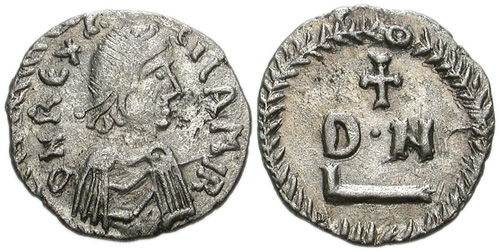
Münze: de:Siliqua, Karthago, Silber, im Namen des weströmischen Kaisers Honorius
Münze: de:Siliqua, Karthago, Silber, im Namen des weströmischen Kaisers Honorius Unknown authorUnknown author · Public domain · Commons

The Vandal Kingdom (Latin: Regnum Vandalum) or Kingdom of the Vandals and Alans (Latin: Regnum Vandalorum et Alanorum) was a confederation of Vandals and Alans, and a barbarian kingdom established under Gaiseric (or Genseric), a Vandalic warlord. It ruled parts of North Africa and the Mediterranean for 99 years from 435 to 534 AD. In 429 AD, an estimated 80,000 Vandals, using their boats, crossed over from Hispania to North Africa. They advanced eastward, conquering the coastal regions of what is now Tunisia, and Algeria.

From Wikipedia: Vandal Kingdom (CC BY-SA 4.0)

Origins and Founding

The Vandals, under their new king Gaiseric (also known as Genseric or Geiseric), crossed to Africa in 429, beginning the Vandalic conquest of Roman Africa. Although their numbers are unknown and some historians debate the validity of estimates, based on Procopius's assertion that the Vandals and Alans numbered 80,000 when they moved to North Africa, Peter Heather estimates that they could have fielded an army of around 15,000–20,000. According to Procopius, the Vandals came to Africa at the request of Bonifacius, the military ruler of the region. However, it has been suggested that the Vandals migrated to Africa in search of safety; they had been attacked by a Roman army in 422 and had failed to seal a treaty with them. Advancing eastward along the African coast, the Vandals laid siege to the walled city of Hippo Regius in 430.

From Wikipedia: Vandal Kingdom · History: Establishment (CC BY-SA 4.0)

Founded
439 CE
Preceded by
Africa

Capitals

Tunisie Carthage Photographie prise par Patrick GIRAUD
Tunisie Carthage Photographie prise par Patrick GIRAUD Calips · CC BY 2.5 · Commons
Carthage
439–534 CE
Hippo Regius
435–439 CE

Rulers

Government, Society and Religion

The administration of the Vandal Kingdom bears a close resemblance to the Roman provincial administration of Africa. While it was staffed by local Africans, the currency and taxation system were a creative adaptation of Roman models and were similar to those administered by the Romans. Vandal troops were also fashioned similarly to the Roman model. Power and wealth in the Vandal state were led by a military landowning aristocracy, and the political elite replaced and expropriated the largely absentee senatorial aristocracy. Other main sources of income included its takeover of the major grain and oil export region of the Romans, which had hitherto been the source of food for the major city of Rome. The wealth that the Vandal leaders accumulated was spent on luxurious town houses and religious buildings, according to literary sources and archeology.

From Wikipedia: Vandal Kingdom · Administration (CC BY-SA 4.0)

Government
Pre-feudal Monarchy
Languages
Latin (spoken by elite and clergy), Vulgar Latin and African Romance (spoken by common people), Vandalic (spoken among elite), Punic (spoken among common people), Alanic (spoken among Alanic elite), Numidian (spoken among common people in rural areas), Medieval Greek (spoken among common people)
Religion
Arianism (among elite), Nicene Christianity, then Chalcedonian Christianity

Economy and Trade

Historians since Edward Gibbon have seen the capture of North Africa by the Vandals and Alans as the "deathblow" and "the greatest single blow" to the Western Roman Empire in its struggle to survive. Prior to the Vandals, northern Africa was prosperous and peaceful, requiring only a small percentage of the Roman Empire's military forces, and was an important source of taxes for the empire and grain for the city of Rome. The scholar Josephus in the 1st century AD said that North Africa fed Rome for eight months of the year, with the other four months of needed grain coming from Egypt.

Read more

The Roman need for grain from North Africa may have declined by the 5th century because the population of the city of Rome had fallen, and the number of Roman soldiers had decreased. The treaty in 442 between Rome and the Vandals seems to have ensured that grain shipments continued.

From Wikipedia: Vandal Kingdom · History: The grain trade (CC BY-SA 4.0)

Wars and Battles

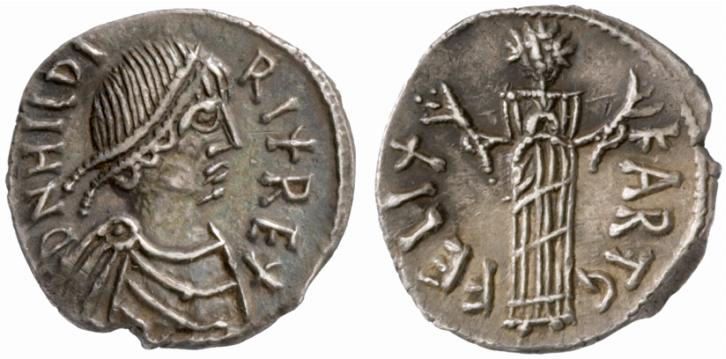
Thrasamund's successor Hilderic (523–530) was the Vandal king who was most tolerant of Trinitarian Christians. He granted religious freedom, and consequently Chalcedonian synods were once more held in North Africa. However, he had little interest in war and left it to his nephew Hoamer. When the Vandals and the Berber Frexes tribe came into conflict yet again, Hoamer suffered a decisive defeat by the Frexes led by Guenfan and his son Antalas. Following this, the Arian faction within the royal family led a revolt, and Hoamer's cousin Gelimer (530–534) became king. Hilderic, Hoamer, and their relatives were thrown into prison. In 533, Hilderic was executed when the Byzantine army approached Carthage. Byzantine Emperor Justinian I declared war, with the stated intention of restoring Hilderic to the Vandal throne.

From Wikipedia: Vandal Kingdom · History: Final years and conquest by the Eastern Roman Empire (CC BY-SA 4.0)

Decline and Fall

Ended
533 CE

Ancient States of North Africa: Frequently Asked Questions

Which states existed in North Africa in this period?

This page maps 5 states of North Africa founded between 650 BCE and 439 CE: Carthage, Cyrenaica, Mauretania, Kingdom of Numidia, Vandal Kingdom.

Which was the largest of the Ancient States of North Africa?

Carthage had the largest mapped extent, about 454,097 km².

Which of the Ancient States of North Africa lasted longest?

Carthage lasted longest, 650 BCE – 145 BCE.

Sources

  • Reading text: Wikipedia articles on the group and each state, condensed (CC BY-SA 4.0).
  • Facts, rulers and wars: Wikidata (CC0).
  • Borders: Cliopatria, Seshat Global History Databank (CC BY 4.0).
  • Pictures: Wikimedia Commons; the author and licence are under each picture.

Largest state by mapped extent: Carthage.