Skip to content
YearMaps
10 states1916 CE – 2024 CE

Modern States of Mesopotamia and the Levant: Map & History

10 states of Mesopotamia and the Levant on one map, from 1916 CE to 2024 CE.The largest, Arab Federation, covered about 537,952 km²; the longest-lived, Iraqi Republic, lasted 1960 CE – 2005 CE. Each has its own section below with its rulers, capitals, wars and pictures where the records hold them.

مونتاج لمدينة مكة.
MrJoker07 · CC BY-SA 4.0 · Commons
Damascus landmarks
See above. · CC BY-SA 3.0 · Commons
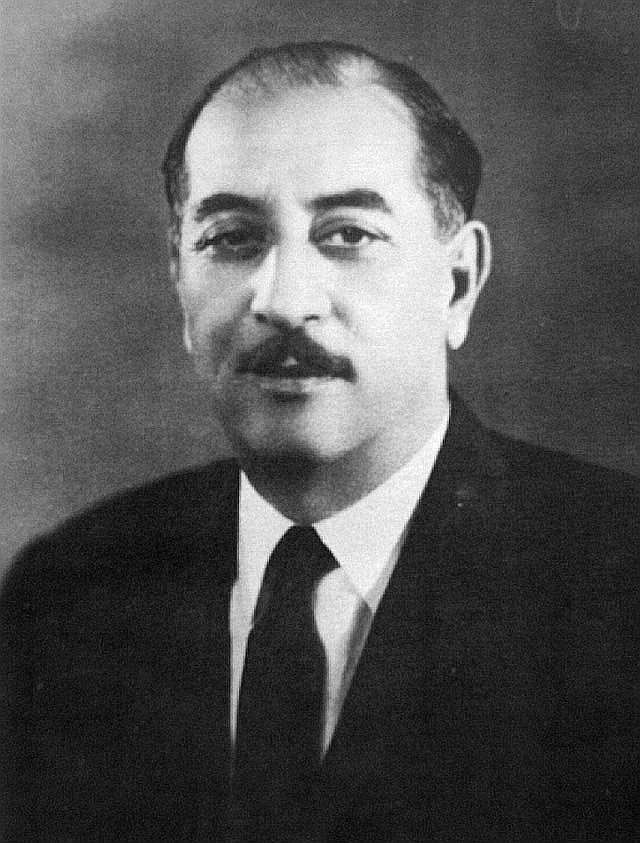
Faisal I, King of Syria and King of Iraq
Vandyk photographic studio · Public domain · Commons
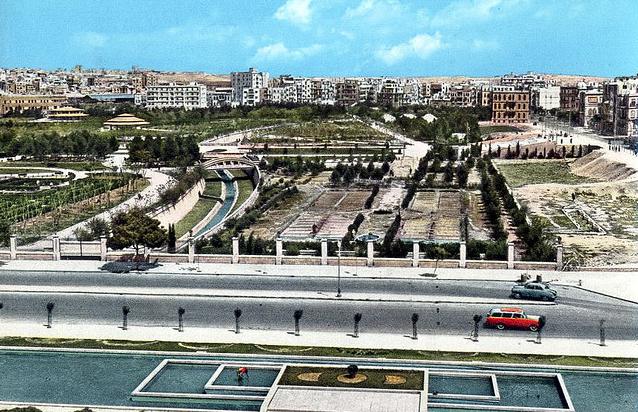
Aleppo public park, 1950
Unknown authorUnknown author · Public domain · Commons
Base map
1916 AD
1948 AD
2024 AD
1916 AD
1950 AD
1975 AD
2000 AD
2024 AD
Epochs:
↗
↗
↗
↗
↗
↗
↗
↗

Each state in its own colour. Move the timeline to see which existed in any year from 1916 to 2024; select a territory to read about it. Borders: Cliopatria / Seshat (CC BY 4.0).

The Modern States of Mesopotamia and the Levant Compared

StateYearsCapitalLargest extentRulers
Kingdom of Hejaz1916 CE – 1925 CEMecca, (1916–1924), Jeddah, (1924–1925)434,096 km²2
French Mandate for Syria and Lebanon1920 CE – 1945 CEBeirut210,022 km²–
Kingdom of Iraq1932 CE – 1957 CEBaghdad434,052 km²3
Second Syrian Republic1946 CE – 1957 CEDamascus187,923 km²2
Palestinians1948 CE – 1948 CE–5,477 km²–
Arab Federation1958 CE – 1959 CEBaghdad537,952 km²2
Iraqi Republic1960 CE – 2005 CEBaghdad456,521 km²10
Arab Socialist Ba'ath Party1967 CE – 1972 CE–185,909 km²–
British Overseas Territories2000 CE – 2024 CEBritish Antarctic Territory20,560 km²–
Gaza/Hamas2014 CE – 2024 CEGaza City155 km²2

Timeline of the Modern States of Mesopotamia and the Levant

When each state existed, 1916 CE to 2024 CE. Select a year to see the map then.

  1. Kingdom of Hejaz
    1916 CE – 1925 CE
  2. French Mandate for Syria and Lebanon
    1920 CE – 1945 CE
  3. Kingdom of Iraq
    1932 CE – 1957 CE
  4. Second Syrian Republic
    1946 CE – 1957 CE
  5. Palestinians
    1948 CE – 1948 CE
  6. Arab Federation
    1958 CE – 1959 CE
  7. Iraqi Republic
    1960 CE – 2005 CE
  8. Arab Socialist Ba'ath Party
    1967 CE – 1972 CE
  9. British Overseas Territories
    2000 CE – 2024 CE
  10. Gaza/Hamas
    2014 CE – 2024 CE

The 10 States

Kingdom of Hejaz

1916 CE – 1925 CE · Capital: Mecca, (1916–1924), Jeddah, (1924–1925) · 434,096 km²

مونتاج لمدينة مكة.
مونتاج لمدينة مكة. MrJoker07 · CC BY-SA 4.0 · Commons

The Hashemite Kingdom of Hejaz (Arabic: المملكة الحجازية الهاشمية, romanized: Al-Mamlakah al-Ḥijāziyyah Al-Hāshimiyyah) was a state in the Hejaz region of Western Asia that included the western portion of the Arabian Peninsula that was ruled by the Hashemite dynasty. It was self-proclaimed as a kingdom in June 1916 during the First World War, to be independent from the Ottoman Empire, on the basis of an alliance with the British Empire to drive the Ottoman Army from the Arabian Peninsula during the Arab Revolt.

From Wikipedia: Kingdom of Hejaz (CC BY-SA 4.0)

Origins and Founding

In 1908, the Young Turks took over the Ottoman Empire, and in 1909 when a counter-coup failed, the Young Turks "secularized" the government. Hussein bin Ali, Sharif of Mecca, was appointed by the previous Sultan of the Ottoman Empire and did not favor the Young Turks; his opposition to the empire grew over time, culminating in the Arab Revolt.

Read more

Hussein bin Ali, the Sharif and Emir of Mecca from 1908, enthroned himself as King of the Hejaz after proclaiming the Great Arab Revolt against the Ottoman Empire, and continued to hold both of the offices of Sharif and King from 1916 to 1924. At the end of his reign he also briefly laid claim to the office of Sharifian Caliph; he was a 37th-generation direct descendant of Muhammad, as he belongs to the Hashemite family.

From Wikipedia: Kingdom of Hejaz · Background (CC BY-SA 4.0)

Founded
1916 CE
Preceded by
Hejaz Vilayet

Rulers

Government, Society and Religion

Government
Absolute monarchy
Languages
Arabic
Religion
Sunni Islam

Coins, Currency and Symbols

Spanish currency (Spanish Real) used in Hejaz with a countermark. The original inscription was "FERDIN. VII - DEI GRATIA - 1820" (translates to:" FERDIN VII - By the grace of God - 1820".)
Spanish currency (Spanish Real) used in Hejaz with a countermark. The original inscription was "FERDIN. VII - DEI GRATIA - 1820" (translates to:" FERDIN VII - By the grace of God - 1820".) Alejo Maria · CC BY 2.5 es · Commons
Currency
Hejaz Saudi riyal
  • Flag of Hejaz (1917)
    Flag of Hejaz (1917) Orange Tuesday at English Wikipedia / (Original text: Orange Tuesday (talk)) · Public domain · Commons
  • Coat of arms of Kingdom of Hejaz
    Coat of arms of Kingdom of Hejaz Samhanin · CC BY 3.0 · Commons

Wars and Battles

Decline and Fall

Ended
1925 CE
Last recorded ruler
Ali of Hejaz

French Mandate for Syria and Lebanon

1920 CE – 1945 CE · Capital: Beirut · 210,022 km²

Damascus landmarks
Damascus landmarks See above. · CC BY-SA 3.0 · Commons

The Mandate for Syria and the Lebanon (French: Mandat pour la Syrie et le Liban; Arabic: الانتداب الفرنسي على سوريا ولبنان, romanized: al-intidāb al-faransī ʻalā sūriyā wa-lubnān, also referred to as the Levant States; 1923−1946) was a League of Nations mandate founded in the aftermath of the First World War and the partitioning of the Ottoman Empire concerning the territories of Syria and Lebanon. The mandate system was supposed to differ from colonialism, with the governing country intended to act as a trustee until the inhabitants were considered eligible for self-government.

From Wikipedia: Mandate for Syria and the Lebanon (CC BY-SA 4.0)

Origins and Founding

With the defeat of the Ottomans in Syria, British troops, under General Sir Edmund Allenby, entered Damascus in 1918 and were accompanied by troops of the Arab Revolt, led by Faisal, the son of Hussein bin Ali, King of Hejaz. Faisal established the first new postwar Arab government in Damascus in October 1918, and named Ali Rikabi a military governor.

Read more

The new Arab administration formed local governments in the major Syrian cities, and the pan-Arab flag was raised all over Syria. The Arabs, trusting earlier British promises, hoped that the new Arab state would include all Arab lands stretching from Aleppo, in northern Syria, to Aden, in southern Yemen.

However, in accordance with the secret Sykes–Picot Agreement between the United Kingdom and France, General Allenby assigned to the Arab administration only the interior regions of Syria (the eastern zone).

From Wikipedia: Mandate for Syria and the Lebanon · Background (CC BY-SA 4.0)

Founded
1920 CE

Capitals

Aleppo, Syria.
Aleppo, Syria. Vyacheslav Argenberg · CC BY 4.0 · Commons
Damascus
1923 CE

Government, Society and Religion

Languages
French

Economy and Trade

In 1921, the French already wanted to develop the agricultural sector, and a feasibility study of the Union Economique de Syrie the North-East of Syria and the Alawite State were deemed profitable for the cultivation of cotton. Investments began in 1924, but it took until the 1930s to produce more than the level that had been reached in 1925. Due to the high economic integration of the region, a trade separation would have harmed both mandates.

Read more

To maintain the economic ties that had been established in the region under the Ottomans, the British and the French agreed to a customs-free zone between their mandates in 1921 even though that decision was protested by French manufacturers. The populations of Palestine, Syria and Lebanon were strongly in favour of the customs-free zone and successfully protested a possible abolition in 1927.

From Wikipedia: Mandate for Syria and the Lebanon · Economy (CC BY-SA 4.0)

Coins, Currency and Symbols

  • Flag of Syria French mandate
    Flag of Syria French mandate F l a n k e r · Public domain · Commons

Decline and Fall

Ended
1945 CE
Succeeded by
Lebanon
Succeeded by
Hatay State

Kingdom of Iraq

1932 CE – 1957 CE · Capital: Baghdad · 434,052 km²

Faisal I, King of Syria and King of Iraq
Faisal I, King of Syria and King of Iraq Vandyk photographic studio · Public domain · Commons

The Hashemite Kingdom of Iraq was the Iraqi state located in the Middle East from 1932 to 1958. It was founded on 23 August 1921 as the Kingdom of Iraq, following the defeat of the Ottoman Empire in the Mesopotamian campaign of the World War I. Although a League of Nations mandate was awarded to the United Kingdom in 1920, the 1920 Iraqi revolt resulted in the scrapping of the original mandate plan in favour of a formally sovereign Iraqi kingdom, but one that was under effective British administration. The plan was formally established by the Anglo-Iraqi Treaty.

From Wikipedia: Kingdom of Iraq (CC BY-SA 4.0)

Origins and Founding

Founded
1932 CE
Preceded by
Mandatory Iraq

Rulers

Government, Society and Religion

The territory of Iraq was under Ottoman dominance until the end of the First World War, becoming an occupied territory under the British military from 1918. In order to transform the region to civil rule, Mandatory Mesopotamia was proposed as a League of Nations Class A mandate under Article 22 and entrusted to the United Kingdom of Great Britain and Ireland, when the former territories of that Ottoman Empire were divided in August 1920 by the Treaty of Sèvres. However, the 1920 Iraqi revolt resulted in the scrapping of the original mandate plan. Instead, the Kingdom of Iraq was recognised as a sovereign country under King Faisal I of Iraq. Not withstanding the formal sovereignty of the Iraqi king, a treaty of alliance was concluded between the Kingdom of Iraq and the United Kingdom in 1922 called the Anglo-Iraqi Treaty.

From Wikipedia: Kingdom of Iraq · Kingdom of Iraq under de facto British administration (CC BY-SA 4.0)

Government
Unitary constitutional monarchy
Languages
Arabic
Religion
Sunni Islam

Coins, Currency and Symbols

Currency
Iraqi dinar
  • Flag of Iraq (1924–1959)
    Flag of Iraq (1924–1959) Unknown author · Public domain · Commons
  • Coat of arms of the Kingdom of Iraq (1921–1958)
    Coat of arms of the Kingdom of Iraq (1921–1958) Samhanin · CC BY 3.0 · Commons

Wars and Battles

After Faisal died in September 1933, King Ghazi reigned as a figurehead from 1933 to 1939, when he was killed in a motor accident. Pressure from Arab nationalists and Iraqi nationalists demanded that the British leave Iraq, but their demands were ignored by the United Kingdom.

Read more

Upon achieving official independence in October 1932, political tensions arose over the continued British presence in the new Hashemite Kingdom of Iraq, with Iraq's government and politicians split between those considered pro-British politicians, such as Nuri as-Said, who did not oppose a continued British presence, and anti-British politicians, such as Rashid Ali al-Gaylani, who demanded that remaining British influence in the country be removed.

From Wikipedia: Kingdom of Iraq · History: Political instability and army coups, 1933–1941 (CC BY-SA 4.0)

Decline and Fall

In 1945, during the final stages of World War II, Iraq joined the United Nations and became a founding member of the Arab League.

Read more

The period following the end of the occupation was a time of the creation of various political parties opposed to or supportive of the government including the National Democratic Party led by Kamil Chadirji, the Constitutional Union Party led by Nuri Al-Said, and the Iraqi Independence Party led by Muhammad Mahdi Kubba.

In 1948, massive violent protests, known as the Al-Wathbah uprising, broke out across Baghdad as a popular demand against the government treaty with the British, and with communist party support. More protests continued in spring, but were interrupted in May, with the martial law, when Iraq entered the 1948 Arab–Israeli War along with other members of the Arab League.

From Wikipedia: Kingdom of Iraq · History: The end of the British occupation until the end of the monarchy (CC BY-SA 4.0)

Ended
1957 CE
Succeeded by
Iraq

Second Syrian Republic

1946 CE – 1957 CE · Capital: Damascus · 187,923 km²

Aleppo public park, 1950
Aleppo public park, 1950 Unknown authorUnknown author · Public domain · Commons

The Second Syrian Republic, officially the Syrian Republic from 1950 to 1958 and the Syrian Arab Republic from 1961 to 1963, succeeded the First Syrian Republic, which had become de facto independent from the French Mandate in April 1946. The Second Republic was established under the Syrian Constitution of 1950, which was suspended from 1950 to 1954 during Adib Shishakli's rule and later became inoperative when Syria joined with the Republic of Egypt to form the United Arab Republic in 1958. The Second Republic was restored when Syria withdrew from the union in 1961.

From Wikipedia: Second Syrian Republic (CC BY-SA 4.0)

Origins and Founding

The Syrian flag shall be composed as follows, the length shall be double the height. It shall contain three bands of equal dimensions, the upper band being green, the middle band white, and the lower band black. The white portion shall bear three red stars in line, having five points each.

Read more

During December 1931 and January 1932, the first elections under the new constitution were held, under an electoral law providing for "the representation of religious minorities" as imposed by article 37 of the constitution. The National Bloc was in the minority in the new Chamber of deputies with only 16 deputies out of 70, due to intensive vote-rigging by the French authorities. Among the deputies were also three members of the Syrian Kurdish nationalist Xoybûn (Khoyboun) party, Khalil bey Ibn Ibrahim Pacha (Al-Jazira province), Mustafa bey Ibn Shahin (Jarabulus) and Hassan Aouni (Kurd Dagh).

From Wikipedia: Second Syrian Republic · Background: Mandatory Syrian Republic (1930–1946) (CC BY-SA 4.0)

Founded
1946 CE

Rulers

  • Hashim al-Atassi (first)
  • Nazim al-Kudsi (last)

Government, Society and Religion

Government
Military dictatorshipcite web
Languages
Arabic
Religion
Islam (all branches incl. Alawite), Christianity, Judaism, Druzism, Yazidism

Coins, Currency and Symbols

Monthly Averages of Offical USD/SYP Exchange Rates from January 2011 to July 2016
Monthly Averages of Offical USD/SYP Exchange Rates from January 2011 to July 2016 علاء الدين · Public domain · Commons
Currency
Syrian pound
  • Flag of Syria (1930–1958, 1961–1963)
    Flag of Syria (1930–1958, 1961–1963) See File history below for details. · Public domain · Commons

Decline and Fall

Ended
1957 CE

Palestinians

1948 CE – 1948 CE · 5,477 km²

Palestinian women in a protest in Jerusalem, Palestine 1930. Protest against the British Mandate. The sign reads "No dialogue, no negotiations until termination [of the Mandate]"
Palestinian women in a protest in Jerusalem, Palestine 1930. Protest against the British Mandate. The sign reads "No dialogue, no negotiations until termination [of the Mandate]" Unknown authorUnknown author · Public domain · Commons

Palestinians (Arabic: الفلسطينيون, romanized: al-Filasṭīniyyūn) are an Arab national group native to the region of Palestine, descended from those who have inhabited the area over the millennia. They represent a highly homogenized community who share a cultural and ethnic identity, and close linguistic and cultural ties with other Levantine Arabs.

From Wikipedia: Palestinians (CC BY-SA 4.0)

Origins and Founding

The timing and causes behind the emergence of a distinctively Palestinian national identity among the Arabs of Palestine are matters of scholarly disagreement. Some argue that it can be traced as far back as the peasants' revolt in Palestine in 1834 (or even as early as the 17th century), while others argue that it did not emerge until after the Mandatory Palestine period. Legal historian Assaf Likhovski states that the prevailing view is that Palestinian identity originated in the early decades of the 20th century, when an embryonic desire among Palestinians for self-government in the face of generalized fears that Zionism would lead to a Jewish state and the dispossession of the Arab majority crystallised among most editors, Christian and Muslim, of local newspapers.

From Wikipedia: Palestinians · Identity: Emergence of a distinct identity (CC BY-SA 4.0)

Founded
1948 CE

Government, Society and Religion

The majority of Palestinians are Muslim, the vast majority of whom are followers of the Sunni branch of Islam, with a small minority of Ahmadiyya. Palestinian Christians represent a significant minority of 6%, and belong to several denominations, followed by much smaller religious communities, including Druze and Samaritans. Palestinian Jews – considered Palestinian by the Palestinian National Charter adopted by the Palestine Liberation Organization (PLO) which defined them as those "Jews who had normally resided in Palestine until the beginning of the Zionist invasion" – today identify as Israelis (with the exception of a very few individuals).

From Wikipedia: Palestinians · Demographics: Religion (CC BY-SA 4.0)

Languages
Palestine and Israel: Arabic (Palestinian Arabic), Diaspora: Palestinian Arabic and languages of host countries
Religion
Majority: Sunni Islam, Significant minority: Christianity (various denominations), Minority: Non-denominational Islam, Druze, Samaritanism, Shia Islam
Population
14.3 million, center, frameless, 260px

Wars and Battles

Achievements and Monuments

Palestinian literature forms part of the wider genre of Arabic literature. Unlike its Arabic counterparts, Palestinian literature is defined by national affiliation rather than territorially. For example, Egyptian literature is the literature produced in Egypt. This too was the case for Palestinian literature up to the 1948 Arab-Israeli war, but following the Palestinian Exodus of 1948 it has become "a literature written by Palestinians" regardless of their residential status.

Read more

Contemporary Palestinian literature is often characterized by its heightened sense of irony and the exploration of existential themes and issues of identity. References to the subjects of resistance to occupation, exile, loss, and love and longing for homeland are also common.

From Wikipedia: Palestinians · Culture: Literature (CC BY-SA 4.0)

Arab Federation

1958 CE – 1959 CE · Capital: Baghdad · 537,952 km²

King Hussein I , of the Hashemite Kingdom of Jordan, meets with Secretary of Defense William S. Cohen in the Pentagon on April 2, 1997. Helene C. Stikkel.
King Hussein I , of the Hashemite Kingdom of Jordan, meets with Secretary of Defense William S. Cohen in the Pentagon on April 2, 1997. Helene C. Stikkel. Helene C. Stikkel - First uploader was Wikifreund at de.wikipedia · Public domain · Commons

The Hashemite Arab Federation was a short-lived confederation that lasted from 14 February to 2 August 1958, between the Hashemite kingdoms of Iraq and Jordan. Although the name implies a federal structure, it was de facto a confederation. The Federation was formed on 14 February 1958, when King Faisal II of Iraq and his cousin, King Hussein of Jordan, sought to unite their two Hashemite kingdoms as a response to the formation of the United Arab Republic between Egypt and Syria. The union lasted only six months.

From Wikipedia: Arab Federation (CC BY-SA 4.0)

Origins and Founding

Pan-Arabism and Arab nationalism were major movements in the Middle East after the dissolution of the Ottoman Empire in 1919–1925. Arab nationalism was particularly popular among intellectuals and the military. Pan-Arabists often advocated for an Arab Union that would combine all the Arabs in a single state, similar to romantic portrayals of the Ottoman Empire and the old caliphates. However, it was unclear who would lead any such proposed pan-Arab state, and major fissures grew between rivals for leadership. The Hashemite dynasty fashioned themselves as the true leaders of the Arab world, but were considered overly deferential to Western interests by other Arab nationalists, and had come to power with the assent and aid of the United Kingdom. Both Jordan and Iraq remained on largely friendly terms with the Western Bloc.

From Wikipedia: Arab Federation · Background (CC BY-SA 4.0)

Founded
1958 CE

Rulers

Government, Society and Religion

Government
Confederal constitutional diarchy
Languages
Arabic (Mesopotamian Arabic, Levantine Arabic)
Religion
Majority: Islam (Sunni and Shi'a), minorities: Christianity and others

Coins, Currency and Symbols

Currency
Iraqi Dinar
  • Flag of the Arab Federation
    Flag of the Arab Federation Orange Tuesday (talk) · Public domain · Commons

Wars and Battles

Tension between the UAR and the Arab Federation worsened. During the summer of 1958, UAR troop movements to the Syrian border instigated the Arab Federation to mobilize troops to counter this move. Within Iraq, a group called the Free Officers plotted against the monarchy. They were inspired both by Iraq's turbulent history of coups and counter-coups in the past decades as well as Nasser's successful overthrow of the Egyptian monarchy in 1952, although they were not direct agents of Nasser. In July 1958, troops led by Abd al-Karim Qasim were transiting through Baghdad on their way to the Jordanian-Syrian border. Qasim took the opportunity, with his troops having a legitimate excuse to be in Baghdad, to overthrow the government there in the 14 July Revolution.

From Wikipedia: Arab Federation · History: Iraqi military coup (CC BY-SA 4.0)

Iraqi Republic

1960 CE – 2005 CE · Capital: Baghdad · 456,521 km²

View of Sulaymaniyah (Slemani) City in Winter Snow
View of Sulaymaniyah (Slemani) City in Winter Snow Diyar Muhammed · CC BY-SA 4.0 · Commons

Iraq, officially the Republic of Iraq, is a country in West Asia. Located within the Middle East, it is bordered by Saudi Arabia to the south, Turkey to the north, Iran to the east, the Persian Gulf and Kuwait to the southeast, Jordan to the southwest, and Syria to the west. The country covers an area of 438,317 square kilometres (169,235 sq mi) and has a population of over 46 million, making it the 58th largest country by area and the 31st most populous in the world. Baghdad, home to over 8 million people, is the capital city and the largest in the country.

From Wikipedia: Iraq (CC BY-SA 4.0)

Origins and Founding

Founded
1960 CE
Preceded by
Kingdom of Iraq

Rulers

Government, Society and Religion

After the end of the Iraq War, Iraq sought and strengthened regional economic cooperation and improved relations with neighbouring countries. On 12 February 2009, Iraq officially became the 186th State Party to the Chemical Weapons Convention. Under the provisions of this treaty, Iraq is considered a party with declared stockpiles of chemical weapons. Because of their late accession, Iraq is the only State Party exempt from the existing timeline for destruction of their chemical weapons.

Read more

Since the situation eased, Iraq reengaged with its Arab neighbours while maintaining relations with Iran in an attempt to position Iraq as a country that would not exacerbate the security concerns of its neighbours and seeking a pragmatic balance in foreign relations. Iran–Iraq relations have flourished since 2005 by the exchange of high-level visits.

From Wikipedia: Iraq · Government and politics: Foreign relations (CC BY-SA 4.0)

Government
Federal parliamentary republic under confessionalism
Languages
Arabic, Kurdish
Religion
90–95% Islam (official), 61% Shia, 35% Sunni, 5-10% other religions (incl. Christians, Mandeans, Yazidis)

Economy and Trade

According to the International Fund for Agricultural Development, Iraq is an oil-rich upper-middle-income country. Iraq's economy is dominated by the oil sector, which has traditionally provided about 95% of foreign exchange earnings. The lack of development in other sectors has resulted in 18%–30% unemployed and a per capita GDP of $4,812. Public sector employment accounted for nearly 60% of full-time employment in 2011. The oil export industry, which dominates the Iraqi economy, generates little employment. Currently only a modest percentage of women (the highest estimate for 2011 was 22%) participate in the labour force. The official currency in Iraq is the Iraqi dinar. The Central Provisional Authority issued new dinar coins and notes, with the notes printed by De La Rue using modern anti-forgery techniques.

From Wikipedia: Iraq · Economy (CC BY-SA 4.0)

Coins, Currency and Symbols

Currency
Iraqi dinar
  • Flag of Iraq
    Flag of Iraq See File history below for details. · Public domain · Commons
  • Coat of arms of Iraq
    Coat of arms of Iraq Tonyjeff, Omar86, Kafka1 and AnonMoos; AnonMoos, Militaryace · Public domain · Commons

Wars and Battles

The Coalition Provisional Authority disbanded the Iraqi military and expelled Ba'athists from the new government. The insurgents fought against the coalition forces and the newly installed government. Saddam was captured and executed. The Shia–Sunni civil war took place from 2006 to 2008. The coalition forces were accused of war crimes such as the Abu Ghraib torture, the Fallujah massacre, the Mahmudiyah rape and killings and the Mukaradeeb wedding party massacre. Following the withdrawal of US troops in 2011, the occupation ceased and war ended. The war in Iraq has resulted in between 151,000 and 1.2 million Iraqis being killed.

Read more

The subsequent efforts to rebuild the country amidst sectarian violence was galvanised by continuing discontent over Nouri al-Maliki's government, which led to protests.

From Wikipedia: Iraq · History: Insurgency and Civil war (CC BY-SA 4.0)

Achievements and Monuments

The architecture of Iraq has a long history, encompassing several distinct cultures and spanning a period from the 10th millennium BC and features both the Mesopotamian and Abbasid architecture. Baghdad and Mosul have plethora of cultural and heritage buildings. There are numerous historic mosques in Baghdad and Basra, old churches in Mosul and synagogues in Baghdad. Modern prominent architects include Zaha Hadid, Basil Bayati, Rifat Chadirji and Hisham N. Ashkouri among others.

Read more

The capital, Ninus or Nineveh, was taken by the Medes under Cyaxares, and some 200 years after Xenophon passed over its site, then mere mounds of earth. It remained buried until 1845, when Botta and Layard discovered the ruins of the Assyrian cities.

From Wikipedia: Iraq · Culture: Architecture (CC BY-SA 4.0)

Decline and Fall

Ended
2005 CE
Last recorded ruler
Nizar Amidi

Arab Socialist Ba'ath Party

1967 CE – 1972 CE · 185,909 km²

The Arab Socialist Ba'ath Party – Syria Region (Arabic: حزب البعث العربي الاشتراكي – قطر سوريا Ḥizb al-Ba'th al-'Arabī al-Ishtirākī – Quṭr Sūriyā), officially the Syrian Regional Branch (Arabic: الفرع القطري السوري), was a Ba'athist organisation founded on 7 April 1947 by Michel Aflaq, Salah al-Din al-Bitar and followers of Zaki al-Arsuzi. The party ruled Syria from the 1963 coup d'état, which brought the Ba'athists to power, until 8 December 2024, when Bashar al-Assad fled Damascus in the face of a rebel offensive which concluded the Syrian civil war.

From Wikipedia: Arab Socialist Ba'ath Party – Syria Region (CC BY-SA 4.0)

Origins and Founding

The Ba'ath Party, and indirectly the Syrian Regional Branch, was established on 7 April 1947 by Michel Aflaq (a Christian), Salah al-Din al-Bitar (a Sunni Muslim) and Zaki al-Arsuzi (an Alawite). According to the congress, the party was "nationalist, populist, socialist, and revolutionary" and believed in the "unity and freedom of the Arab nation within its homeland." The party opposed the theory of class conflict, but supported the nationalisation of major industries, the unionisation of workers, land reform, and supported private inheritance and private property rights to some degree. The party merged with the Arab Socialist Party (ASP), led by Akram al-Hawrani, to establish the Arab Socialist Ba'ath Party in Lebanon following Adib Shishakli's rise to power. Most ASP members did not adhere to the merger and remained, according to George Alan, "passionately loyal to Hawrani's person."

From Wikipedia: Arab Socialist Ba'ath Party – Syria Region · History: Founding and early years: 1947–1963 (CC BY-SA 4.0)

Founded
1967 CE

Government, Society and Religion

The Military Bureau, which succeeded the Military Committee, oversaw the Syrian Armed Forces. Shortly after the 8 March Coup, the Military Committee created National Council for the Revolutionary Command (NCRC) and became the supreme authority in military affairs. The party had a parallel structure within the Syrian armed forces. The military and civilian sectors only met at the regional level, as the military sector is represented in the Central Command and sends delegates to general congresses. The military sector was divided into branches, which operated at the battalion level. The head of a military party branch was called a tawjihi, or guide.

Read more

In 1963, the Military Committee established the Military Organisation, which consisted of 12 branches resembling their civilian counterparts. The Military Organisation was led by a Central Committee, which represented the Military Committee.

From Wikipedia: Arab Socialist Ba'ath Party – Syria Region · Organization: Military Bureau (CC BY-SA 4.0)

Coins, Currency and Symbols

  • Flag of the Ba'ath Party
    Flag of the Ba'ath Party Drawn by User:Darz Mol. · Public domain · Commons

British Overseas Territories

2000 CE – 2024 CE · Capital: British Antarctic Territory · 20,560 km²

Aerial photo Port Stanley
Aerial photo Port Stanley Unknown author · CC BY-SA 3.0 · Commons

The British Overseas Territories (BOTs) are fourteen dependent territories of the United Kingdom (UK) that lie outside the British Islands. These territories are remnants of the former British Empire, which remained under British sovereignty following decolonisation, albeit with varying constitutional statuses. Britain is notably the only country to still have territories in every continent on earth, except the continent of Australia.

From Wikipedia: British Overseas Territories (CC BY-SA 4.0)

Origins and Founding

Founded
2000 CE

Government, Society and Religion

The head of state in the overseas territories is the British monarch, currently King Charles III. The monarch appoints a representative in each territory to exercise the executive power of the monarch. In territories with a permanent population, a governor is appointed by the monarch on the advice of the British government. Currently (2019), all but two governors are either career diplomats or have worked in other civil service departments. The remaining two governors are former members of the British armed forces. In territories without a permanent population, a commissioner is usually appointed to represent the monarch. Exceptionally, in the overseas territories of Saint Helena, Ascension, Tristan da Cunha and the Pitcairn Islands, an administrator is appointed to be the governor's representative.

From Wikipedia: British Overseas Territories · Government: Head of state (CC BY-SA 4.0)

Government
Dependent territories under a constitutional monarchy
Languages
English

Wars and Battles

Ascension Island (part of Saint Helena, Ascension and Tristan da Cunha) – the base known as RAF Ascension Island is used by both the Royal Air Force and the United States Air Force.

Read more

Bermuda – became the primary Royal Navy base in North America, following US independence, and was designated an Imperial fortress. The naval establishment included an admiralty, a dockyard, and a naval squadron. A considerable military garrison was built up to protect it, and Bermuda, which the British government came to see as a base, rather than as a colony, was known as Fortress Bermuda, and the Gibraltar of the West (Bermudians, like Gibraltarians, also dub their territory "The Rock"). Canada and the United States also established bases in Bermuda during the Second World War, which were maintained through the Cold War.

From Wikipedia: British Overseas Territories · Relations with the United Kingdom: Military (CC BY-SA 4.0)

Gaza/Hamas

2014 CE – 2024 CE · Capital: Gaza City · 155 km²

Map showing the extent of territory governed by Hamas in Gaza
Map showing the extent of territory governed by Hamas in Gaza Evaporation123 · CC0 · Commons

The Gaza Strip is governed by Hamas which assumed control of the territory on 11 June 2007 after seizing it from the rival Fatah-controlled Palestinian Authority (PA). The Hamas administration was first led by Ismail Haniyeh from June 2007 until February 2017; then by Yahya Sinwar until his killing in October 2024; then by Mohammed Sinwar until his assassination in May 2025; then by Izz al-Din al-Haddad until his assassination in May 2026; then by Mohammed Odeh until his assassination the same month.

From Wikipedia: Gaza Strip under Hamas (CC BY-SA 4.0)

Rulers

  • Ismail Haniyeh
  • Yahya Sinwar

Government, Society and Religion

The Hamas government of 2016 is the third de facto Hamas government in the Gaza Strip since the Hamas takeover of the Gaza Strip in 2007. On 17 October 2016 it as announced that the Supreme Administrative Committee, which is in charge of the conduct of Gaza's ministries, had carried out a Cabinet reshuffle in active ministries and a change the positions of 16 deputy ministers and directors general in government institutions. The new administration was composed of Deputy Ministers, Directors General and other high-level officials, not directly bound to the Ramallah administration. It was initially speculated that the 2016 Hamas government was an attempt to return Ismail Haniyeh to full control of the Gaza Strip. As part of the government changes, the Ministry of Planning was abolished.

From Wikipedia: Gaza Strip under Hamas · History: 2016 Hamas administration (CC BY-SA 4.0)

Government
Authoritarian one-party Islamist state under a dictatorship
Languages
Arabic

Economy and Trade

Gaza generally obtained its diesel fuel from Israel but, in 2011, Hamas began buying cheaper fuel from Egypt, bringing it via a network of tunnels, and refused to buy it from Israel.

Read more

In early 2012, due to internal economic disagreement between the Palestinian Authority and the Hamas Government in Gaza, decreased supplies from Egypt through tunnel smuggling, and Hamas' refusal to ship fuel via Israel, the Gaza Strip plunged into a fuel crisis, bringing increasingly long electricity shut downs and disruption of transportation. Egypt attempted to stop the use of tunnels for delivery of Egyptian fuel purchased by Palestinian authorities, and severely reduced supply through the tunnel network. As the crisis deepened, Hamas sought to equip the Rafah terminal between Egypt and Gaza for fuel transfer, and refused to accept fuel delivered via the Kerem Shalom crossing between Israel and Gaza.

From Wikipedia: Gaza Strip under Hamas · Finance and economics: 2012 fuel crisis (CC BY-SA 4.0)

Coins, Currency and Symbols

Currency
Israeli new shekel, Egyptian pound

Wars and Battles

Following the outbreak of the Gaza war and the Israeli invasion of the Gaza Strip in early November 2023, Hamas' complete control of the Gaza Strip was weakened as Israeli forces kept advancing. On 6 January 2024, the Israeli government stated that actual Hamas rule in the northern part of the Gaza Strip was eliminated due to Israeli military advance. By 18 January, the IDF stated that Hamas had begun to rebuild its armies in the occupied parts of Northern Gaza. The IDF had previously stated these armies were stripped of military capabilities but by 18 January the fighting strength of many battalions had been significantly restored. Some change occurred from late January 2024 onward, as it was reported that Hamas managed to revive some of its governing abilities in parts of Gaza city from which Israeli forces withdrew.

From Wikipedia: Gaza Strip under Hamas · History: Gaza war (CC BY-SA 4.0)

Modern States of Mesopotamia and the Levant: Frequently Asked Questions

Which states existed in Mesopotamia and the Levant in this period?

This page maps 10 states of Mesopotamia and the Levant founded between 1916 CE and 2014 CE: Kingdom of Hejaz, French Mandate for Syria and Lebanon, Kingdom of Iraq, Second Syrian Republic, Palestinians, Arab Federation, Iraqi Republic, Arab Socialist Ba'ath Party, British Overseas Territories, Gaza/Hamas.

Which was the largest of the Modern States of Mesopotamia and the Levant?

Arab Federation had the largest mapped extent, about 537,952 km².

Which of the Modern States of Mesopotamia and the Levant lasted longest?

Iraqi Republic lasted longest, 1960 CE – 2005 CE.

Sources

  • Reading text: Wikipedia articles on the group and each state, condensed (CC BY-SA 4.0).
  • Facts, rulers and wars: Wikidata (CC0).
  • Borders: Cliopatria, Seshat Global History Databank (CC BY 4.0).
  • Pictures: Wikimedia Commons; the author and licence are under each picture.

Largest state by mapped extent: Arab Federation.