Skip to content
YearMaps
12 states750 BCE – 204 BCE

Warring States of Ancient China: Map & History

The Warring States period (c. 475 – 221 BC) in Chinese history comprises the final centuries of the Zhou dynasty (c. 1046 – 256 BC), which were characterized by warfare, bureaucratic and military reform, and political consolidation. It followed the Spring and Autumn period and concluded with the wars of conquest that saw the state of Qin annex each of the other contender states by 221 BC and found the Qin dynasty, the first imperial dynastic state in East Asian history. It saw developments in philosophy, commerce, agriculture, the arts, and society at large.

While scholars have identified several different dates as marking the beginning of the Warring States period, Sima Qian's choice of 475 BC is the most often cited. The era largely corresponds to the second half of the Eastern Zhou period, when the king of Zhou formally ruled as Chinese sovereign, but had lost political power and functioned in practice as a figurehead. This dynamic served as the backdrop for the machinations of the eponymous Warring States. The term "Warring States period" comes from the Record of the Warring States, a work of history compiled during the early Han dynasty (202 BC – 220 AD). It was also named such because of how the scale of warfare exploded during this period.

From Wikipedia: Warring States period (CC BY-SA 4.0)

太极门前的广场
山海风 · CC BY-SA 3.0 · Commons
China Map, Chu State, 260BCE
Philg88 · CC BY-SA 3.0 · Commons
A portrait of the w:Duke of Zhou from w:Sancai Tuhui.
Wang Qi · Public domain · Commons
Photograph of a model of the ancient city of Linzi in the Museum of the Qi State.
Rolfmueller · CC BY-SA 3.0 · Commons
Base map
750 BC
498 BC
204 BC
750 BC
600 BC
500 BC
400 BC
300 BC
204 BC
Epochs:
↗
↗
↗
↗
↗
↗
↗
↗

Each state in its own colour. Move the timeline to see which existed in any year from 750 BC to 204 BC; select a territory to read about it. Borders: Cliopatria / Seshat (CC BY 4.0).

The Warring States of Ancient China Compared

StateYearsCapitalLargest extentRulers
Chen750 BCE – 451 BCEWanqiu (宛丘)5,047 km²–
Chu750 BCE – 224 BCEYing588,602 km²4
Jin750 BCE – 405 BCETang (唐), Quwo (曲沃), Jiang (絳), Xintian (新田)152,647 km²–
Lu750 BCE – 248 BCE1. Lushan (today Lushan), 2. City of Yan (today Qufu), 3. Qufu (today Qufu)43,571 km²1
Qi750 BCE – 204 BCEYingqiu (11 c.–866 BCE), Bogu (866–859 BCE), Linzi (859–221 BCE)129,744 km²2
Qin750 BCE – 219 BCEQuanqiu, Qinyi, Qian, Pingyang, Yong, Jingyang, Yueyang, Xianyang1,523,240 km²4
Wu750 BCE – 451 BCEWu (modern-day Wuxi and Suzhou, Jiangsu province)193,280 km²4
Yan750 BCE – 204 BCEJi (蓟), Xiadu105,154 km²1
Zheng750 BCE – 367 BCEZheng (鄭), Xinzheng (新鄭)10,403 km²1
Yue500 BCE – 334 BCEKuaiji, later Wu188,597 km²1
Wei404 BCE – 204 BCEAnyi (安邑), Daliang (大梁; from 361 BC)97,232 km²2
Zhao404 BCE – 226 BCEJinyang, Handan66,731 km²2

Timeline of the Warring States of Ancient China

When each state existed, 750 BCE to 204 BCE. Select a year to see the map then.

  1. Chen
    750 BCE – 451 BCE
  2. Chu
    750 BCE – 224 BCE
  3. Jin
    750 BCE – 405 BCE
  4. Lu
    750 BCE – 248 BCE
  5. Qi
    750 BCE – 204 BCE
  6. Qin
    750 BCE – 219 BCE
  7. Wu
    750 BCE – 451 BCE
  8. Yan
    750 BCE – 204 BCE
  9. Zheng
    750 BCE – 367 BCE
  10. Yue
    500 BCE – 334 BCE
  11. Wei
    404 BCE – 204 BCE
  12. Zhao
    404 BCE – 226 BCE

How the Warring States of Ancient China Began

Where did the Warring States of Ancient China come from?

The Eastern Zhou dynasty began its fall around the 5th century BC. As their influence waned, they had to rely on armies in allied states rather than their own military force. Hundreds of smaller polities coalesced into seven major states which included Chu, Han, Qin, Wei, Yan, Qi and Zhao. However, there eventually was a shift in alliances because each state's ruler wanted independence. This caused hundreds of wars between 535 and 286 BC. The victorious state would have overall rule and control in China.

Read more

The system of feudal states created by the Western Zhou dynasty underwent enormous changes after 771 BC with the flight of the Zhou court to modern-day Luoyang and the diminution of its relevance and power. The Spring and Autumn period led to a few states gaining power at the expense of many others, the latter no longer able to depend on central authority for legitimacy or protection.

From Wikipedia: Warring States period · History: Background and formation (CC BY-SA 4.0)

How the Warring States of Ancient China Were Ruled

How were the Warring States of Ancient China governed?

In 369 BC, Marquess Wen of Wei would ascend the throne of Wei and become the leader of the Wei family. With the help of the Three Qins, they besieged the Qi territory (located in modern-day Pingyuan County, Shandong.) Marquess Wen of Wei would also lead the Three Jins against the Chu state in response to their routine occupations. In 400 BC, Chu would be defeated. Marquess Wen would lead Wei to become the mightiest state in China, with even one of Confucius' old students, named Bu Shang, became Wei's court tutor and numerous strategists at their disposal.

Read more

King Hui of Wei ascended the throne of Wei one year later in 370 BC. Thanks to his predecessors and a great geographical position, King Hui of Wei was able to have several states enter an alliance under King Hui's supervision.

From Wikipedia: Warring States period · History: Politics of Wei (369-335 BC) (CC BY-SA 4.0)

Culture of the Warring States of Ancient China

What did the Warring States of Ancient China leave behind?

The constant conflict and need for innovative social and political models led to the development of many philosophical doctrines, later known as the Hundred Schools of Thought. The most notable schools of thought include Mohism (expounded by Mozi), Confucianism (represented by Mencius and Xunzi), Legalism (represented by Shang Yang, Shen Buhai, Shen Dao and Han Fei) and Taoism (represented by Zhuangzi and Lao Tzu).

Read more

If it [war] is in winter it will be too cold, and if in summer it will be too hot. So it should be done neither in winter nor in summer. But if it is in spring it will take people away from sowing and planting, and if in fall it will take them away from reaping and harvesting. Should they be taken away in any of these seasons, innumerable people would die of hunger and cold.

From Wikipedia: Warring States period · Culture and society: Philosophical developments (CC BY-SA 4.0)

How the Warring States of Ancient China Ended

How did the Warring States of Ancient China end?

By 453, Jin, one of the most powerful states of the Spring and Autumn period was undergoing a civil war between its four ruling families; the Han, Wei, Zhao and Zhi clans. The Zhi clan, led by Zhi Yao was the most powerful and influential of the four and demanded land from all three clans as a show of submission. Only the Zhao clan refused and was besieged by the other three at Jinyang (modern-day Taiyuan). Zhao, however, was aware that the other two clans were only coerced into joining and convinced them to betray Zhi by flooding his camp. Zhi Yao and his family were exterminated, and his skull was presented to Zhao Wuxu, who used it as a drinking cup. This is marked as the beginning of the Warring States period.

From Wikipedia: Warring States period · History: Partition of Jin (453–403 BC) (CC BY-SA 4.0)

The 12 States

Chen

750 BCE – 451 BCE · Capital: Wanqiu (宛丘) · 5,047 km²

太极门前的广场
太极门前的广场 山海风 · CC BY-SA 3.0 · Commons

Chen (simplified Chinese: 陈; traditional Chinese: 陳; pinyin: Chén) was a state founded by Duke Hu of Chen during the Zhou dynasty of ancient China. It existed from c. 1045 BC–479 BC. Its capital was Wanqiu, in present-day Huaiyang County in the plains of eastern Henan province. Chen, the 4th most popular Chinese surname in the world, and members of the Hu clan, the 13th most popular Chinese surname in the world, would claim descent from the Duke Hu of Chen who was in turn descended from the legendary Emperor Shun. At its peak, Chen encompassed fourteen cities in modern-day Henan and Anhui.

From Wikipedia: Chen (state) (CC BY-SA 4.0)

Government, Society and Religion

Government
Monarchy

Achievements and Monuments

The founding duke, formally known as Duke Hu of Chen, is credited with being the originator of the Hu (surname) and the Chen (surname).

Read more

The Chen clan would later found the Chen dynasty of China and then the Trần dynasty, a golden age of Vietnam (陳朝 Tran is the Vietnamese pronunciation of Chen).

In 1400 AD, Hồ Quý Ly overthrew the Trần dynasty and established the Hồ dynasty (Hồ is the Vietnamese pronunciation for "Hu"). He claimed to be a descendant of Chen Hugong and Emperor Shun, and changed the name of Vietnam from Đại Việt to Đại Ngu (大虞), or Great Ngu (Ngu is the Vietnamese pronunciation for Yu 虞 the legendary state of Emperor Shun).

In ancient times 陳 sounded similar to 東 dong, meaning 'East'. It also sounded similar to 田 tian.

From Wikipedia: Chen (state) · Achievements and descendants (CC BY-SA 4.0)

Decline and Fall

Ended
451 BCE
Succeeded by
Chu

Chu

750 BCE – 224 BCE · Capital: Ying · 588,602 km²

China Map, Chu State, 260BCE
China Map, Chu State, 260BCE Philg88 · CC BY-SA 3.0 · Commons

Chu (Chinese: 楚; pinyin: Chǔ; Wade–Giles: Ch'u, Old Chinese: *s-r̥aʔ) was an ancient Chinese state during the Zhou dynasty. Their first ruler was King Wu of Chu in the early 8th century BC. Chu was located in the south of the Zhou heartland and lasted during the Spring and Autumn period. At the end of the Warring States period it was annexed by the Qin in 223 BC during the Qin's wars of unification.

From Wikipedia: Chu (state) (CC BY-SA 4.0)

Origins and Founding

According to legends recounted in Sima Qian's Records of the Grand Historian, the ruling family of Chu descended from the Yellow Emperor and his grandson and successor Zhuanxu. Zhuanxu's great-grandson Wuhui (吳回) was put in charge of fire by Emperor Ku and given the title Zhurong. Wuhui's son Luzhong (陸終) had six sons, all born by Caesarian section. The youngest, Jilian, adopted the ancestral surname Mi. Jilian's descendant Yuxiong was the teacher of King Wen of Zhou (r. 1099–1050 BC). After the Zhou overthrew the Shang dynasty, King Cheng (r. 1042–1021 BC) enfeoffed Yuxiong's great-grandson Xiong Yi with the fiefdom of Chu in the Nanyang Basin and the hereditary title of zǐ (子; "viscount"). Then the first capital of Chu was established at Danyang (present-day Xichuan in Henan).

From Wikipedia: Chu (state) · History: Founding (CC BY-SA 4.0)

Founder
Xiong Yi
Founded
750 BCE
Preceded by
Lu
Preceded by
Qi
Preceded by
Cai

Rulers

Government, Society and Religion

The Mo'ao (莫敖) and the Lingyin (令尹) were the top government officials of Chu. Sima was the military commander of Chu's army. Lingyin, Mo'ao and Sima were the San Gong (三公) of Chu. In the Spring and Autumn period, Zuoyin (左尹) and Youyin (右尹) were added as the undersecretaries of Lingyin. Likewise, Sima (司馬) was assisted by Zuosima (左司馬) and Yousima (右司馬) respectively. Mo'ao's status was gradually lowered while Lingyin and Sima became more powerful posts in the Chu court.

Read more

Ministers whose functions vary according to their titles were called Yin (尹). For example: Lingyin (Prime minister), Gongyin (Minister of works), and Zhenyin were all suffixed by the word "Yin". Shenyin (沈尹) was the minister of religious duties or the high priest of Chu, multiple entries in Zuo Zhuan indicated their role as oracles.

From Wikipedia: Chu (state) · Bureaucracy (CC BY-SA 4.0)

Government
Monarchy
Languages
Chu
Religion
Chinese folk religion

Coins, Currency and Symbols

S-106 W Han banliang, Wudi, 140-87 BC, lead, prob private mint, 22-23mm
S-106 W Han banliang, Wudi, 140-87 BC, lead, prob private mint, 22-23mm Prof. Gary Lee Todd · CC BY-SA 4.0 · Commons
Currency
ancient Chinese coinage

Wars and Battles

Achievements and Monuments

Based on the archaeological finds, Chu's culture was initially quite similar to that of the other Zhou states of the Yellow River basin. However, subsequently, Chu absorbed indigenous elements from the Baiyue lands that it conquered to the south and east, developing a blended culture compared to the northern plains.

Read more

During the Western Zhou period, the difference between the culture of Chu and the Central Plains states to the north was negligible. Only in the late Spring and Autumn period does Chu culture begin to diverge, preserving some older aspects of the culture and developing new phenomena. It also absorbed some elements from annexed areas. The culture of Chu had significant internal diversity from locality to locality. Chu, like Qin and Yan, was often described as being not as cultured by people in the Central plains.

From Wikipedia: Chu (state) · Culture (CC BY-SA 4.0)

Decline and Fall

Ended
224 BCE
Succeeded by
Qin dynasty
Succeeded by
Qin

Jin

750 BCE – 405 BCE · Capital: Tang (唐), Quwo (曲沃), Jiang (絳), Xintian (新田) · 152,647 km²

Jin (晉; 883 (or 896 or 907) –923), also known as Hedong (河東) and Former Jin (前晉) in Chinese historiography, was a dynastic state of China and the predecessor of the Later Tang dynasty. Its princely rulers were the ethnic Shatuo warlords Li Keyong and Li Cunxu (Li Keyong's son).

From Wikipedia: Jin (Later Tang precursor) (CC BY-SA 4.0)

Government, Society and Religion

Government
Monarchy
Languages
Old Chinese
Religion
Taoism, Animism, Ancestor veneration

Coins, Currency and Symbols

Currency
Spade money

Lu

750 BCE – 248 BCE · Capital: 1. Lushan (today Lushan), 2. City of Yan (today Qufu), 3. Qufu (today Qufu) · 43,571 km²

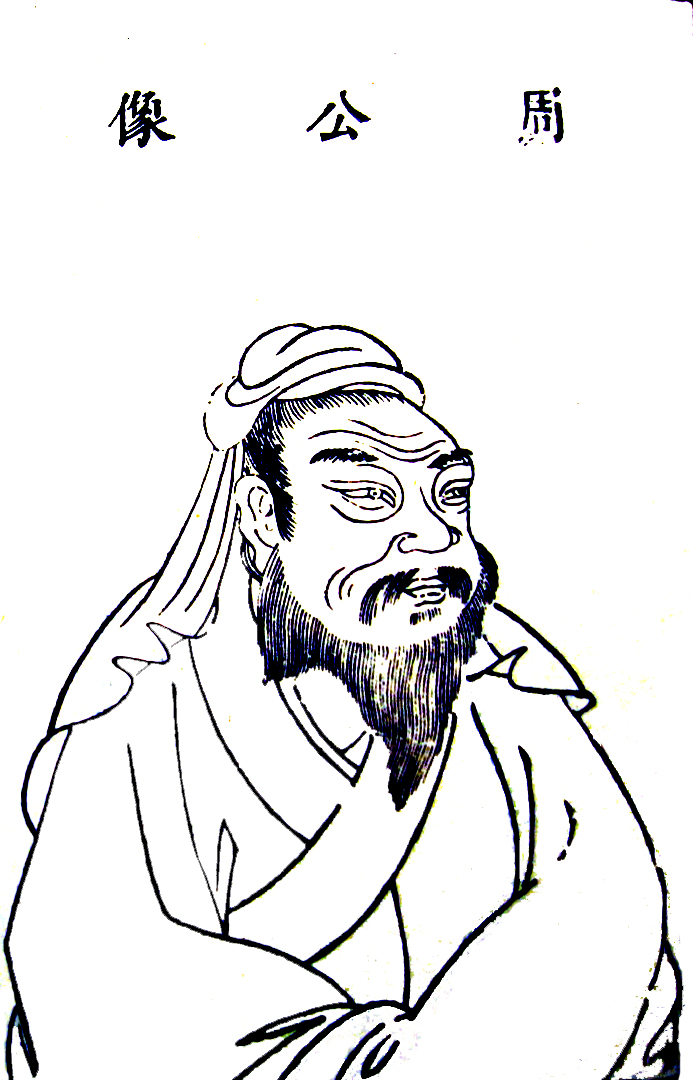
A portrait of the w:Duke of Zhou from w:Sancai Tuhui.
A portrait of the w:Duke of Zhou from w:Sancai Tuhui. Wang Qi · Public domain · Commons

Lu (Chinese: 魯; c. 1042 – 249 BC) was a vassal state during the Zhou dynasty of ancient China located around modern southwest Shandong. Founded in the 11th century BC, its rulers were from a cadet branch of the House of Ji (姬) that ruled the Zhou dynasty. The first duke was Boqin, a son of the Duke of Zhou, who was brother of King Wu of Zhou and regent to King Cheng of Zhou. Lu was the home state of Confucius as well as Mozi, and, as such, has an outsized cultural influence among the states of the Eastern Zhou and in history.

From Wikipedia: Lu (state) (CC BY-SA 4.0)

Origins and Founding

Founder
Dan of Zhou
Founded
750 BCE

Rulers

  • Hereditary dukes of the House of Ji (姬)

Government, Society and Religion

Government
Monarchy
Languages
Persian
Religion
Chinese folk religion, ancestor worship, Taoism

Coins, Currency and Symbols

Currency
Tenge

Qi

750 BCE – 204 BCE · Capital: Yingqiu (11 c.–866 BCE), Bogu (866–859 BCE), Linzi (859–221 BCE) · 129,744 km²

Photograph of a model of the ancient city of Linzi in the Museum of the Qi State.
Photograph of a model of the ancient city of Linzi in the Museum of the Qi State. Rolfmueller · CC BY-SA 3.0 · Commons

Qi, or Ch'i in Wade–Giles romanization, was a regional state of the Zhou dynasty in ancient China, whose rulers held titles of Hou (侯), then Gong (公), before declaring themselves independent Kings (王). Its capital was Linzi, located in present-day Shandong. Qi was founded shortly after the Zhou conquest of Shang, c. 1046 BCE. Its first monarch was Jiang Ziya (Lord Tai; r. 1046–1015 BCE), minister of King Wen and a legendary figure in Chinese culture. His family ruled Qi for several centuries before it was replaced by the Tian family in 386 BCE.

From Wikipedia: Qi (state) (CC BY-SA 4.0)

Origins and Founding

During the Zhou conquest of Shang, Jiang Ziya, a native of Ju County served as the chief minister to King Wu of Zhou, the same position he had held in service to King Wu's father. Following Zhou victory, the lands comprising much of the Shandong peninsula and some nearby surrounds were established as the state of Qi, with the Jiang clan charged with ruling and defending them. After King Wu's death, Ziya remained loyal to the Duke of Zhou's regency during the Three Guards' failed rebellion. Jiang Ziya was also called Lü Shang so the state of Qi is ruled by the Lü family of the Jiang clan and was commonly known as Jiang Qi.

Read more

The Shang prince Wu Geng had joined the revolt along with the Dongyi polities of Yan, Xu, and Pugu, located within the boundaries of Qi.

From Wikipedia: Qi (state) · History: Foundation (CC BY-SA 4.0)

Founded
750 BCE
Preceded by
Eastern Wei

Rulers

  • Duke Huan of Qi
  • Duke Jing of Qi

Government, Society and Religion

Government
Monarchy

Coins, Currency and Symbols

Gary Lee Todd Collection, Ancient Chinese Coins. Complete indexed photo collection at www.WorldHistoryPics.com.
Gary Lee Todd Collection, Ancient Chinese Coins. Complete indexed photo collection at www.WorldHistoryPics.com. Gary Lee Todd, Ph.D. · CC0 · Commons
Currency
knife money

Wars and Battles

Achievements and Monuments

Before Qin unified China, each state's customs, culture, dialects, and orthography had pronounced differences. According to the Yu Gong or Tribute of Yu, composed in the fourth or fifth century BCE and included in the Classic of Documents, there were nine distinct cultural regions of China, which are described in detail. The work focuses on the travels of the titular sage, Yu the Great, throughout each of the regions.

Read more

Although Qi's troops are numerous, their organization is unstable... The people of Qi are by nature unyielding and their country prosperous, but the ruler and officials are arrogant and care nothing for the people. The state's policies are not uniform and not strictly enforced. Salaries and wages are unfair and unevenly distributed, causing disharmony and disunity.

From Wikipedia: Qi (state) · Culture of Qi (CC BY-SA 4.0)

Decline and Fall

Ended
204 BCE
Succeeded by
Northern Zhou

Qin

750 BCE – 219 BCE · Capital: Quanqiu, Qinyi, Qian, Pingyang, Yong, Jingyang, Yueyang, Xianyang · 1,523,240 km²

​1962-05 1962年 陕西挖掘咸阳秦朝遗址
​1962-05 1962年 陕西挖掘咸阳秦朝遗址 《人民画报》 · Public domain · Commons

Qin (CHIN,, or Ch'in) was an ancient Chinese state during the Zhou dynasty. It is traditionally dated to 897 BC. The state of Qin originated from a reconquest of western lands that had previously been lost to the Xirong. Its location at the western edge of Chinese civilisation allowed for expansion and development that was not available to its rivals in the North China Plain. After extensive reform during the 4th century BC, Qin emerged as one of the dominant powers among the Seven Warring States. It unified the seven states of China under Qin Shi Huang in 221 BC.

From Wikipedia: Qin (state) (CC BY-SA 4.0)

Origins and Founding

According to the 2nd-century BC Records of the Grand Historian by Sima Qian, the state of Qin traced its origin to Zhuanxu, one of the legendary Five Emperors in ancient times. One of his descendants, Boyi, was granted the family name of Ying by Emperor Shun. During the Xia and Shang dynasties, the Ying clan split in two: a western branch that migrated across the Ordos Plateau to Quanqiu (犬丘; 'hill of the Quanrong', modern Li County, Gansu), and an eastern branch that settled east of the Yellow River in modern Shanxi. The latter became the ancestors of the rulers of the later state of Zhao.

Read more

The western Ying clan at Quanqiu were lords over the Xichui ('western march') region west of Mount Long and served as a buffer state for the Shang dynasty against invasions by the Xirong (also called Rong).

From Wikipedia: Qin (state) · History: Founding (CC BY-SA 4.0)

Founded
750 BCE
Preceded by
Former Yan
Preceded by
Former Liang
Preceded by
Dai

Rulers

Government, Society and Religion

Government
Monarchy
Languages
Old Chinese
Religion
Chinese folk religion, Ancestor veneration

Coins, Currency and Symbols

S-106 W Han banliang, Wudi, 140-87 BC, lead, prob private mint, 22-23mm
S-106 W Han banliang, Wudi, 140-87 BC, lead, prob private mint, 22-23mm Prof. Gary Lee Todd · CC BY-SA 4.0 · Commons
Currency
ancient Chinese coinage

Wars and Battles

In the five decades following King Huiwen's death, King Zhaoxiang of Qin shifted his focus to the central plains after victories in the south against Chu. In the early years of King Zhaoxiang's reign, the Marquis of Rang (穰侯) served as Qin's chancellor and actively advocated for military campaigns against the state of Qi in the far eastern part of China. However, the marquis had personal motives, intending to use Qin's formidable military to secure his own fief in Qi territories, as these lands were not directly linked to Qin and would not be under the Qin government's direct administration.

Read more

King Zhaoxiang's foreign adviser, Fan Sui, counselled the king to abandon these fruitless campaigns against distant states.

From Wikipedia: Qin (state) · History: Wars against Zhao, Han, and Wei (CC BY-SA 4.0)

Achievements and Monuments

Before Qin unified China, each state had its own customs and culture. According to the Yu Gong or Tribute of Yu, composed in the 4th or 5th century BC and included in the Book of Documents, there were nine distinct cultural regions of China, which are described in detail in this book. The work focuses on the travels of the titular sage, Yu the Great, throughout each of the regions. Other texts, predominantly military, also discussed these cultural variations.

Read more

The nature of Qin's troops is to disperse so that each unit fights their own respective battles.

The people of Qin are ferocious by nature and their terrain is treacherous. The government's decrees are strict and impartial. The rewards and punishments are clear. Qin soldiers are brave and high in morale so that they are able to scatter and engage in individual combat.

From Wikipedia: Qin (state) · Culture and society (CC BY-SA 4.0)

Decline and Fall

Ended
219 BCE
Succeeded by
Western Qin
Succeeded by
Later Qin
Succeeded by
Later Yan
Succeeded by
Later Liang

Wu

750 BCE – 451 BCE · Capital: Wu (modern-day Wuxi and Suzhou, Jiangsu province) · 193,280 km²

Wu (Chinese: 吳; pinyin: Wú, Old Chinese: *ŋʷˤa) was a state during the Western Zhou dynasty and the Spring and Autumn period, outside the Zhou cultural sphere. It was also known as Gouwu (句吳) or Gongwu (工/攻吳) from the pronunciation of the local language. Wu was located at the mouth of the Yangtze River east of the State of Chu and south of the State of Qi. Its first capital was at Meili (梅里, in modern Wuxi), then Helü's City (闔閭, in present-day Xueyan town near Wuxi), and later moved to Gusu (姑蘇, probably in modern Suzhou).

From Wikipedia: Wu (state) (CC BY-SA 4.0)

Origins and Founding

Founded
750 BCE
Preceded by
Eastern Han

Rulers

Government, Society and Religion

Government
Monarchy
Religion
Taoism

Coins, Currency and Symbols

S-106 W Han banliang, Wudi, 140-87 BC, lead, prob private mint, 22-23mm
S-106 W Han banliang, Wudi, 140-87 BC, lead, prob private mint, 22-23mm Prof. Gary Lee Todd · CC BY-SA 4.0 · Commons
Currency
ancient Chinese coinage

Achievements and Monuments

The Records of the Grand Historian states that the people in Wu wore their hair short and sported tattoos. For Sima Qian this would have illustrated their supposed barbarism, as in his time Chinese men and women were not allowed to cut their hair or otherwise modify their body - doing so was considered an offence against the ancestors from which one had inherited one's physical features.

From Wikipedia: Wu (state) · Culture (CC BY-SA 4.0)

Decline and Fall

Ended
451 BCE

Legacy in the Modern World

"Wu" continues to be used as a name for the region around Suzhou and Shanghai and their regional speech, Wu Chinese. It was employed by other states and princes holding power in the region, most notably Eastern Wu of the Three Kingdoms, and Wu and Wuyue of the Ten Kingdoms.

From Wikipedia: Wu (state) · Legacy (CC BY-SA 4.0)

Yan

750 BCE – 204 BCE · Capital: Ji (蓟), Xiadu · 105,154 km²

​琉璃河遗址标志碑,遗址建筑在该碑后侧
​琉璃河遗址标志碑,遗址建筑在该碑后侧 霧島聖 · CC BY-SA 4.0 · Commons

Yan (Chinese: 燕; pinyin: Yān; Old Chinese pronunciation: *ʔˤe) was an ancient Chinese state during the Zhou dynasty. Its capital was Ji (later known as Yanjing and now Beijing). During the Warring States period, the court was also moved to another capital at Xiadu at times. The history of Yan began in the Western Zhou in the early first millennium BC. After the authority of the Zhou king declined during the Spring and Autumn period in the 8th century BC, Yan survived and became one of the strongest states in China.

From Wikipedia: Yan (state) (CC BY-SA 4.0)

Origins and Founding

Founded
750 BCE
Preceded by
Ran Wei

Capitals

Peking and Nanking Ancient and Modern (I)
Peking and Nanking Ancient and Modern (I) Albert Herrmann & Georg Westermann · Public domain · Commons
Doudian City Walls
280 BCE

Rulers

Government, Society and Religion

Government
Monarchy

Coins, Currency and Symbols

Square Shoulder Spade coin from the State of Zhou. c. 650-400 BC. One character 貝 bei.
Square Shoulder Spade coin from the State of Zhou. c. 650-400 BC. One character 貝 bei. Davidhartill · CC BY-SA 3.0 · Commons
Currency
spade money, knife money
  • Gary Lee Todd Collection, Ancient Chinese Coins. Complete indexed photo collection at www.WorldHistoryPics.com.
    Gary Lee Todd Collection, Ancient Chinese Coins. Complete indexed photo collection at www.WorldHistoryPics.com. Gary Lee Todd, Ph.D. · CC0 · Commons
  • Gary Lee Todd Collection, Ancient Chinese Coins. Complete indexed photo collection at www.WorldHistoryPics.com.
    Gary Lee Todd Collection, Ancient Chinese Coins. Complete indexed photo collection at www.WorldHistoryPics.com. Gary Lee Todd, Ph.D. · CC0 · Commons

Wars and Battles

Achievements and Monuments

Before the state of Qin unified China in 221 BC, each region had its own unique customs and culture, although all were dominated by an upper class that shared a largely common culture. In the Yu Gong (Tribute of Yu), a section of the Book of Documents which was most likely composed in the 4th century BC, the author describes a China that is divided into Nine Provinces, each with its own distinctive culture and products. The core theme of this section is that these nine regions are unified into one state by the travels of the eponymous sage, Yu the Great and by sending each region's unique goods to the capital as tribute. Other texts also discussed these regional variations in culture and physical environments.

From Wikipedia: Yan (state) · Culture and society (CC BY-SA 4.0)

Decline and Fall

Ended
204 BCE
Succeeded by
Former Qin

Zheng

750 BCE – 367 BCE · Capital: Zheng (鄭), Xinzheng (新鄭) · 10,403 km²

​华州站轨道
​华州站轨道 Liuxingy · CC BY-SA 4.0 · Commons

Zheng (Chinese: 鄭; Old Chinese: *reng-s) was a vassal state in China during the Zhou dynasty (1046–221 BCE) located in the centre of ancient China in modern-day Henan Province on the North China Plain about 75 miles (121 km) east of the royal capital at Luoyang. It was the most powerful of the vassal states at the beginning of the Eastern Zhou (771–701 BCE), and was the first state to clearly establish a code of law in its late period of 543 BCE.

From Wikipedia: Zheng (state) (CC BY-SA 4.0)

Origins and Founding

Zheng was founded in 806 BC when King Xuan of Zhou, the penultimate king of the Western Zhou, made his younger brother Prince You (王子友) Duke of Zheng and granted him lands within the royal domain in the eponymous Zheng in modern-day Hua County, Shaanxi on the Wei River east of Xi'an. Prince You, known posthumously as Duke Huan of Zheng, established what would be the last bastion of Western Zhou. He went on to serve as Situ under King You of Zhou. When the Quanrong tribes sacked the Zhou capital Haojing in 771 BC, Duke Huan was killed along with his nephew King You of Zhou.

Read more

Duke Huan was succeeded by his son Duke Wu (鄭武公). Along with Marquis Wen of Jin, Duke Wu supported King Ping of Zhou against a rival, thereby helping to establish the Eastern Zhou.

From Wikipedia: Zheng (state) · Foundation (CC BY-SA 4.0)

Founded
750 BCE

Rulers

Government, Society and Religion

Government
Monarchy
Languages
Old Chinese
Religion
Taoism, Animism, ancestor worship

Coins, Currency and Symbols

S-106 W Han banliang, Wudi, 140-87 BC, lead, prob private mint, 22-23mm
S-106 W Han banliang, Wudi, 140-87 BC, lead, prob private mint, 22-23mm Prof. Gary Lee Todd · CC BY-SA 4.0 · Commons
Currency
ancient Chinese coinage

Decline and Fall

Ended
367 BCE
Succeeded by
Han

Yue

500 BCE – 334 BCE · Capital: Kuaiji, later Wu · 188,597 km²

Shaoxing has a good mixture of parkland and city. And lots of pagodas.
Shaoxing has a good mixture of parkland and city. And lots of pagodas. serapio · CC BY-SA 2.0 · Commons

Yue (Chinese: 越), also known as Yuyue (於越 or 于越), was a state in ancient China which existed during the first millennium BC – the Spring and Autumn and Warring States periods of China's Zhou dynasty – in the modern provinces of Zhejiang, Shanghai and Jiangsu. Its original capital was Kuaiji (modern Shaoxing); after its conquest of Wu, Yue relocated its court north to the city of Wu (modern-day Suzhou). Yue was conquered by Chu in 333 BC.

From Wikipedia: Yue (state) (CC BY-SA 4.0)

Rulers

  • Goujian

Government, Society and Religion

Possible languages spoken in the state of Yue may have been of Tai-Kadai and Austronesian origins. 126 Tai-Kadai cognates have been identified in Maqiao Wu dialect spoken in the suburbs of Shanghai out of more than a thousand lexical items surveyed. According to the author, these cognates are likely traces of 'old Yue language' (古越語; Gǔyuèyǔ).

From Wikipedia: Yue (state) · Language (CC BY-SA 4.0)

Government
Monarchy

Coins, Currency and Symbols

S-106 W Han banliang, Wudi, 140-87 BC, lead, prob private mint, 22-23mm
S-106 W Han banliang, Wudi, 140-87 BC, lead, prob private mint, 22-23mm Prof. Gary Lee Todd · CC BY-SA 4.0 · Commons
Currency
ancient Chinese coinage

Wei

404 BCE – 204 BCE · Capital: Anyi (安邑), Daliang (大梁; from 361 BC) · 97,232 km²

Map of China proper in with the state of Wei highlighted, 260 BCE
Map of China proper in with the state of Wei highlighted, 260 BCE Philg88 · CC BY-SA 3.0 · Commons

Wei (Chinese: 魏; pinyin: Wèi) was one of the seven major states during the Warring States period of ancient China. It was created from the three-way Partition of Jin, together with Han and Zhao. Its territory lay between the states of Qin and Qi and included parts of modern-day Henan, Hebei, Shanxi, and Shandong. After its capital was moved from Anyi to Daliang (present-day Kaifeng) during the reign of King Hui, Wei was also called Liang (Chinese: 梁; pinyin: Liáng).

From Wikipedia: Wei (state) (CC BY-SA 4.0)

Origins and Founding

Surviving sources trace the ruling house of Wei to the Zhou royalty: Gao, Duke of Bi (畢公高), was a son of King Wen of Zhou. His descendants took their surname, Bi, from his fief. Bi Wan (畢萬), a descendant of the duke, served the Jin, where he became a courtier of Duke Xian's. After a successful military expedition, Bi Wan was granted the fief of Wei (in present-day Ruicheng County, Shanxi), from which his own descendants then founded the house of Wei.

From Wikipedia: Wei (state) · History: Foundation (CC BY-SA 4.0)

Founded
404 BCE
Preceded by
Eastern Han
Preceded by
Shu Han

Rulers

Government, Society and Religion

Languages
Old Chinese
Religion
Taoism

Coins, Currency and Symbols

Currency
ancient Chinese coinage

Wars and Battles

Decline and Fall

Ended
204 BCE

Legacy in the Modern World

According to the Records of the Warring States, a king of Wei had a lover named Lord Longyang, with whom he enjoyed fishing. One day, Longyang began to weep. When questioned, Longyang said he saw his own future in how he had treated a fish. Happy to have the catch at first, Longyang had wanted to throw it back when he caught a better fish. He wept, "I am also a previously-caught fish! I will also be thrown back!" To show his fidelity to Longyang, the king declared that, "Anyone who dares to speak of other beauties will be executed along with his entire family".

From Wikipedia: Wei (state) · Legacy: Chinese legend (CC BY-SA 4.0)

Zhao

404 BCE – 226 BCE · Capital: Jinyang, Handan · 66,731 km²

Zhao Handan Gucheng.
Zhao Handan Gucheng. I am a wild crane. (我乃野云鹤) · CC BY-SA 4.0 · Commons

Zhao (traditional Chinese: 趙; simplified Chinese: 赵) was one of the seven major states during the Warring States period of ancient China. It emerged from the tripartite division of Jin, along with Han and Wei, in the 5th century BC. Zhao gained considerable strength from the military reforms initiated during the reign of King Wuling, but suffered a crushing defeat at the hands of Qin at the Battle of Changping. Its territory included areas in the modern provinces of Inner Mongolia, Hebei, Shanxi and Shaanxi.

From Wikipedia: Zhao (state) (CC BY-SA 4.0)

Origins and Founding

The Zhao clan within Jin had been accumulating power for centuries, including annexing the Baidi state of Dai in the mid-5th century BC.

Read more

At the end of the Spring and Autumn period, Jin was divided between three powerful ministers, one of whom was Zhao Xiangzi, patriarch of the Zhao family. In 403 BC, the Zhou king formally recognised the existence of the Zhao state along with two other states, Han and Wei. Some historians, beginning with Sima Guang, take this recognition to mark the beginning of the Warring States period.

At the beginning of the Warring States period, Zhao was one of the weaker states. Despite its extensive territory, its northern border was frequently harassed by the Eastern Hu, Forest Hu, Loufan, Xiongnu, and other northern nomadic peoples. Zhao lacked the military might of Wei or the wealth of Qi, and became a pawn in the struggle between them.

From Wikipedia: Zhao (state) · Origins and ascendancy (CC BY-SA 4.0)

Founded
404 BCE

Capitals

​邯郸市街道
​邯郸市街道 User:我乃野云鹤 · CC BY-SA 4.0 · Commons
Handan, Zhao
Capital
Handan
Capital

Rulers

  • Marquess Xian of Zhao
  • Marquess Lie of Zhao

Government, Society and Religion

Government
Monarchy

Wars and Battles

Achievements and Monuments

Before Qin Shi Huang unified China in 221 BC, each region had its own customs and culture, although elite culture was identical throughout. In the Yu Gong (Tribute of Yu) chapter of the Book of Documents – probably written in the 4th century BC – China is described as divided into nine regions, each with its own distinctive peoples and products. The central theme of this section is that these nine regions are unified into one state through the travels of the eponymous sage, Yu the Great, and the sending of each region's unique goods to the capital as tribute. Other texts also discussed these regional differences in culture and physical environment.

Read more

One such text was Wuzi (The Book of Master Wu), a military treatise of the Warring States, written in response to a request from Marquis Wu of Wei for advice on how to deal with the other states.

From Wikipedia: Zhao (state) · Culture and society (CC BY-SA 4.0)

Decline and Fall

By the end of the Warring States period, Zhao was the only state strong enough to oppose the mighty Qin. An alliance with Wei against Qin began in 287 BC, but ended in defeat at Huayang in 273 BC. The struggle then culminated in the bloodiest battle of the entire period, the Battle of Changping in 260 BC. Zhao's forces were utterly defeated by Qin. Although the forces of Wei and Chu saved Handan from a subsequent siege by the victorious Qin, Zhao would never recover from the enormous loss of troops in the battle.

Read more

In 229 BC, invasions led by the Qin general Wang Jian were resisted by Li Mu and his subordinate officer Sima Shang (司馬尚) until 228 BC. Li Mu was one of the finest generals of the Warring States period, and although he was unable to defeat Wang Jian (also one of the best generals of the period), Wang Jian was unable to make any headway. The invasion ended in a stalemate.

From Wikipedia: Zhao (state) · Fall of Zhao (CC BY-SA 4.0)

Ended
226 BCE
Succeeded by
Later Zhao

Warring States of Ancient China: Frequently Asked Questions

What were the Warring States of Ancient China?

The Warring States period (c.

How many states were there among the Warring States of Ancient China?

The atlas maps 12 of them: Chen, Chu, Jin, Lu, Qi, Qin, Wu, Yan, Zheng, Yue, Wei, Zhao.

Which was the largest of the Warring States of Ancient China?

Qin had the largest mapped extent, about 1,523,240 km².

Which of the Warring States of Ancient China lasted longest?

Qi lasted longest, 750 BCE – 204 BCE.

Sources

  • Reading text: Wikipedia articles on the group and each state, condensed (CC BY-SA 4.0).
  • Facts, rulers and wars: Wikidata (CC0).
  • Borders: Cliopatria, Seshat Global History Databank (CC BY 4.0).
  • Pictures: Wikimedia Commons; the author and licence are under each picture.

Largest state by mapped extent: Qin.